
Starbucks expands business in China with first expansion into Xinjiang
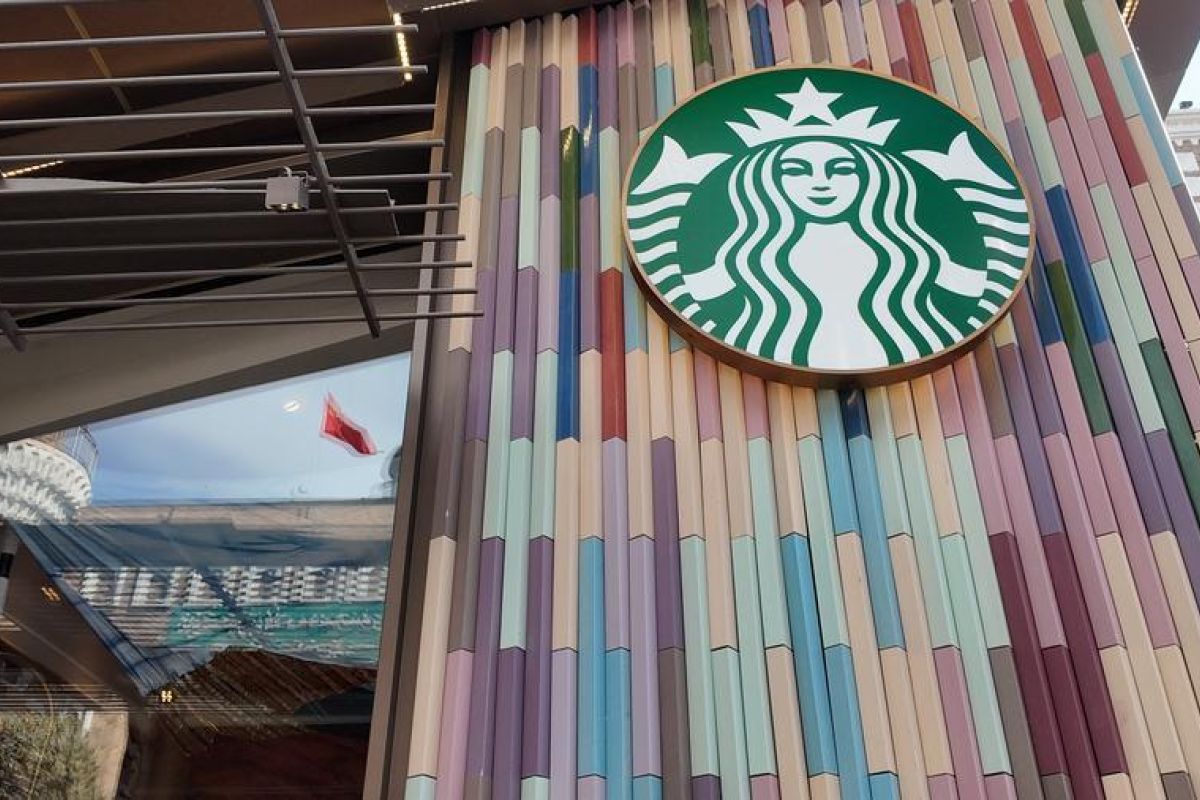
Urumqi (ANTARA) - The international coffee giant Starbucks opened two outlets in the Xinjiang Uyghur Autonomous Region, northwest China, on Tuesday (29/9), marking its debut in the region and its latest expansion in China, its second-largest market after the United States (US).
The outlets are located in Urumqi, the capital of the autonomous region. One is situated in the iconic Grand Bazaar, and the other is at Urumqi Tianshan International Airport.
The flagship Grand Bazaar store features a unique design inspired by the silhouette of traditional bazaar canopies, with an interior showcasing characteristic Xinjiang elements such as Atlas silk and ethnic musical instruments. Both outlets have launched menus inspired by local flavours, alongside other exclusive beverages, such as a milk-skin-flavoured salty milk tea.
“Entering Xinjiang not only marks the further expansion of our store network but also allows us to engage deeply with this dynamic market and build sincere and lasting relationships with our customers there,” said Molly Liu, CEO of Starbucks China, in a written statement.
The opening of these stores follows Starbucks’ partnership with the Chinese venture capital firm, Boyu Capital, to operate its retail business in China.
Under the agreement signed last November, Boyu and Starbucks will operate a joint venture, with Boyu holding up to 6-0 per cent ownership of Starbucks’ retail operations in China, while Starbucks will retain the remaining 40 per cent in the joint venture. Starbucks will also retain the Starbucks brand and licence the brand along with its intellectual property to the new entity.
Zhang Yu, an official from the regional market regulation administration, stated that Xinjiang has prioritised the “first store economy”—a vital indicator of urban commercial vitality and consumer appeal—as a key strategy to drive domestic demand and consumption.
Zhang added that Xinjiang will continue to refine support policies for these first stores, improving approval efficiency and optimising the business environment.
China is now Starbucks’ second-largest market after the US, with the company operating 16,933 stores as of 28 June 2026, according to Starbucks’ third-quarter results for fiscal year 2026.
This latest expansion comes as Starbucks is restructuring its business in North America, where the company announced plans last week to close 250 underperforming coffee stores in the region.
Starbucks entered the Chinese market in January 1999 with the opening of its first store in Beijing. As coffee culture began to take root and gain popularity, the chain gradually expanded its footprint across China. As of 27 September 2026, Starbucks operated 8,342 stores in China, an increase of 331 stores from the end of fiscal year 2025, according to the company’s fiscal 2026 data.
This long-standing expansion reflects how foreign brands are seeking opportunities in China’s evolving consumer market.
The State Administration for Market Regulation stated that China recorded 35,000 newly established foreign-funded enterprises in the first half (H1) of 2026, a 7 per cent increase year-on-year. Separate data from China’s Ministry of Commerce shows that nearly 4,800 foreign-funded companies increased their investments in China during H1 2026.