
Stanford and UC Berkeley Study Tests Safety of Healthcare AI
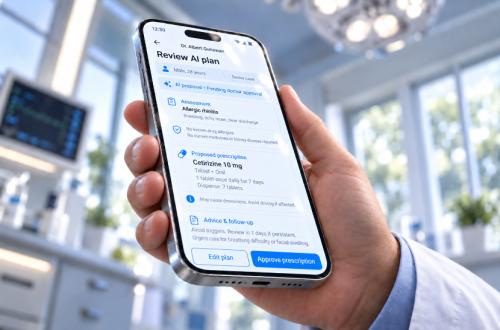
The use of artificial intelligence (AI) in healthcare services is being tested through live patient consultations, rather than just through pre-determined scenarios. A study involving researchers from Stanford and the University of California, Berkeley (UC Berkeley) found that 98.8% of AI recommendations across 402 general practitioner consultations on Alodokter met clinical safety benchmarks, based on an assessment by a panel of doctors.
Published by the Stanford King Center on Global Development, the study involved three independent Indonesian doctors who evaluated each consultation using 14 clinical safety criteria. As a result, 397 out of 402 consultations, or 98.8%, were classified as clinically safe based on the doctors’ panel consensus.
The evaluation covered the entire consultation process, ranging from information gathering, identification of danger signs, diagnosis, and treatment, to referrals and follow-up. The study identified Alodokter AI as a clinical AI system based on a Large Language Model (LLM) evaluated through actual patient consultations within a telemedicine service framework.
Ziad Obermeyer, MD, an Associate Professor at UC Berkeley and a co-author of the study, stated that the evaluation of healthcare AI must be conducted in conditions that closely mimic real-world practice.
“AI technology for healthcare services cannot be assessed solely on its ability to provide answers to pre-determined scenarios. By evaluating Alodokter AI within its telemedicine consultations occurring under real conditions, this study brings clinical AI evaluation closer to real-world patient management,” Ziad said in a press release on Tuesday (22/9/2026).
These findings emerge as the use of AI for seeking health information continues to expand. Within Alodokter’s services, the AI is developed to assist doctors in the consultation process, rather than replacing the doctor’s authority in making medical decisions.
In every consultation, the AI assists doctors in gathering essential information, recognising danger signs, assessing the risks of medication use, and considering treatment steps. AI recommendations are still reviewed and adjusted by the attending physician if necessary, while the final diagnosis and prescription remain the sole authority of the doctor.
Dr Marianti, Head of Medical Content and Marketing at Alodokter, stated that the use of AI in healthcare must continue to place the doctor’s clinical judgement as a primary component of the consultation process.
“The public uses AI because it is fast, practical, and easily accessible. However, regarding health matters, instant answers do not always equate to appropriate medical service. At Alodokter, patients do not have to choose between technological convenience and a doctor’s clinical judgement. Medical decisions remain in the hands of the doctor,” said Dr Marianti.
According to Alodokter’s internal data, 98% of consultations with GPs supported by Alodokter AI received positive satisfaction ratings from patients. This figure is internal company data and differs from the study results, which measured clinical safety based on physician assessments.
Suci Arumsari, President Director and Co-Founder of Alodokter, stated that the development of clinical AI is carried out by considering the healthcare conditions in Indonesia.
“Indonesia has one of the most complex healthcare systems in the world. For us, this condition is not a reason to fall behind, but rather an opportunity to build AI innovations that meet Indonesia’s needs while serving as a global reference for telemedicine development,” said Suci.
The study also noted several areas for further development, particularly in managing conditions requiring immediate referral and ensuring the safety of paediatric medication dosages. Alodokter stated it will use these findings to refine its technology.
Alodokter also plans to conduct randomised controlled trials alongside a research team to study the impact of AI use on service quality and patient safety. These follow-up tests could provide additional evidence regarding the use of AI in clinical settings and serve as input for the development of policies and safety standards for clinical AI in Indonesia.
Source: jawawa.id (https://jawawa.id/newsitem/stanford-and-uc-berkeley-study-tests-safety-of-healthcare-ai-1790089099)
Originally published by Republika (https://ameera.republika.co.id/berita/tlrjgv416/studi-stanford-dan-uc-berkeley-uji-keamanan-ai-kesehatan), translated from Indonesian