
Standardising Livestock Human Resource Skills to Support the Free Nutritious Meal Programme
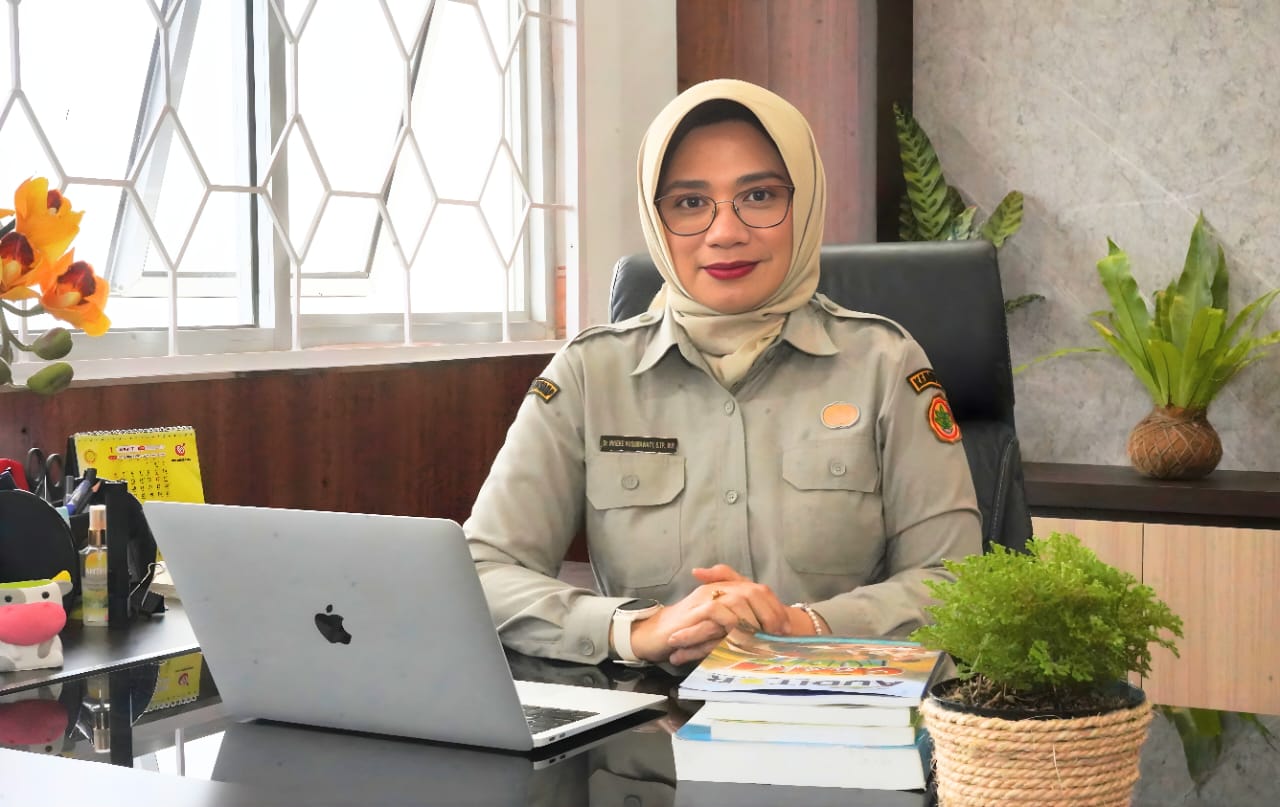
The Cinagara Animal Health Training Centre (BBPKH) under the Ministry of Agriculture is taking a strategic role in supporting the national Free Nutritious Meal (MBG) programme and accelerating food self-sufficiency. This unit focuses on developing reliable livestock human resources from upstream to downstream.
The Head of BBPKH Cinagara, Inneke Kusumawaty, stated that standardising the skills of actors in the livestock sector is key to providing a massive and safe supply of animal products. To this end, since early 2026, BBPKH Cinagara has expanded access to competency through 38 certification schemes recognised by the National Professional Certification Agency (BNSP).
“In the upstream sector, we are preparing veterinary paramedics, professional inseminators, pregnancy check officers, and livestock reproduction management systems to boost local livestock populations. Meanwhile, in the downstream sector, we are testing poultry slaughterhouse operators, Halal slaughterers, butchers, and meat health supervisors,” said Inneke.
Inneke emphasised that food safety guarantees should not just be a theory in the classroom. As proof, in April 2026, BBPKH Cinagara officially obtained Veterinary Control Number (NKV) certification from the Veterinary Authority for its three main business units.
The three teaching farm facilities that successfully received certification are the Dairy Cattle Breeding Unit, the Milk Processing Unit, and the Poultry Slaughterhouse Unit.
“This NKV certification is valid proof that all of our operational processes meet strict hygiene, sanitation, and biosecurity requirements. Through these high-standard facilities, training participants can absorb modern industrial work culture before being deployed directly to the community,” she explained.
The surge in demand for meat, milk, and egg commodities for the Free Nutritious Meal (MBG) programme in 38 provinces carries a high risk if not carefully monitored. BBPKH Cinagara is addressing this challenge by producing thousands of competent alumni through its ‘from farm to table’ training concept.
These graduates are prepared to become assistants in Veterinary Public Health Supervision and food quality control. They will be placed in various Nutrition Fulfillment Service Units to ensure that all food supplies meet the ASUH criteria (Safe, Healthy, Whole, and Halal).
“The involvement of certified human resources is crucial to minimise the risk of food contamination and ensure that Indonesian children receive optimal nutrition to eliminate stunting,” added Inneke.
Furthermore, Inneke said that BBPKH Cinagara continues to strengthen synergy with various strategic programmes of the Ministry of Agriculture, starting from the Food Brigade, Millennial Farmers, to optimising the Red and White Village Cooperatives.
Through increased production capacity in the breeding sector and the use of livestock processing technology, this institution is optimistic that it can reduce food loss in national milk and meat products.
“This solid training and certification ecosystem is a strategic long-term investment. Together with competent agricultural human resources, we will work together to make Indonesia a global food barn,” concluded Inneke.