
Standardised Tobacco Packaging Could Have Negative Impact, Here's the Explanation
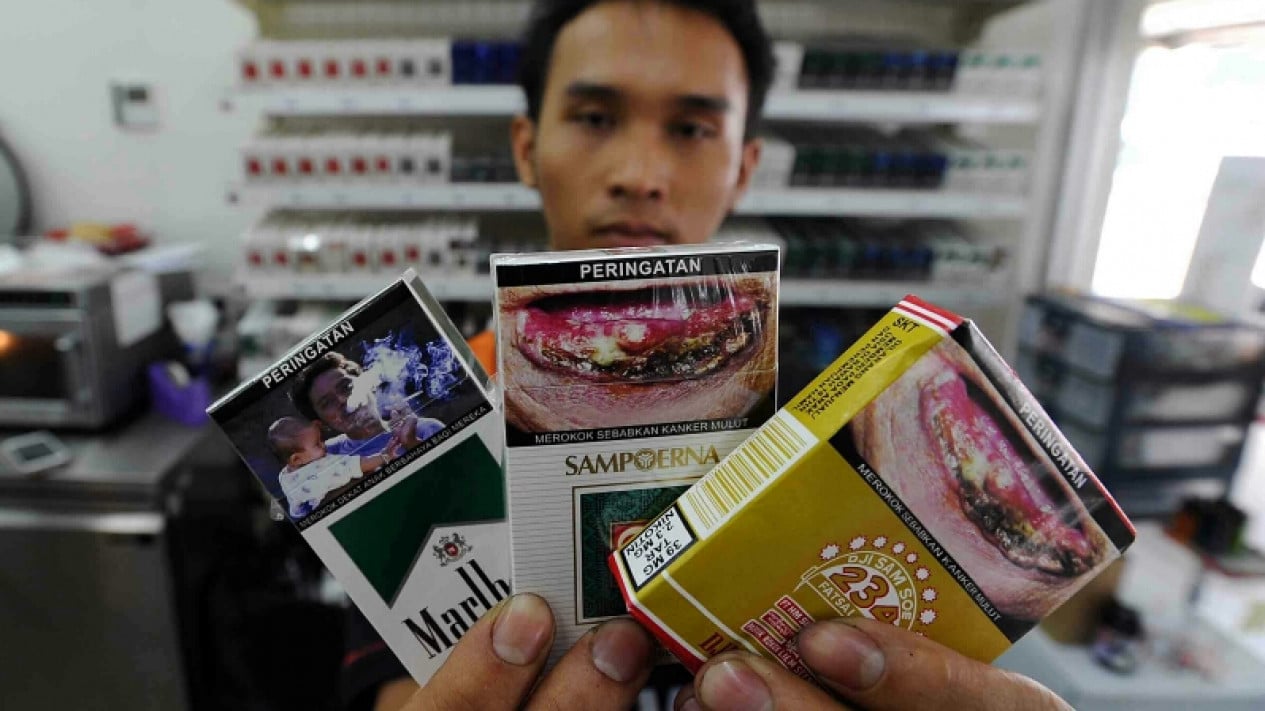
Jakarta, VIVA – The Chief Economist of Permata Bank, Josua Pardube, stated that packaging and visual design are vital identities for consumer products, serving as brand differentiators. When colours and visual appearances are standardised, the ability to distinguish between brands weakens, causing business competition to shift from quality to price wars.
He made these remarks in response to a proposal by the Ministry of Health, which is currently drafting the Ministerial Regulation on the Inclusion of Health Warnings and Information on Tobacco and E-cigarette Products. This regulation, which mandates standardised packaging for tobacco and e-cigarette (vape) products, has drawn a wave of criticism from business players as well as industry and economic observers.
Consequently, Josua expressed that on a larger scale, the regulation possesses the potential to trigger new economic shocks, which could have a systemic impact on industrial supply chains and state revenue.
“Indonesian consumers are very price-sensitive. If the price of legal products remains high due to excise burdens while their appearance is made uniform with difficult-to-distinguish quality, consumers are unlikely to stop smoking; instead, they will migrate to cheaper products or even illegal ones,” Josuna said in a statement on Tuesday, 30 June 2026.
He also cautioned the government against blindly adopting the claims of success regarding plain packaging from developed nations. According to him, success in developed countries occurs within a different ecosystem, characterised by stronger law enforcement, controlled distribution chains, and higher public purchasing power.
Australia is one of the countries cited by the government as an example. In reality, nicotine consumption from illegal sources in Australia has risen significantly. “In Australia, data from the Australian Bureau of Statistics (ABS) shows that nicotine consumption from illegal sources surged from 12 per cent in 2017 to 80 per cent in 2025,” he noted.
Josua explained that this surge was triggered by the price difference, where legal products tripled in price due to high excise duties compared to the stable prices of illegal products. “Indonesia faces a similar risk if the loss of visual appeal instead encourages consumers to switch to the cheaper black market,” he added.