
Standard Chartered Forecasts Digitalisation to Boost Global Trade by 2031
JAKARTA — Standard Chartered Indonesia says accelerating trade digitalisation could increase the value of global trade by US$2.8 trillion by 2031, or 6.9% above the baseline forecast. The use of artificial intelligence (AI), digital documents and automation could improve the efficiency of cross-border trade while creating new business opportunities.
Standard Chartered Indonesia CEO Donny Donosepoetro said technological developments and changes in the global economy were expanding the role of corporate treasury, from managing liquidity and working capital to mitigating risks amid shifting supply chains.
“The Standard Chartered Future of Trade 2026 report shows that accelerating trade digitalisation could increase the value of global trade by US$2.8 trillion, or 6.9% above the baseline forecast, by 2031,” Donny said at the Indonesia Treasury Leadership Forum 2026 in Jakarta on Tuesday (13 October 2026).
He said companies needed to harness technological developments while strengthening operational resilience to meet the challenges posed by changes in the economy and global supply chains.
Donny also pointed to growth in digital payment transactions in Indonesia. Citing Bank Indonesia data, he said the volume of digital payment transactions reached 6.11 billion in August 2026, up more than 40% on the same period a year earlier.
He said advances in AI and digital currencies could transform corporate financial transactions, making them more automated, integrated and efficient.
“Going forward, artificial intelligence (AI) and digital currencies have the potential to change how companies conduct financial transactions, making them not only faster but also increasingly automated, intelligent and connected,” he said.
Downstream investment
Meanwhile, geopolitical shifts, trade policies and production diversification strategies are prompting companies to reassess their global supply chains. This is creating opportunities for Indonesia to strengthen its position in international trade networks.
Investment realised in Indonesia in 2025 totalled Rp1,931.2 trillion, up 12.7% year on year, according to data from the Ministry of Investment and Downstreaming/BKPM presented at the forum. Investment in downstream industries reached Rp584.1 trillion, an increase of 43.3% from the previous year.
Shinta Kamdani, chairwoman of the Indonesian Employers Association (APINDO) and CEO of Sintesa Group, said businesses needed to focus on three factors to navigate changes in the global economy: opportunity, competitiveness and connectivity.
She said opportunities could be pursued by expanding markets, adapting to supply-chain changes and making use of technology. Competitiveness, meanwhile, needed to be strengthened through higher productivity, cost management and a predictable business climate.
Connectivity includes strengthening supply chains and logistics, access to financing, and payment systems, both domestically and across borders.
“Opportunity alone is not enough. Businesses need competitiveness to seize those opportunities, and connectivity to turn them into economic value,” Shinta said.
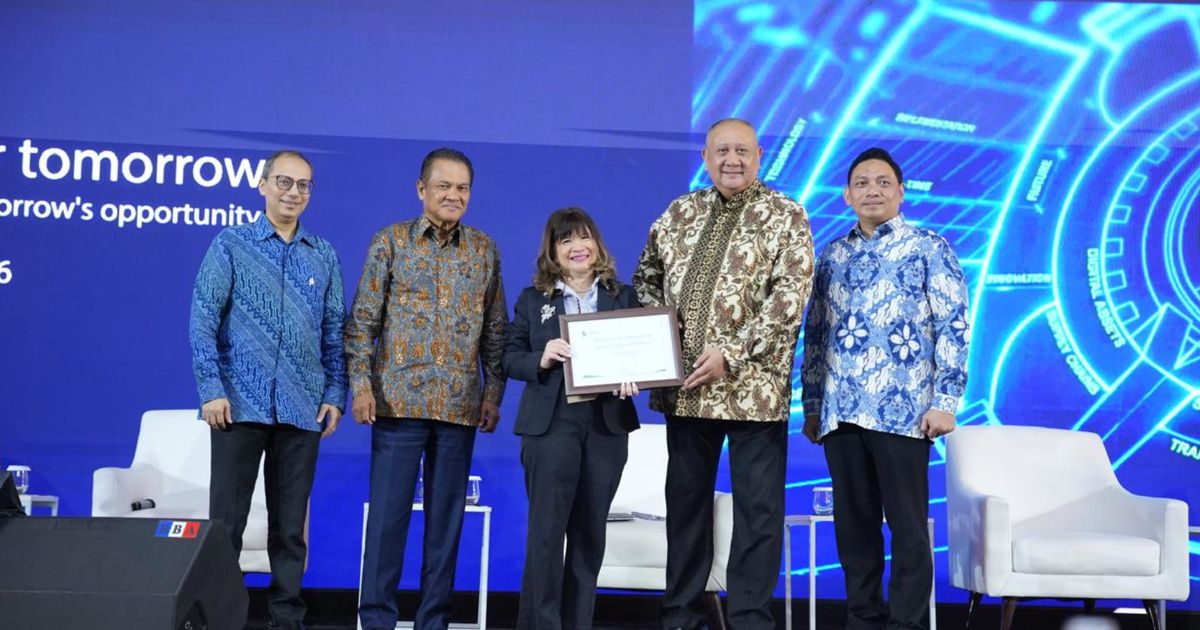
These issues were discussed at the Indonesia Treasury Leadership Forum 2026, organised by Standard Chartered Indonesia under the theme “The Blueprint for Tomorrow: From Today’s Disruption to Tomorrow’s Opportunity”.
The annual forum brought together regulators, industry players, corporate leaders and experts to discuss how technological developments and changes in the global economy affect corporate treasury management. This was the forum’s second edition in Indonesia.
One session examined real-time payments, AI, digital assets and payment-system connectivity. Discussions also highlighted the importance of cybersecurity, fraud prevention and operational resilience as transaction systems become faster and more interconnected.
Standard Chartered Indonesia previously launched its Payouts as a Service offering, which enables corporate clients to automate large-scale, recurring payments according to business-defined parameters.
At the forum, Standard Chartered also highlighted the need for companies to strengthen liquidity, working-capital and risk management so they can adapt to supply-chain changes and capture opportunities in global trade.