
Stalemate in the Strait of Hormuz: From Trump Card to a Test of Iran's Diplomacy
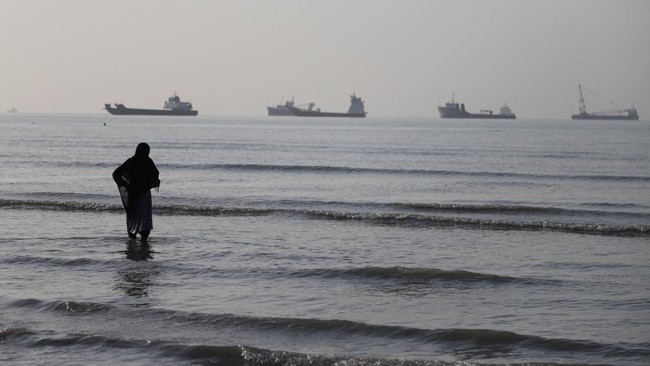
The Strait of Hormuz has become the most crucial point in negotiations between Iran and the United States after the two countries signed a memorandum of understanding (MoU) on 18 June. For Tehran, the strategic shipping lane is the main bargaining chip in talks with Washington, so the dispute over reopening the strait is expected to be the most difficult issue to resolve.
According to The Guardian, every part of the roughly 24-mile-wide strait has become an arena for a tug-of-war between the two nations, in a test of diplomatic resolve and patience. For Iran, the continuation of the dispute over the Strait of Hormuz is not a problem as long as the country maintains control over the shipping lane.
Based on the MoU signed with the US, substantive negotiations on Iran’s nuclear programme do not have to begin before the blockade of the Strait of Hormuz is lifted. In the agreement, Iran is only required to use its ‘best efforts’ to reopen the shipping lane. This condition provides a strategic advantage for Tehran. The longer the blockade lasts, the closer the United States gets to midterm elections that will serve as a political test for President Donald Trump. On the other hand, although the Iranian government is also facing public pressure due to high inflation, there is no definite schedule for when this domestic political pressure will peak.
Iran is applying a maximalist interpretation of the MoU by asserting that only Tehran has the authority to lift the blockade of the Strait of Hormuz. Jealously guarding this right, Iran has rejected the involvement of other countries or international institutions in the process of reopening the shipping lane. This stance is the reason Iran rejected a proposal to open an alternative shipping lane in the southern part of the Strait of Hormuz, near the coast of Oman, developed jointly with the International Maritime Organization (IMO) under the United Nations. The plan emerged after the main central channel of the strait was closed due to the presence of sea mines.
Under the proposed scheme, two new shipping lanes would be opened. The first lane is in Omani waters and monitored by the US Joint Maritime Information Center, while the second lane is further north, near Iranian territory. The IMO had believed that Iran had agreed to the proposal. However, there may have been a difference of opinion within the Iranian government or a misunderstanding on the IMO’s part regarding Tehran’s level of flexibility. The situation changed after Iran attacked a Singapore-flagged vessel transiting the southern lane last Thursday. The incident led the IMO to finally cancel the plan to open the alternative route.
For Iran, losing control of the Strait of Hormuz means returning to the negotiating table in the same position as before the war and losing one of its most important strategic instruments in dealing with the United States. At a press conference in Baghdad, Iranian Foreign Minister Abbas Araghchi stressed that Tehran rejects any form of new mechanism outside of those operated by the Iranian government. ‘Any attempt to adopt new or separate arrangements from those currently run by the Islamic Republic will only lead to further complications, delays in the reopening of the Strait of Hormuz, and increased tensions,’ Araghchi said, as quoted by The Guardian on Tuesday (30/6/2026).
The dispute over the southern shipping lane is expected to be one of the main agendas in the Doha talks. However, the issue could potentially divert attention from efforts to find a long-term solution for the governance of the Strait of Hormuz.
Over the past two months, Oman has drafted a detailed management plan for the Strait of Hormuz based on international law, which it hopes will be acceptable to Iran. However, Oman’s position as a neutral state puts Muscat in a complicated diplomatic situation. If Oman ignores Iran’s objections, the chances of Tehran accepting the proposal will diminish further. Conversely, if Oman does not take the initiative to assist humanitarian operations to free the thousands of seafarers still trapped by the blockade, the chances of the Omani plan being accepted by the region and the UN will also decrease. This situation also increases the likelihood of the United States launching full-scale military operations again.
Nevertheless, the fact that Iranian Deputy Foreign Minister Kazem Gharibabadi and Omani Minister of State for Foreign Affairs Abdulaziz al-Hinai held talks in Muscat is seen as an implicit acknowledgment from Tehran that the future management of the Strait of Hormuz cannot be decided entirely by Iran alone. In its proposal, Oman seeks to build a management system that allows coastal states to gain economic benefits from commercial vessels transiting the Strait of Hormuz. However, this revenue is intended to come from voluntary contributions or payments for specific navigation services by trade groups, ships, or user states, rather than from transit tariffs.
Omani Foreign Minister Badr al-Busaidi explained this approach. ‘We do not support the imposition of tariffs on ships transiting the Strait of Hormuz because that is prohibited under international law. Instead, service fees are legitimate, and discussions on this matter are ongoing with the Iranian side,’ he said. This distinction has a clear legal basis. Article 26 of the Convention on the Law of the Sea explicitly prohibits charges solely for the right of transit through international straits. However, Article 43 allows user states and states bordering a strait to cooperate in financing the provision of maritime services, including navigational aids.
Source: jawawa.id (https://jawawa.id/newsitem/stalemate-in-the-strait-of-hormuz-from-trump-card-to-a-test-of-irans-diplomacy-1782856260)
Originally published by CNBC Indonesia (https://www.cnbcindonesia.com/news/20260630155910-4-746905/sengkarut-di-selat-hormuz-dari-kartu-truf-hingga-ujian-diplomasi-iran), translated from Indonesian