
Stakeholders Highlight Major Challenges Facing Indonesia’s Healthcare Sector
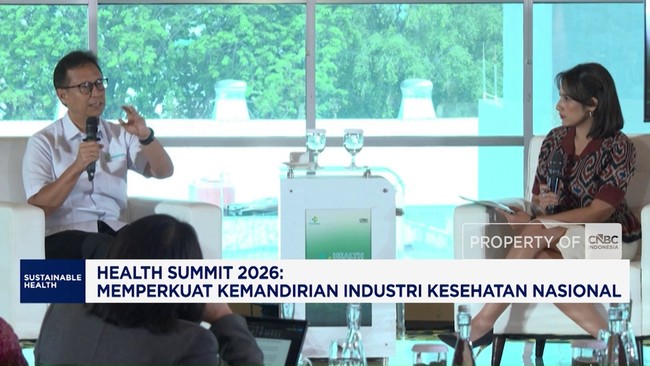
Jakarta, CNBC Indonesia — Indonesia’s healthcare industry still faces a number of challenges, particularly its reliance on imports for medical equipment and medicines. Yet healthcare is a strategic sector that can support the country’s economy.
Strengthening the industry will require close cooperation between the government and private sector, including through investment. Health Minister Budi Gunadi Sadikin outlined a strategy to attract investment and reduce import dependence, saying Indonesia needs to produce medical equipment and medicines domestically.
One approach being pursued by the Ministry of Health is to introduce regulations that encourage private companies to invest.
“Regulations need to be designed to trigger private companies to use their balance sheets and capital, and the funds they can mobilise, to invest in Indonesia and build industry,” Budi said at the Health Summit 2026, organised by CNBC Indonesia on Thursday (8 October 2026).
Budi said that if regulations were poorly designed, private companies would have little incentive to invest in healthcare facilities and factories. Such investment could turn healthcare spending into economic growth and create jobs.
He cited the domestic downstreaming of blood products as a success. Indonesia previously had to import albumin and IVIG (intravenous immunoglobulin) at very high prices, even though both are derived from blood plasma. As a country with a large population, Indonesia also has a substantial potential supply of blood plasma.
“Downstreaming is not only about natural resources in the form of ore, such as nickel ore; it can also come from blood. We can downstream blood,” he said.
Healthcare sector ‘attractive’ to investors
Nurul Ichwan, deputy for investment promotion at the Ministry of Investment and Downstreaming/BKPM, acknowledged that Indonesia’s healthcare sector was highly attractive to investors. The country’s large population had drawn a number of companies, including Japan’s biopharmaceutical firm Takeda.
The Ministry of Health has partnered with Takeda to develop an ecosystem for plasma-derived medicinal products (PODP) in Indonesia.
“Indonesia’s population of almost 300 million is attractive. That is one of the things that interested Takeda,” Nurul said.
Takeda’s interest also reflects the shortage of plasma supplies in Indonesia, which currently do not meet national demand. Developing a complete plasma ecosystem, from collection through to production, is therefore necessary.
“The government also has an interest in this, based on our experience during COVID, when it was extremely difficult to obtain plasma as a raw material for producing quality products,” he said.
Andreas Gutknecht, president director of PT Takeda Life Sciences, said Takeda was not new to Indonesia, where it had operated for 55 years with a commitment to improving public health. Its latest investment is an initial step towards building a sustainable blood-plasma ecosystem in the country.
“Indonesia is a real example of a win-win situation. The priorities of the Indonesian government and Takeda are truly aligned. As Minister Budi said, Indonesia wants to build health resilience, particularly by ensuring supplies of essential medicines made from blood plasma,” Andreas said.
Strengthening healthcare services
The government is also preparing fundamental changes to Indonesia’s healthcare-service system, including through the use of technology and artificial intelligence (AI). The reforms are intended to expand service capacity and ensure that people receive care suited to local needs.
Azhar Jaya, director-general of health services at the Ministry of Health, said the changes would cover several basic aspects, including the referral system. In future, referrals would be based not merely on a hospital’s tier or class, but on its competence to treat a patient’s condition.
“We will prepare healthcare services at a fundamental level. There will be three basic changes, one of which is competence-based referrals,” Azhar said.
AI also has an important role in improving healthcare services. Sigit Pramono, head of the Obstetrics and Gynaecology Department at Abdi Waluyo Hospital, said medicine could not be separated from technology and AI. He said AI could support diagnosis and optimal, timely treatment, as well as patient safety, evidence-based medicine and personalised care.
“Abdi Waluyo always prioritises technological advances and innovation to provide fast and accurate diagnosis and treatment. We combine AI with the continued development of our human resources to deliver personalised patient care, which is the hospital’s main vision,” he said.
Sigit said Abdi Waluyo began using AI in 2004. The hospital was also the first to use 64-slice CT, a cath lab and cardiac imaging, and continued upgrading its equipment. In 2015, it became the first hospital to use a 512-slice CT Revo and 1.5-tesla MRI.
The importance of investing in technology was also emphasised by Yohanes Jeffry, managing director of OCS Indonesia and president of the Indonesia Chapter of IFMA. He said investment in better buildings, advanced technology and medical innovation was important, but added that progress should also be assessed by whether it made staff more competent, operations more reliable and communities better served.
“Facilities management contributes by helping coordinate these functions in close cooperation with clinical leaders and other specialist units. Every patient journey depends on a hospital’s operational ecosystem. Strengthening that ecosystem should therefore be part of how we assess healthcare readiness,” Yohanes said.
With stronger facilities and services, Indonesians may increasingly choose to seek treatment at home rather than abroad.
Icon Cancer Centre opens in Bali
Serena Wee, chief executive of Icon Cancer Centre ASEAN, said Indonesians with cancer no longer needed to travel overseas for certain treatments. She said nearly 30% of cancer medicines that had previously been unavailable in Indonesia could now be accessed at Bali International Hospital (BIH).
Icon said it had brought innovative, evidence-based oncology medicines to Indonesia. Serena said around 30% of medicines that had previously been unavailable in the country were now available at BIH.
“The most important aspect of this progress is that it allows us to provide the best possible care closer to where Indonesian patients live,” she said.
Serena said Icon hoped to connect opportunities created by policy changes with the practical reality of accessing healthcare in Indonesia. The centre also intends to work with Indonesian partners and build capacity together.
Source: jawawa.id (https://jawawa.id/newsitem/stakeholders-highlight-major-challenges-facing-indonesias-healthcare-sector-1791539520)
Originally published by CNBC Indonesia (https://www.cnbcindonesia.com/news/20261009153727-4-774816/ramai-ramai-stakeholder-ungkap-pr-besar-sektor-kesehatan-ri), translated from Indonesian