
Stages of Danantara Sumberdaya Indonesia: From Intermediary to Strategic Commodity Trader
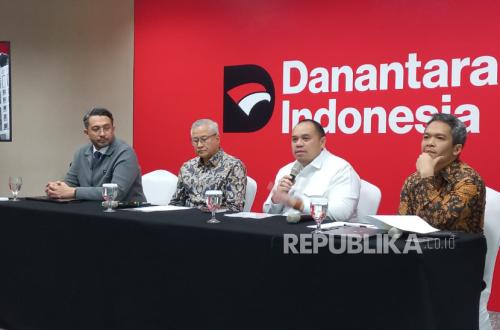
Managing Director of Stakeholders Management & Communications, Rohan Hafas, announced that Danantara Indonesia has formed a new subsidiary named Danantara Sumberdaya Indonesia (DSI), which will play a pivotal role in the export process of several national commodities. The company will operate as a State-Owned Enterprise (BUMN), with the Ministry of SOEs holding a one per cent stake.
Speaking at a media briefing in Jakarta, Rohan explained that DSI’s implementation will occur in two distinct phases. In the first phase, running from 1 June to 31 December 2026, DSI will act as an evaluator and intermediary between sellers and buyers. During this period, the company will not act as a buyer or seller itself, but rather as a government representative to ensure transactions are transparent and to prevent ‘under-invoicing’ and ‘under-pricing’ practices that deprive the state of revenue.
Export pricing will be benchmarked against international commodity exchanges, such as those for coal and palm oil, to ensure easy monitoring. Rohan highlighted that under-invoicing has historically caused massive losses to the state; citing President Prabowo Subianto, he noted that such practices have cost the country an estimated Rp 15,400 trillion over the past 34 years. Under-invoicing occurs when transaction prices are recorded far below international market rates, leading to a significant loss in export tax revenue.
Furthermore, Rohan addressed the issue of ‘shell companies’ used to park export proceeds abroad. He noted that when goods are resold at normal prices in international markets, the resulting foreign exchange often fails to return to Indonesia, thereby limiting domestic foreign exchange reserves and disrupting the national financial market’s supply and demand balance.
In the second phase, DSI’s function will evolve into that of a direct trader. In this stage, DSI will act as a buyer, purchasing commodities from national exporters and selling them directly to the international market. Under this scheme, DSI will hold the goods and bear the trading risks, ensuring that payments from overseas buyers are received directly by DSI, thus ensuring foreign exchange flows back into Indonesia. The formation of DSI is part of the government’s broader effort to improve the governance of national commodity exports and ensure that Indonesia’s natural resources provide optimal benefits to the nation.