
Staffing community health centres with doctors from their own regions
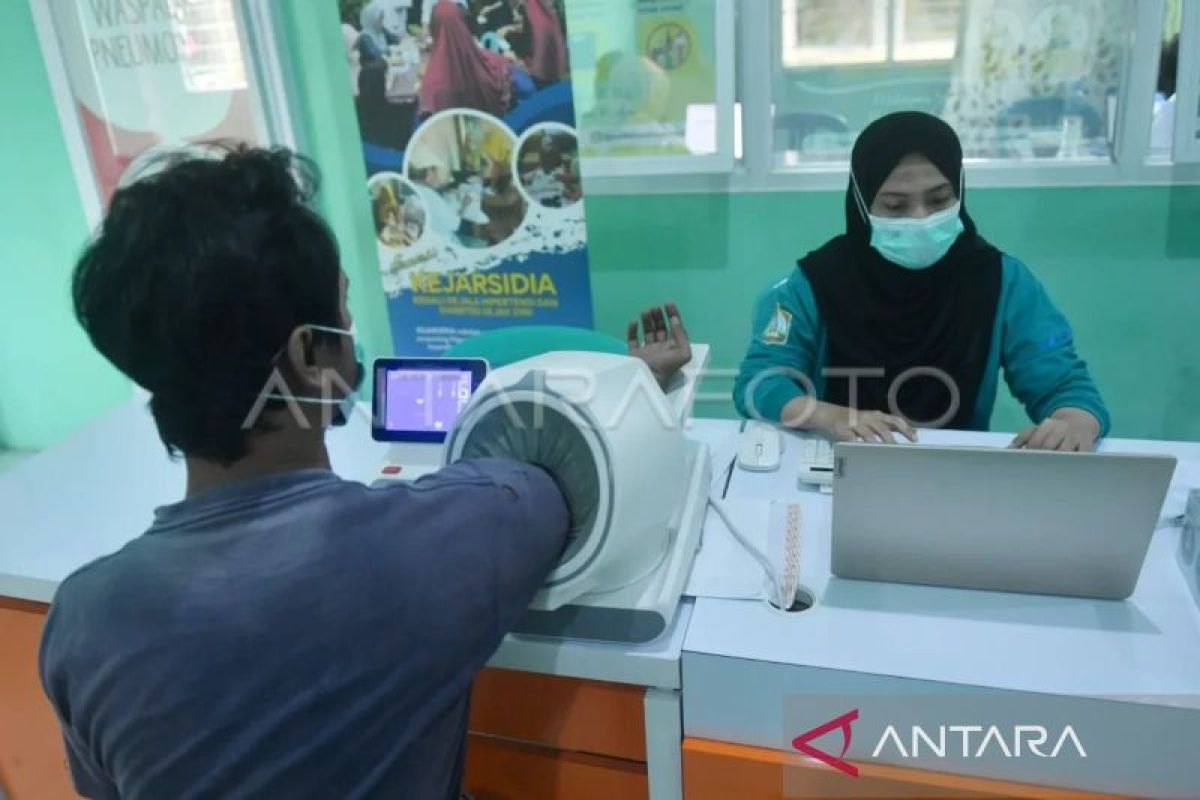
Jakarta (ANTARA) – The government is changing how it fills health-worker vacancies, moving from sending staff to regions to educating local people so they can eventually serve their home communities.
The need is clear. Health Ministry data for August 2026 show that 38 per cent of community health centres (puskesmas) are still short of a full complement of nine categories of medical and health personnel, with 6,927 positions needing to be filled.
Deputy Health Minister Benjamin Paulus Octavianus presented the figures at the 2nd National Forum of the Indonesian Health Council 2026 late last month, which also marked the Indonesian Health Council’s (KKI) second anniversary. The nine categories are doctors, dentists, nurses, midwives, public health workers, environmental health workers, medical laboratory technologists, nutritionists and pharmaceutical personnel. Without a full staffing complement, puskesmas struggle to provide promotive and preventive services.
The Asia Pacific Action Alliance on Human Resources for Health (AAAH) conference in Bali early this November brought together 200 participants from 22 countries, including policymakers, educators and development partners, to exchange experiences on health-worker shortages and unequal distribution.
The shortage is a global issue, not one confined to Indonesia. The World Health Organization (WHO) projects that the world will be short of around 11 million health workers by 2030. Last September, the WHO also warned that populations and health workforces ageing at the same time could widen the gap.
AAAH chair Anna Kurniati, who is also secretary of the Health Ministry’s Directorate General of Pharmaceuticals and Medical Devices, said the pressures on health workers were becoming more complex. The elderly population is growing, non-communicable diseases are accumulating, new infectious diseases are emerging, and climate change is adding to the strain. The WHO says inadequate investment in health-worker education and training in some countries is also perpetuating the shortage.
For Indonesia, the problem is more about the uneven distribution of health workers than an overall lack of numbers. The Health Ministry uses its Health Human Resources Information System to map distribution and project demand, prioritising areas with limited access, such as Papua, East Nusa Tenggara and Maluku. Data from May 2026 show dentists are the most frequently missing health-worker category at puskesmas.
For a decade, the main response has been staff-placement schemes. The Health Ministry’s Special Assignment Programme, launched in 2015, has deployed 21,105 health workers to 3,630 puskesmas in 331 regencies and municipalities. The ministry classifies this as a temporary measure because staff are posted for a set period. As a result, continuity of services at remote puskesmas depends on the next recruitment cycle, as doctors do not remain in place permanently.
The root of the problem lies upstream, in education. When hospital-based specialist medical training was launched in 2024, the Health Ministry found that 67 per cent of participants in the Specialist Medical Education Programme (PPDS) came from Java and Bali. Kalimantan accounted for just two per cent, and eastern Indonesia one per cent. Training centres were also concentrated, with 52 per cent located on the two islands. If this pattern continues, eastern Indonesia will have very few prospective specialists from its own communities.
The government aims to close this gap through the PPDS programme run by teaching hospitals as the lead providers (RSPPU). In its first intake, the programme accepted 52 participants at six hospitals. Residents do not pay tuition fees because they are employed by the hospitals where they practise. The programme also gives priority to doctors from areas short of specialists.
The government has approved operating licences for 25 new RSPPU specialist programmes, bringing the total to 31, with priority given to doctors from underdeveloped, frontier and outermost regions (3T). The urgency is underscored by the Health Ministry’s projection that Indonesia could face a shortage of nearly 65,000 specialist doctors by 2032 without faster action. The hospital-based route operates alongside the university pathway rather than replacing it.
Education funding is also being mobilised. From 2022 to 2025, the Health Ministry says 8,484 scholarships were awarded through schemes run by the ministry and the Indonesia Endowment Fund for Education (LPDP). The focus is shifting from filling empty posts to preparing people to occupy them over the long term.
Numbers alone are not enough. At the KKI forum, Benjamin stressed that health-worker recruitment must ensure that workers’ fields and competencies match service needs, and that they are distributed evenly. He called for continuing professional development to focus on practical abilities rather than merely accumulating credit points, including skills in artificial intelligence, telemedicine and electronic medical records.
For workers serving in disadvantaged, border and island regions (DTPK), as well as areas with serious health problems (DBK), skills can be improved through online training, blended learning and mentoring by referral hospitals. Six recommendations presented at the forum, including data-driven workforce planning and fair enforcement of professional discipline, are directly linked to these efforts.
Similar priorities feature in the AAAH conference’s three pillars: leadership and governance; quality education and health-worker wellbeing throughout their careers; and inclusive digital transformation. Benjamin said investment in health human resources should be a priority for every country, adding that Indonesia was ready to strengthen regional cooperation.
WHO Regional Director for the Western Pacific Saia Ma’u Piukala, a former practising surgeon, emphasised the need to protect health workers through decent working conditions, career development and wellbeing.
Founded in 2005 with 10 member countries, the AAAH now brings together 22 countries across Asia and the Pacific. The Bali conference aims to produce policy recommendations to strengthen health-workforce planning, improve workers’ safety and wellbeing, and expand digital innovation, with the recommendations expected to guide member countries.
Source: jawawa.id (https://jawawa.id/newsitem/staffing-community-health-centres-with-doctors-from-their-own-regions-1793768020)
Originally published by Antara (Indonesian) (https://www.antaranews.com/berita/5830579/menambal-puskesmas-dengan-dokter-dari-daerahnya-sendiri), translated from Indonesian