
Stablecoin Development Planned in Indonesia: Opportunities and Risks
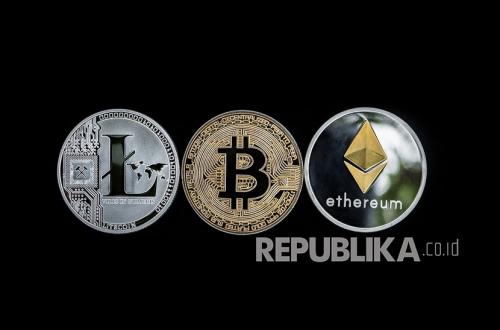
JAKARTA — Preparations are under way to develop stablecoins in Indonesia, alongside plans to formulate regulations with an initial direction targeted for January 2027. These digital assets are designed to maintain a relatively stable value and could be used in digital financial services, but carry risks related to asset reserves, liquidity and redemption mechanisms.
Bittime Operations Director Ryan Lymn said stablecoin development requires a clear regulatory framework so that users understand the function and risks of the instrument. Regulation is also needed to ensure transparency and consumer protection in its use.
“Stablecoins are an interesting development in the digital finance ecosystem because they serve a different function from crypto-assets, whose prices are more volatile. However, their use needs to be supported by regulatory clarity, transparency and consumer protection,” Ryan said in a statement on Saturday (17 October 2026).
The Financial Services Authority (OJK) is preparing regulations for stablecoins, with an initial direction targeted for January 2027. Discussions cover the potential use of the instruments as programmable money, as well as governance, asset reserves, redemption mechanisms and consumer protection.
Stablecoins are digital assets designed to maintain a relatively stable value by reference to a particular asset, such as an official currency. This distinguishes them from other crypto-assets, whose prices can fluctuate more widely.
Although designed to have a stable value, stablecoins still carry a number of risks, including issuer risk, the adequacy of reserve assets, liquidity availability and users’ ability to redeem their holdings.
“Market growth needs to be matched by a sound understanding of how each instrument works. Stablecoins are designed to maintain a stable value against their reference asset, but that does not mean they are risk-free,” Ryan said.
Plans to develop stablecoins come amid growing digital-asset trading activity in Indonesia. According to OJK data, the number of crypto-asset consumer accounts reached 23.21 million in August 2026.
In the same period, crypto-asset transaction value stood at Rp23.16 trillion, up 12.87 per cent from July 2026. The increase indicates rising digital-asset trading activity, although it does not directly reflect demand for stablecoins.
Alongside stablecoins, the development of digital instruments also includes asset tokenisation. The OJK is drafting a regulation on the offering of tokenised assets.
Tokenisation allows the rights or value of an asset to be represented as a digital token using blockchain technology. However, owning a token does not always confer the same rights as direct ownership of the underlying asset.
Token holders’ rights, transaction mechanisms and consumer protections depend on the structure and terms of each product. Consumers should understand these differences before using tokenisation-based instruments.
“Stablecoins and tokenisation have different functions and characteristics, so their regulatory approaches need to take account of the structure and risks of each product,” Ryan said.
In Indonesia, tokenisation-based products are beginning to become available through several digital-asset trading services. Bittime, for example, offers tokenised US stocks, giving users exposure to price movements in assets linked to US companies’ shares through digital tokens.
These products differ from direct share ownership through conventional capital markets. Users should therefore understand the rights they receive, the trading mechanisms and the risks that apply to the product.
Ryan said the development of digital-asset products should be accompanied by clear information for consumers, including explanations of each product’s function, transaction mechanisms and potential risks.
“For Bittime, the development of the digital-asset ecosystem is not only about a wider range of products, but also about consumers understanding the function, mechanisms and risks of each instrument,” Ryan said.
Regulation of stablecoins and tokenisation remains at the preparatory stage. Clarity on governance, asset reserves, user rights and consumer-protection mechanisms will be important to the development of both instruments.