
Stability as the Foundation for Democracy and Development
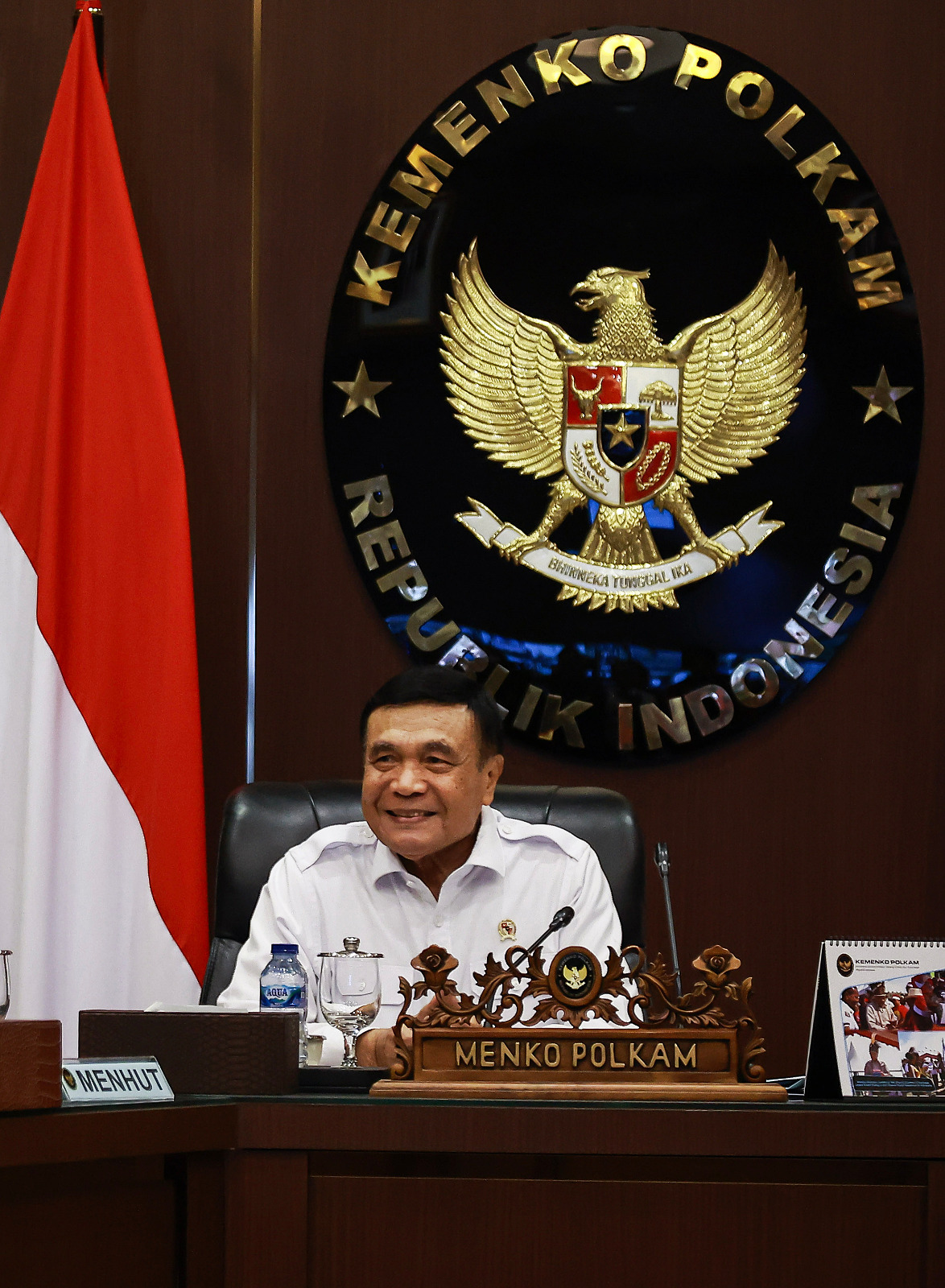
National security faces increasingly diverse challenges, from geopolitical dynamics in the Indo-Pacific and great power rivalries to cyber threats, terrorism, transnational crime, and the impacts of climate change on food and energy security. Coordinating Minister for Political and Security Affairs Djamari Chaniago considers strengthening defence, strategic diplomacy, and cyber security as crucial elements in maintaining national stability.
Ahead of the 2029 elections, the government faces the challenge of preserving stability without curtailing democratic space. Djamari stressed the importance of countering disinformation, hoaxes, hate speech, and digital influence operations through public literacy, early detection, inter-agency coordination, and proportional law enforcement.
Revisions to the Election Law and strengthened governance are part of efforts to prepare for a more democratic and credible electoral process. Djamari noted that political and security stability is not only vital for the continuity of democracy but also serves as a foundation for investment certainty, economic growth, and national development.
When asked about mapping future national security challenges amidst rising geopolitical dynamics and cyber threats, Djamari explained that the government has identified several key issues. These include intensifying great power rivalry in the Indo-Pacific, disputes in the South China Sea, and disruptions to international trade routes, which necessitate strengthening defence and strategic diplomacy, including the development of a smart defence system for the new capital, IKN. The increasing threat of cyber attacks on critical infrastructure, the financial sector, energy, and democratic systems requires enhanced national cyber security capacity. Other challenges include the spread of disinformation, digital influence operations, terrorism, radicalism, and transnational crimes such as drug and human trafficking. Non-traditional threats like climate change, natural disasters, and food and energy security also increasingly affect national stability.
Regarding strategies to maintain security without restricting democratic space and freedom of expression ahead of elections, Djamari stated that the goal is to ensure elections are free, fair, and peaceful. He noted that security and democracy are complementary, as political rights cannot be optimally exercised without a secure environment. The government is employing a preventive, collaborative, and law-based approach through early conflict detection, strengthening inter-agency coordination, and protecting the information space. Freedom of expression, criticism, and electoral participation are guaranteed constitutionally as long as they are exercised responsibly and within the bounds of the law.
Reflecting on the 2024 elections, the Coordinating Ministry for Political and Security Affairs actively strengthened inter-agency coordination throughout the electoral stages, including central and regional coordination meetings and field monitoring on voting day. In preparation for the 2029 elections, cross-agency coordination has been initiated to address potential issues. The ministry will continue to optimise coordination, particularly with security forces, to ensure stability and democratic guarantees.
On the matter of ensuring effective synergy among the Indonesian National Armed Forces, the Indonesian National Police, the State Intelligence Agency, and other ministries and agencies, Djamari explained that the ministry ensures aligned and mutually reinforcing policies. This coordination is mandated by Presidential Regulation Number 141 of 2024, which tasks the ministry with synchronising policy formulation, determination, and implementation in the political and security sectors. Coordination is carried out through regular inter-ministerial and agency meetings to align policy positions and formulate joint recommendations. For issues requiring intelligence synergy and more immediate handling, coordination is conducted through forums involving the State Intelligence Agency, the Armed Forces Strategic Intelligence Agency, the Police Security Intelligence Agency, the National Cyber and Crypto Agency, and other relevant bodies as needed. The effectiveness of this coordination is measured not by the frequency of meetings, but by the quality of follow-up actions, ensuring that policy recommendations are implemented and that the government’s response to national security threats is well-coordinated and timely.