
ST016 Savings Sukuk Targets Diaspora, Expanding Potential for Sharia Investors
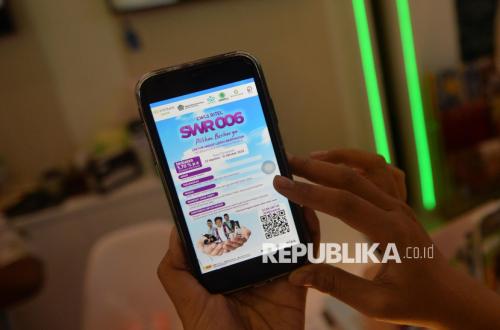
REPUBLIKA.CO.ID, JAKARTA – The role of the Indonesian diaspora is considered increasingly important in expanding the national Sharia investment market, especially ahead of the ST016 Savings Sukuk offering from 8 May to 3 June 2026. In addition to serving as a source of foreign exchange, the diaspora is also seen as a bridge for promoting Indonesia’s Sharia economy on a global level.
Managing Director of Bank Syariah Matahari, Muhammad Iman Sastra Mihajat, stated that state sukuk remains an attractive investment instrument for Indonesians abroad. Besides being considered safe due to state guarantees, the instrument also offers relatively low taxes.
“If viewed from a safety perspective, state sukuk is very secure because it is guaranteed by the state. So the possibility of not getting the money back is very small,” said Iman during the EKSYAR Diaspora and Indonesian Students Association (PPI) Webinar themed Strategic Role of the Diaspora in Driving Sharia Economic Transformation through Optimising ST016 Investment at Global and National Levels in Jakarta, Wednesday (6/5/2026).
According to him, the diaspora generally still wants to have investments in Indonesia even while living abroad. Besides the emotional closeness to the homeland, some diaspora also consider investment returns in Indonesia to be competitive.
“After all, in the end, many diaspora want to return to Indonesia. That’s why they still find investments in Indonesia attractive,” he said.
Iman added that current retail sukuk investors are dominated by young generations, especially Generation Z and millennials. Therefore, socialisation of Sharia investment products is considered necessary to be made closer to the communication style of young people.
Coordinator of World PPI/PPI Jordan, Andika Ibrahim Nasution, assessed that the main challenge in developing Indonesia’s Sharia economy abroad is not only literacy, but also how to build narratives and positioning for products.
According to him, many diaspora actually already know Indonesian Sharia instruments, but are not fully confident in making them part of their investment portfolio.
“Our Sharia economy is often positioned only as a domestic product, whereas it can actually become a global product if the framing is right,” said Andika.
He also highlighted the importance of simpler cross-country investment access so that the diaspora does not face administrative obstacles when buying retail government bonds from abroad.
“The diaspora should not only be targeted for socialisation, but also as partners in developing the Sharia economy going forward,” he said.
Meanwhile, Head of Financial Controlling at Airbus Helicopters Arabia, Harri Gemilang, believes that the promotion approach for Sharia government bonds needs to be made more modern to reach young diaspora more broadly.
According to him, many diaspora actually want to contribute to Indonesia, but are not yet familiar enough with Sharia financial instruments.
“If we want to reach a wider diaspora, the visuals and digital models need to be more modern. The storytelling also needs to be closer to their lives,” said Harri.
He added that ownership of state sukuk for the diaspora is no longer just about coupons and investment tenors, but also part of family future planning.