
Sri Sultan Welcomes Monks from Three Countries Participating in Indonesia Walk for Peace 2026
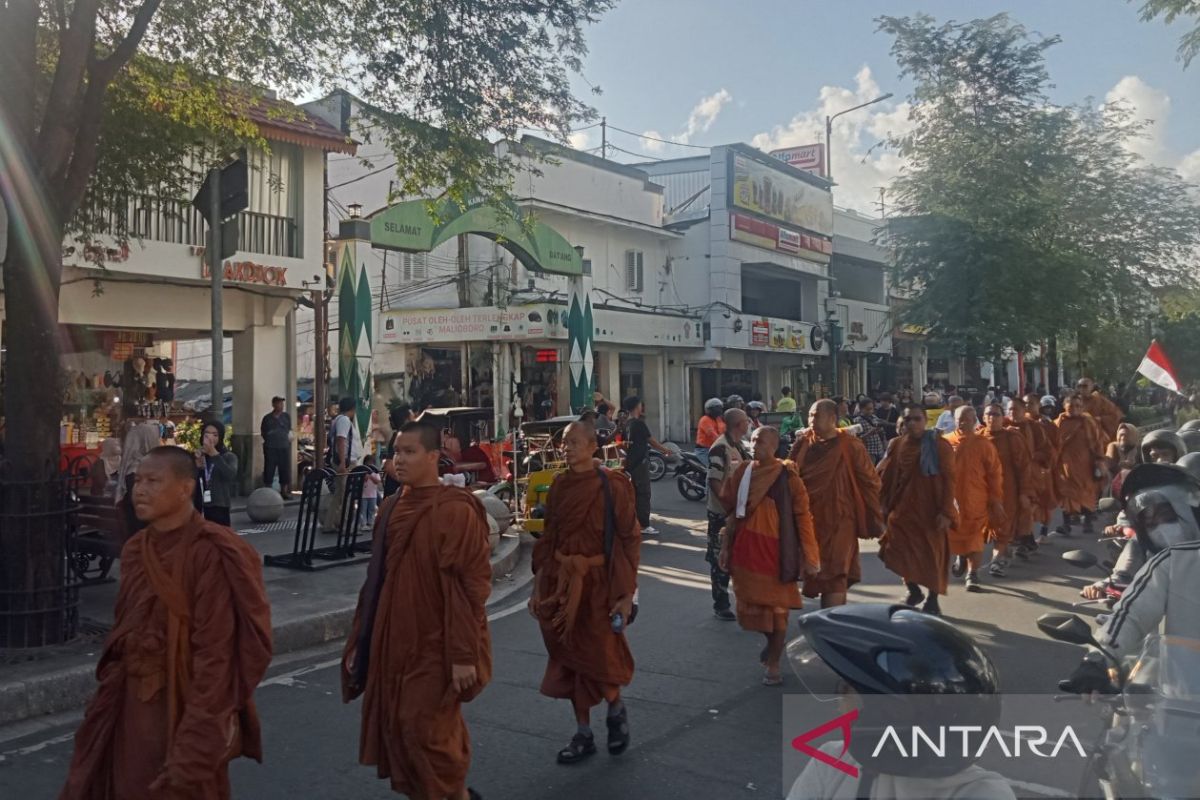
Sri Sultan Hamengku Buwono X, Governor of the Special Region of Yogyakarta, welcomed monks from three countries participating in the Indonesia Walk for Peace (IWFP) 2026 at Bangsal Kepatihan in Yogyakarta on Monday.
‘It is an honour for the Yogyakarta Special Region Government to welcome and receive the bhikkhu delegation participating in the Indonesia Walk for Peace,’ he said.
According to him, their presence is meaningful for the Yogyakarta Special Region Government as it allows direct interaction with the Indonesia Walk for Peace delegation.
On the occasion, he also introduced Yogyakarta’s local wisdom and cultural heritage passed down through generations.
‘The Indonesia Walk for Peace reflects a retrospective or life journey reflection. It is “niti-laku”, looking back at historical paths through time and revitalising them to be meaningful for the present and future,’ he said.
‘This journey also embodies the spirit of Bhinneka Tunggal Ika, reinforcing that ethnic, religious, and cultural diversity is a unifying strength, not a divisive force,’ the Sultan said.
Central Committee Chair of IWFP 2026, Tosin, said the cross-island peace walk involved 57 bhikkhus: 43 from Thailand, four from Malaysia, three from Laos, and seven Indonesian support participants.
He said the spiritual delegation is led by 31-year-old Bhikkhu Phanarin Anando. The participants’ ages range widely, with the oldest monk aged 67 and the youngest at 23.
Before arriving in Yogyakarta, they walked 30-40 kilometres daily since starting from Bali on 9 April.
They spent eight to ten hours daily on the road in Java’s scorching heat, with temperatures reaching 34-36 degrees Celsius.
This reflects the monks’ determination to continue their activities despite leg injuries.
‘I have seen stitches on their legs—three to five—this is extraordinary. Even with injuries stitched up, most people would rest, but they continue walking without pause,’ he said.
He also highlighted the monks’ simplicity, choosing not to burden the organisers.
They declined luxurious accommodations, opting instead to stay in basic facilities provided by locals or religious site administrators.
‘These bhikkhus are very simple; they refuse to stay in hotels even though organisers offered the best. They sleep in open fields, meeting halls, and temples, and despite basic facilities, they are content and easy to accommodate,’ he said.