
Spring festival gala strengthens China-ASEAN cultural bridge
Nanning — As stage lights shimmered and shifted colour, Indonesian student Yosep stepped onto the stage of the Global Spring Festival Gala 2026 wearing an outfit of his own design. Alongside his Chinese partners, Yosep performed a Mandarin-language song to rapturous applause. His outfit combined Chinese paper-cutting techniques with traditional Indonesian motifs, captivating the audience as models showcased it under the spotlight.
On the eve of the Spring Festival in the Year of the Horse, the Global Spring Festival Gala 2026 in Nanning, southern China, held its global premiere. The programme was translated into seven languages, including English, Vietnamese, Indonesian and Lao, and broadcast on television stations across numerous ASEAN countries. Highlights from the gala spread widely on international social media.
“In China, I experience every day how two cultures blend and enrich each other. I hope this spirited bond continues to shine, and that we can walk hand in hand towards a brighter future,” said Yosep.
As the capital of the Chinese province closest to ASEAN nations, Nanning in the Guangxi Zhuang Autonomous Region has become the frontline and hub for China-ASEAN openness and cooperation. For many years, a cross-border cultural celebration marking Chinese New Year has been held regularly.
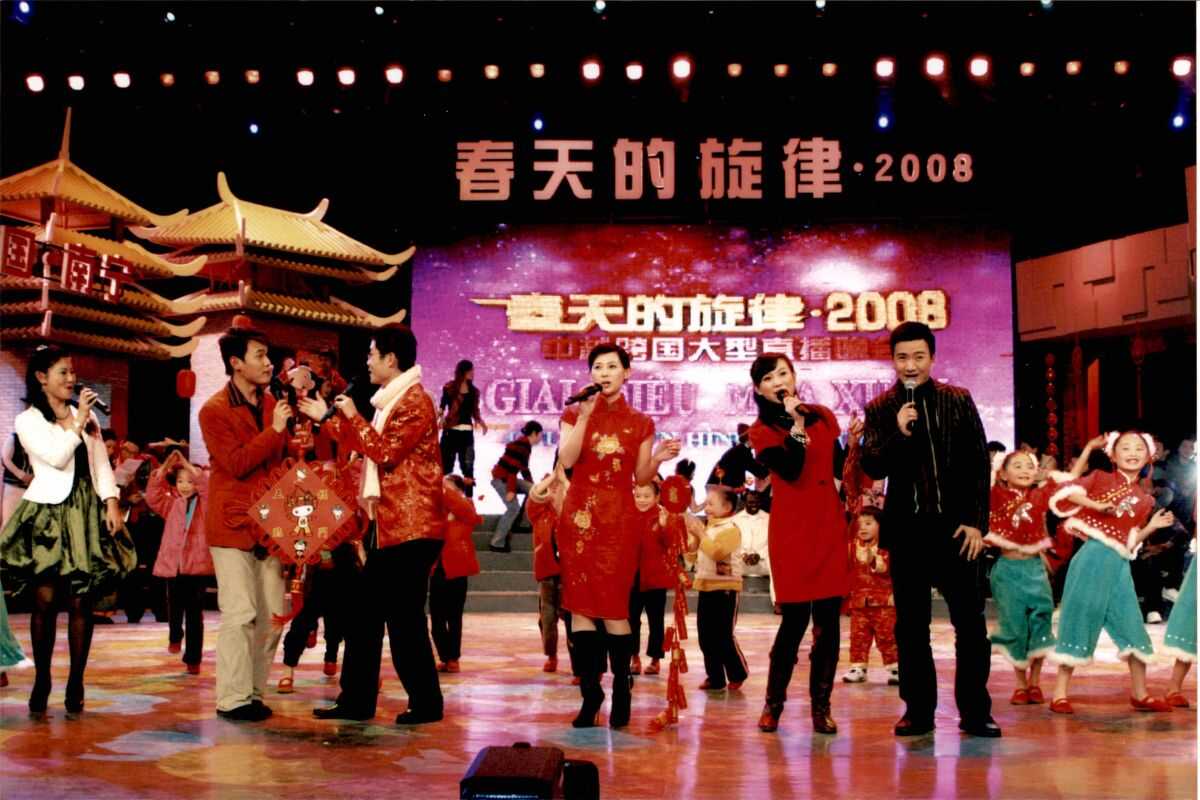
From its first satellite-linked broadcast between China and Vietnam in 2007 to its current reach across all of ASEAN involving dozens of global media outlets, the gala — rooted in China-ASEAN friendship — has gradually built a cultural bridge between peoples, carrying New Year festivities across mountains and oceans whilst fostering deep emotional bonds.
On Chinese New Year’s Eve 2007, Nanning and Vietnam held their first cross-border satellite broadcast for the Spring Festival Gala. On screen, the Zhuang ethnic Drum Tower appeared alongside French-style architecture.
“At that time, live broadcasting conditions were still limited. Sometimes microphones or stage props on the Vietnamese side were visible, and our own equipment was quite basic,” recalled presenter Xia Ying, who witnessed the gala’s birth first-hand.
“But that didn’t diminish anyone’s creative spirit. Everyone felt genuine happiness and pride, treating that inaugural gala like a great undertaking — like a rocket launch — with earnestness and high hopes,” she said.
On stage, Chinese musicians and a young woman from Laos together performed the melody of the Lusheng, a traditional Chinese instrument. AR-based window paper-cut motifs appeared on screen, virtual lion dances performed alongside “smart puppy” robot performers, whilst a high-tech horse galloped across a star-studded scene featuring young people from various countries. Behind the vibrant, youthful performance lay the story of a cultural bridge.
China and ASEAN nations share close cultural ties. This year marks 35 years of China-ASEAN dialogue relations and five years of the China-ASEAN Comprehensive Strategic Partnership. In 2004, Nanning was designated the permanent host city for the China-ASEAN Expo.
Nanning resident and loyal audience member Zhang Weilan said that through the gala, she could witness stunning traditional dances and beautiful ethnic music from ASEAN countries, showcasing the charm of cultural diversity.
Over the past two decades, the Spring Festival Gala has developed into a major brand for China-ASEAN cultural exchange.
Researcher Jiang Chenxian of Guangxi Minzu University said that China and ASEAN nations share emotional bonds through Spring Festival culture. From pasting New Year couplets and enjoying family reunion dinners to bidding farewell to the old year and welcoming the new with prayers for prosperity, these traditions resonate strongly among neighbouring countries separated by mountains and seas.
Norodom Jenna, a member of the Cambodian royal family, appeared wearing a golden sampot and Zhuang ethnic embroidered ball earrings whilst recording a music video for the gala. Known as “Princess Jenna” among her fans in China, Norodom Jenna said that China is a nation rich in history and vitality. She expressed her love for traditional Chinese culture and cuisine, and hoped that cultural exchange could help more young Cambodians understand China.
The gala’s performance formats have now expanded from songs and dances to include instrumental music, acrobatics, martial arts and storytelling. Participants are no longer limited to professional artists but also include young people, folk artists and cultural exchange ambassadors from various countries. Increasingly led by Generation Z, the gala incorporates trending elements such as influencer interactions, cross-border cultural exploration and street dance interpreting intangible cultural heritage.
According to director Wang Zhu, this year’s gala surpassed its previous simple connectivity format. In addition to the main venue in Nanning, sub-venues were established in Vietnam, Indonesia, Laos and Thailand. Joint gala events, collaborative performances and pop-up cultural activities for the Spring Festival added new layers and enhanced the interactivity of cultural exchange.
Lei Xiaohua, deputy director of the Southeast Asian Studies Institute at the Guangxi Academy of Social Sciences, assessed that the cross-border Spring Festival Gala has evolved into a branded and institutionalised platform. It serves as a tangible example of deepening cultural exchange and cooperation between China and ASEAN nations, not only enhancing mutual understanding and friendship between peoples but also promoting regional cultural cooperation, people-to-people connectivity, and contributing to building a closer China-ASEAN community with a shared future.
Nguyen Vinh Quang, vice-chairman of the Vietnam-China Friendship Association, said that relations between nations are rooted in closeness between peoples, and exchange among young people is particularly important. “Such exchanges enable both sides to stand shoulder to shoulder and jointly contribute to cooperation in various fields. The more frequently young people interact, the deeper the mutual understanding becomes,” he said.