
SPPG Staff Face the Prospect of Lay-offs
The National Nutrition Agency’s (BGN) latest rules on adjusting operational costs and the number of beneficiaries of the Free Nutritious Meals (MBG) programme have created a dilemma for volunteers and MBG partners in West Nusa Tenggara (NTB). As a result of the cuts, volunteers and workers at Nutrition Fulfilment Service Units (SPPGs) are at risk of being laid off.
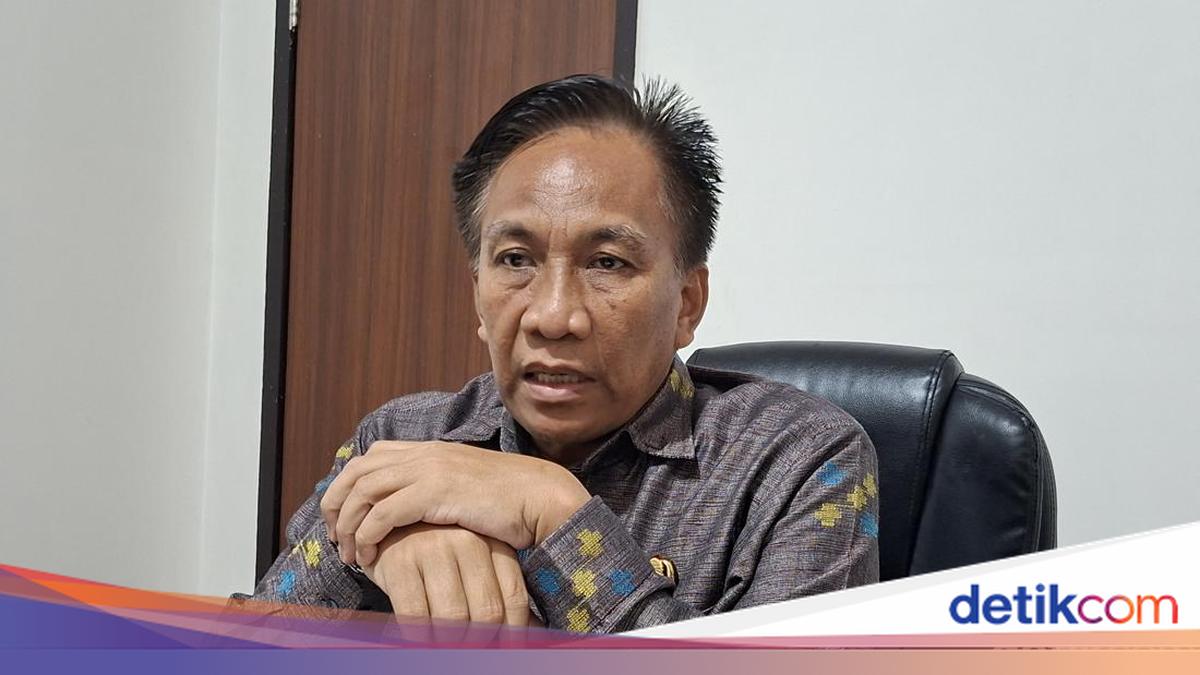
Fathul Gani, head of the NTB MBG Task Force, said the new rules require the number of volunteers to be adjusted to each SPPG’s beneficiary capacity.
For example, Fathul said, an SPPG with capacity for 3,000 beneficiaries is allocated 47 volunteers. If the number of beneficiaries is lower, however, the number of volunteers must automatically be reduced. He said this placed partners on the ground in a difficult position.
“Our partners are now in a dilemma. It looks as if they are the ones reducing the number of volunteers, when in fact the volunteer quota has been reduced under the latest BGN rules,” Fathul told reporters on Thursday (12 November 2026).
Nevertheless, Fathul praised several partners and volunteers for finding a compromise. Under internal agreements, some volunteers have chosen to stay and share their earnings, even though this means their income will fall.
“We should be grateful to the partners who have taken the initiative, and to the volunteers who have accepted sharing. The consequence is that their earnings will decrease,” he added.
The policy’s most significant impact has been the sharp decline in SPPGs’ operational income. Fathul said that before the new rules took effect, daily service incentives could reach Rp6 million, or around Rp144 million a month.
Under the new formula, the incentive is Rp2,000 per beneficiary, causing income to fall steeply. If an SPPG serves only 1,000 beneficiaries, its daily income is effectively Rp2 million.
“Over 20 service days, that amounts to just Rp40 million a month,” he said.
Fathul said the substantial decrease was putting considerable strain on SPPG operations. The issue was not only income: volunteers’ workloads were also becoming disproportionate.
“If the number of volunteers is cut, they will have to work much harder to handle both large and small portions of the MBG menu,” he said.
Given the difficulties on the ground, Fathul hopes the BGN will review the policy, noting that one of the MBG programme’s major aims is to expand employment opportunities for the public.
“We hope these rules can readily be reviewed with conditions on the ground taken into account. One of the expectations for the MBG programme is that it will create jobs,” he said.
As a concrete step, the NTB MBG Task Force plans to take the issue to the national level. Task Force officials from districts and cities are scheduled to hold a co-ordination meeting next week to voice the concerns of volunteers and partners.
“We are also asking that no one be laid off. Some places are already using a weekly rotation system,” he said.
Eko Prasetyo, BGN’s regional head for NTB, said he hoped the efficiency policy would not result in SPPG volunteers being laid off. He urged each SPPG to arrange shifts so that all volunteers could continue working.
“The key is to reach a mutual agreement. We hope no volunteers are sent home, because they have been working hard from the beginning. We hope they can remain employed,” he said.
Eko said decisions on volunteer numbers and work schedules were left to each SPPG and should be made by mutual agreement. SPPG heads were expected to mediate between foundation partners and volunteers to find a solution that did not disadvantage either side.
“SPPGs, as mediators, can find the best solution for everyone, both the foundation partners and the volunteers,” he said.
According to Eko, shift or rotation systems are already in use at several SPPGs. Under these arrangements, volunteers work in turns according to an agreed schedule, including agreements on how many people work each day and how wages are set.
“This system is already in place. It is flexible and depends on mutual agreement,” he added.
However, the BGN cannot compel volunteers to stay if they choose to resign because of the adjustments.
“Volunteers will certainly want to keep working. But if any of them want to resign, we cannot force them to stay,” he said.
Eko said the budget allocation for each beneficiary was Rp15,000: Rp10,000 for ingredients, Rp2,000 for incentives and Rp3,000 for operational costs.
Volunteer wages are covered by the operational-cost component. Previously, the salaries of nutrition supervisors and accountants were also charged to that allocation, but both positions are now funded directly by the central government.
The BGN has set maximum volunteer numbers in technical guidelines and the latest regulations. SPPGs serving more than 3,000 beneficiaries may employ up to 47 volunteers, while those serving between 2,500 and 2,900 beneficiaries are allocated around 33.
Eko was confident that adjustments to operational costs would not affect food quality or service to beneficiaries. He said the policy had been analysed by the BGN, taking into account input from various parties.
“This is public money and it must be accounted for. It would not be efficient to give an SPPG serving 3,000 beneficiaries the same number of volunteers as one serving 1,000,” he said.
Eko said he had not yet calculated the exact savings the policy would generate in NTB. Nationally, he put the potential savings at around Rp30 trillion.
There are currently 814 SPPGs in NTB. Of these, 19 are suspended following serious incidents, while most of the others remain operational.
Source: jawawa.id (https://jawawa.id/newsitem/sppg-staff-face-the-prospect-of-lay-offs-1794498662)
Originally published by detikBali (https://www.detik.com/bali/nusra/d-8750681/bayang-bayang-phk-karyawan-sppg), translated from Indonesian