
SPP-TDLN and the Transfer Tax Controversy
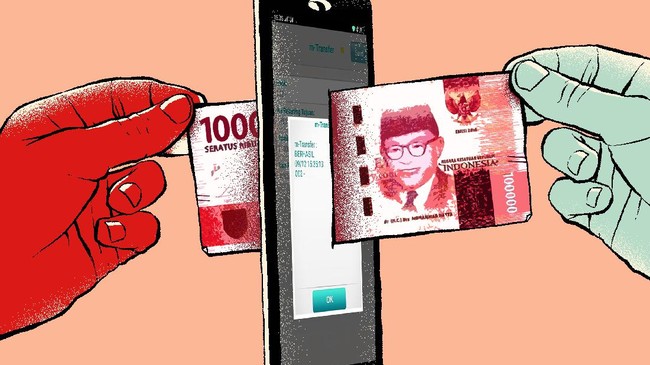
Public controversy over taxes on bank transfers and digital wallets attracted attention in early November 2026. It followed a statement on 29 October by Presidential Special Envoy Hashim Djojohadikusumo about the involvement of banks, fintech firms and e-commerce companies in digital tax collection from 9 November. The statement raised concerns that every money transfer would be taxed.
Finance Minister Suahasil Nazara subsequently stressed that there was no new policy automatically imposing value-added tax (VAT) on every interbank or digital-wallet transfer. The policy in question concerns the implementation of the System for Collecting Taxes on Overseas Digital Transactions (SPP-TDLN), which began operating on 25 September 2026.
What exactly is SPP-TDLN, and why does its implementation involve financial institutions?
Not a new type of tax
SPP-TDLN is not a new type of tax. It is a mechanism for collecting VAT on the use by consumers in Indonesia of digital goods and services from overseas where VAT has not already been collected under the VAT on Trading Through Electronic Systems (PPN PMSE) mechanism.
Its legal basis is Presidential Regulation No. 68 of 2025 and Finance Ministerial Regulation (PMK) No. 49 of 2026. Article 2 of the regulation states that the collection applies to the use within Indonesia of intangible taxable goods in the form of digital goods, and taxable services in the form of digital services, supplied from outside the customs territory.
Accordingly, payments for digital services from overseas providers, such as software, multimedia and software-based services, may be subject to VAT if they meet the tax requirements.
The system is also intended to broaden VAT collection on cross-border digital consumption. As the digital economy grows, transactions can take place without businesses having a physical presence in Indonesia. This creates particular challenges for tax administration, especially in identifying transactions and ensuring effective tax collection.
Why are banks and fintech firms involved?
A key element of SPP-TDLN is the involvement of banks and non-bank institutions appointed as issuers and designated as “Other Parties”. Under this mechanism, payment-system information is used to help identify overseas digital transactions that meet the criteria for VAT.
At the initial stage, six issuers have been appointed: five banks and one financial technology company. Their involvement does not mean that all transactions passing through their payment systems are automatically subject to VAT.
Article 8 of PMK No. 49 of 2026 provides that data on domestic transactions, including fund transfers and remittances, may be used to map and analyse overseas digital transactions. In other words, transfer data serves an identification function; domestic transfer amounts are not themselves subject to VAT.
Collection effectiveness and limits on data use
The use of transaction data is becoming an increasingly important tool in modern tax administration. By using payment information, the government may be able to identify transactions that were previously difficult to reach through conventional collection mechanisms.
However, the effectiveness of tax administration should not be measured solely by the government’s ability to access and process data. The proportionality of data use must also be considered.
Article 8 of PMK No. 49 of 2026 sets out information that may be provided, including the amount and currency, transaction time, originating and receiving institutions, and information related to the business. For destination account numbers in fund-transfer or remittance transactions, the regulation provides for the use of a hashed value.
The Directorate General of Taxes (DJP) is also authorised to access the data through the SPP-TDLN operator. Article 9 places responsibility for managing, securing, keeping confidential and protecting the data on that operator.
These provisions are an important part of the policy design, but there is still room to clarify how they will work in practice. For example, the criteria for mapping transactions, oversight of data access and use, and regular security assessments need to be made clear. The public should also receive adequate information about what data is used, why it is used and what safeguards are available.
Measuring success beyond revenue
Another important issue is how the success of SPP-TDLN will be assessed. Article 2 of PMK No. 49 of 2026 says the system is intended to improve tax revenue from overseas digital transactions efficiently, effectively and accountably.
That objective should be translated into measurable indicators. Additional VAT revenue matters, but assessments should also consider the cost of operating the system, the accuracy of transaction identification, compliance by the parties involved and data protection.
In addition, the VAT-refund mechanism provided for in Article 16 should be supported by procedures that are simple, transparent and easy to access. This would allow parties charged VAT in error to seek a refund through a straightforward process.
SPP-TDLN is one way of adapting tax administration to the development of the digital economy. Involving financial institutions may expand the state’s ability to identify taxable transactions. But the policy’s success cannot be measured only by how many transactions it can reach.
The state must also ensure that all data used is relevant to the collection objective, that every power is subject to oversight, and that there is a clear means of resolving administrative errors.
Source: jawawa.id (https://jawawa.id/newsitem/spp-tdln-and-the-transfer-tax-controversy-1794527419)
Originally published by CNBC Indonesia (https://www.cnbcindonesia.com/opini/20261113054817-14-784835/spp-tdln-dan-polemik-pajak-transfer), translated from Indonesian