
SPLP helps improve effectiveness of social assistance distribution
The Ministry of Communication and Digital Affairs has stated that the Government Service Interconnection System (SPLP) plays an important role in efforts to improve the effectiveness of social assistance distribution for the public.
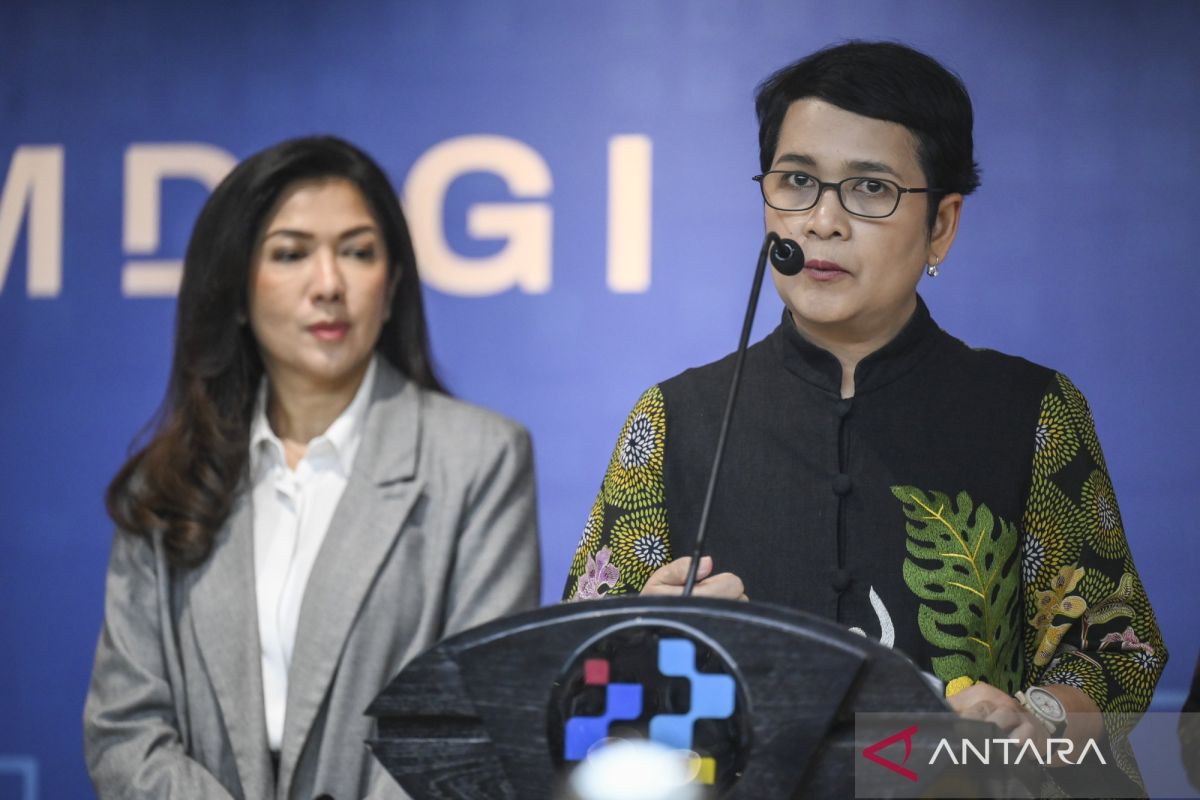
Director General of Digital Government Technology at the Ministry of Communication and Digital Affairs Mira Tayyiba explained that in the digitalisation of the Social Protection (Perlinsos) system, SPLP serves as a bridge connecting systems and data from various ministries, agencies, and regional governments.
“Through SPLP, data exchange can be carried out automatically, faster, and in a standardised manner,” Mira told ANTARA in Jakarta on Thursday.
“Data remains stored and managed by the owning agency. SPLP only connects the data required according to each agency’s authority,” she said.
In the digitalisation of the Perlinsos system, SPLP, developed by the Ministry of Communication and Digital Affairs, assists the Perlinsos Portal developed by the Ministry of Social Affairs in verifying data on prospective social assistance recipients from multiple data sources.
For example, the identity of prospective social assistance recipients can be checked using the population database, employment status, vehicle or asset ownership, electricity usage, and data on social security programme participants.
“Such cross-checking helps identify duplicate data, mismatched identities, or unrecorded changes in economic conditions,” Mira said.
“As a result, the risk of assistance being received by people who do not meet the criteria, as well as eligible people who have not yet been registered, can be reduced,” she added.
Thus, the interoperability provided by SPLP can make social assistance distribution more effective and better targeted.
SPLP was deemed reliable during the trial of Perlinsos digitalisation. This was evident, among other things, from the smooth expansion of the Perlinsos digitalisation programme to cover 43 regencies and cities.
As of 6 August 2026, the system was recorded to have helped 2,568,486 heads of families obtain social assistance services, with primary access through the Perlinsos portal platform.
“SPLP is designed so that service capacity can adjust when there is a surge in simultaneous access, without disrupting data exchange for other government services,” Mira said.
She stated that efforts to secure inter-agency data exchange are also strengthened through cooperation with the National Cyber and Crypto Agency (BSSN).
The government is also designing system reinforcement so that SPLP can continue to operate even if there is a disruption to one service at a particular agency.
Mira believes the benefits of Perlinsos digitalisation can be optimised with strong system support.
She expressed hope that agencies whose databases are used in the Perlinsos digitalisation programme will update their data regularly.
In this way, the accuracy of social assistance recipient data can be maintained and the programme can be implemented optimally.