
SPKS Urges Agrarian Reform Bill to Strengthen Farmers' Rights
Jakarta (ANTARA) - The Oil Palm Farmers Union (SPKS) has stated that the Agrarian Reform Bill must be returned to its function as an instrument to implement and strengthen the mandate of the 1960 Basic Agrarian Law (UUPA).
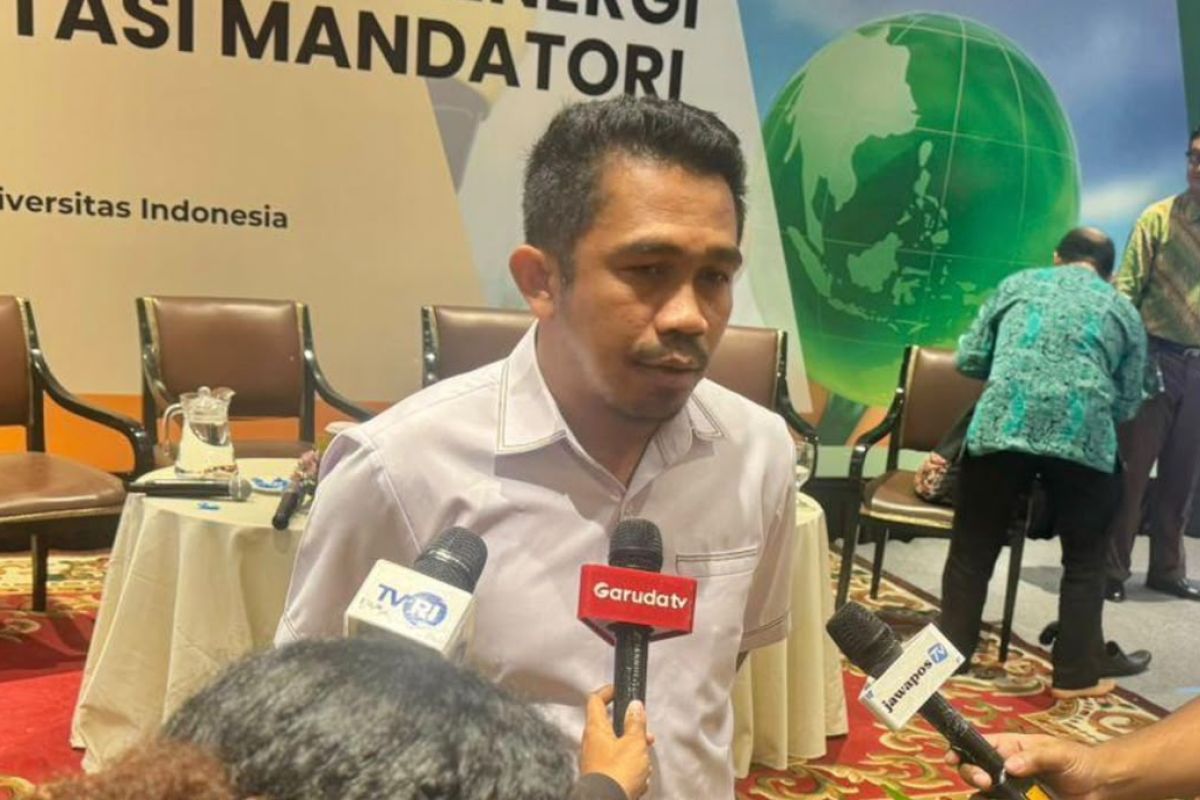
“SPKS firmly rejects any attempt to direct this policy towards replacing or altering the fundamental principles of national agrarian law under the guise of refinement,” said SPKS General Chair Sabarudin in Jakarta on Tuesday.
He emphasised that agrarian reform is a fundamental state agenda that must not be reduced to a mere matter of land administration. “Land must be positioned as a basis for production and the livelihood of the people, not merely an object of land administration,” he said.
He added that the Agrarian Reform Bill must truly address the structural issues faced by smallholders, including those facing uncertainty regarding land status within forest areas.
The union highlighted the fate of community plantations trapped within forest zones and requested that community gardens that have been actively cultivated for at least five years, with an area of up to five hectares per farmer, be explicitly included as objects of agrarian reform.
“This is considered essential to provide a way out for smallholders caught in uncertainty,” he said.
Furthermore, SPKS demands that the Agrification Reform Bill courageously restructure the inequality in plantation land ownership that has long existed between corporations and smallholders. He proposed that 80 per cent of plantation area control be allocated to smallholders and cooperatives, while corporations be limited to 20 per cent.
“Corporations must be directed to play a greater role in processing, industry, technology, trade, and downstreaming,” he said.
SPKS believes that agrarian reform is not enough if it is only directed towards resolving existing land conflicts. According to him, the objects of agrarian reform should also include land that can be restructured based on the principles of agrarian justice and the correction of land ownership inequality.
SPKS requests that the state provide recognition for rural communities, indigenous peoples, and smallholders who have occupied land for generations, even if they do not possess formal legal titles. Such recognition should not be limited by rigid institutional nomenclature.
He emphasised that the objects of agrarian reform should not merely be oriented towards resolving conflicts from remaining company land, forest area releases, or the Land Bank alone, but must restructure land based on the principle of justice.
To prevent overlapping sectoral authorities between land, forestry, plantations, and spatial planning, SPKS fully supports the implementation and institutionalisation of Agrarian Reform being carried out in an integrated or single-door manner.
Sabarudin reminded that land redistribution without economic empowerment is not a complete agrarian reform. Certainty of land rights for oil palm farmers must be accompanied by access to finance, the strengthening of cooperatives, and supporting programmes such as the Smallholder Palm Oil Replanting (PSR) scheme and market access.
“Agrarian reform must truly be able to provide certainty of rights as well as a sustainable increase in welfare for Indonesian farmers,” he said.
Source: jawawa.id (https://jawawa.id/newsitem/spks-urges-agrarian-reform-bill-to-strengthen-farmers-rights-1790085698)
Originally published by Antara (Indonesian) (https://www.antaranews.com/berita/5753460/spks-minta-ruu-reforma-agraria-perkuat-hak-petani), translated from Indonesian