
SPKS Hopes B50 Programme Will Improve Farmer Welfare
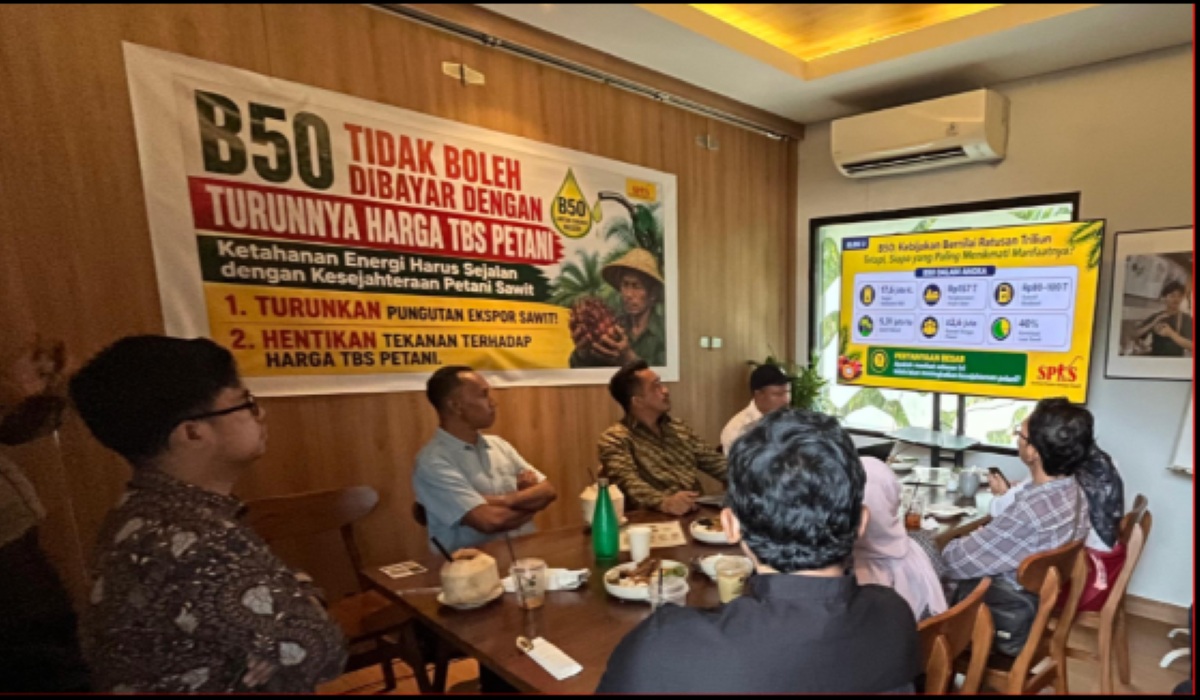
The Indonesian Oil Palm Farmers Union (SPKS) has expressed its hope that the implementation of the B50 biodiesel programme, scheduled to take effect on 1 July 2026, will not impose additional financial burdens on smallholder palm oil farmers. As one of the largest palm oil farmer organisations in Indonesia, SPKS emphasised that the national energy security programme must align with the improvement of welfare for farmers, who serve as the primary suppliers of raw materials.
The General Chairman of SPKS, Sabar Muthu, stated his support for the government’s steps to strengthen energy security and reduce dependence on fuel imports. However, he provided critical notes regarding the governance of the policy.
“SPKS supports the government’s efforts to increase the added value of palm oil commodities. However, the governance of the B50 implementation needs to be evaluated if palm oil farmers end up being the most burdened party,” Sabar stated in Jakarta on Tuesday.
Sabar highlighted the journey of biodiesel mandates over nearly a decade, moving from B15 towards the planned B50. According to him, to date, there has been no comprehensive evaluation regarding the real impact of such policies on the welfare of smallholder palm oil farmers on the ground.
He emphasised that SPKS does not reject the B50 programme, but rather rejects the governance scheme that shifts implementation costs onto farmers. “The state must not achieve energy security and the industry enjoy added value, only for palm oil farmers to pay for that success through a drop in Fresh Fruit Bunch (FFB) prices,” he asserted.
One crucial point highlighted by SPKS is the increase in CPO export levies, which directly impacts FFB prices at the farmer level. Based on the organisation’s calculations, an increase in export levies from 10% to 12.5% has the potential to depress FFB prices by approximately Rp833 per kilogram.
Nationally, SPKS estimates that the total losses for palm oil farmers could reach between Rp499 billion and Rp500 billion every month due to this decline in FFB prices. Sabar reminded that the projected economic benefits of B50, which are expected to reach Rp24.68 trillion, must not come at the expense of sacrificing farmer incomes by up to 20%.
The Association of Indonesian Oil Palm Farmer Organisations (POPSI), along with the Clean Transition Coalition, has requested that the government not rush the implementation of the B50 biodiesel mandate. They argue that the presence of Domestic Similars Industry (DSI) must be able to provide real added value to the national palm oil industry.
Meanwhile, the swift actions of the Minister of Agriculture, Andi Amran Sulaiman, in overseeing the recovery of palm oil FFB prices have received positive responses from farmers in various regions. Palm oil farmers across various areas welcomed the Minister’s rapid steps to stabilise FFB prices through cross-sector coordination, noting that the agricultural and plantation sectors remain a primary pillar of the economy in many parts of Indonesia.