
SPKLU usage in NTB surges eightfold
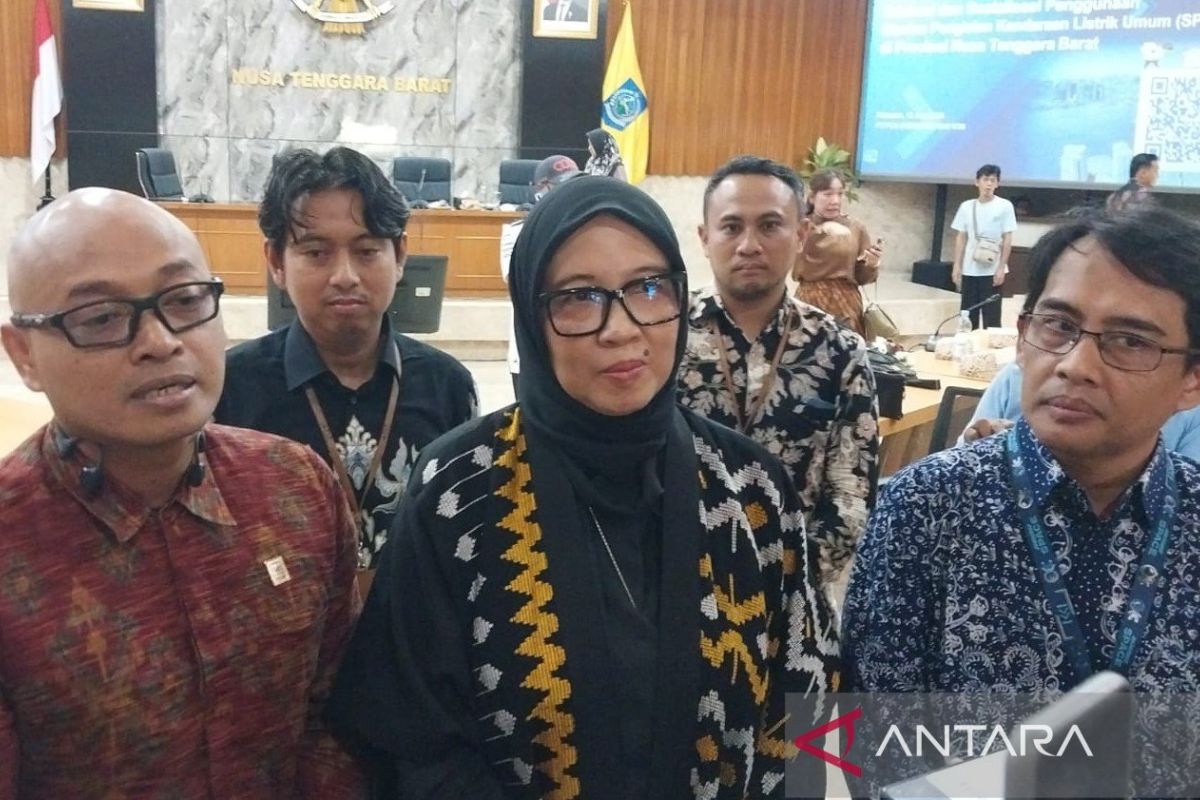
Mataram (ANTARA) - The growth and usage of Public Electric Vehicle Charging Stations (SPKLU) in West Nusa Tenggara has surged dramatically by up to eight times, in line with the increasing presence of electric vehicles in the region.
General Manager of PLN West Nusa Tenggara, Sri Heny Purwanti, acknowledged that the number of SPKLU installations in NTB, both on Lombok Island and Sumbawa Island, has increased from 38 units to 51 units in 2026.
“So the increase has been remarkable over the past year, from 2025 to 2026,” she told reporters after an SPKLU socialisation and education event at the NTB Governor’s Office in Mataram on Friday.
She noted that, based on PLN NTB records, the number of electric vehicles utilising SPKLU services in NTB currently exceeds 500 units.
“From 4,000 KW to 32,000 KW, resulting in an eightfold increase in SPKLU utilisation in NTB,” Heny said.
Heny explained that these SPKLU are distributed almost evenly across districts and cities in NTB, both on Lombok Island and Sumbawa Island.
“So, if you want to know where the locations are, the PLN Mobile application is already available. People can simply search for the locations there,” she explained.
She gave an example that people wishing to travel to East Lombok Regency can immediately see the SPKLU locations, as well as how many vehicles are queuing for charging at the SPKLU.
“That is the level of guidance provided through the PLN Mobile application,” Heny said.
Furthermore, Heny stated that her party also has a robotic application to monitor or supervise SPKLU that experience service disruptions.
“So, every piece of information about SPKLU disruptions is conveyed through the robotic application, and we also already have a team to carry out repairs when problems occur,” she said.
According to her, one SPKLU consists of two charging nozzles (connectors). SPKLU comprises four types of charging power for electric cars. These include standard charging for 2-7 KW, requiring around 8-12 hours.
Next is medium charging for 7-22 KW, requiring around 3-5 hours. Fast charging for 22-30 KW requires around 1-2 hours. Then ultra-fast charging for more than 30-60 KW requires a very short time, only 15-30 minutes.
“For the use of these SPKLU, apart from PLN, we also encourage members of the public who wish to establish SPKLU, whether companies or individuals. For an ultra-fast charging machine, it costs around IDR 400-500 million. So, it depends on the location where it is to be built because each is different, making this a profitable business,” Heny said.
Furthermore, Heny stated that the ideal charging ratio at one SPKLU is 1:10 vehicles. This is to ease queues so they are not too long.
“Why 1:10? To maintain people’s patience while queuing, and this queuing pattern has already been arranged in the PLN Mobile application,” she said.