
SPIEF 2026 Forum Discusses Oil Price Outlook for Next Year
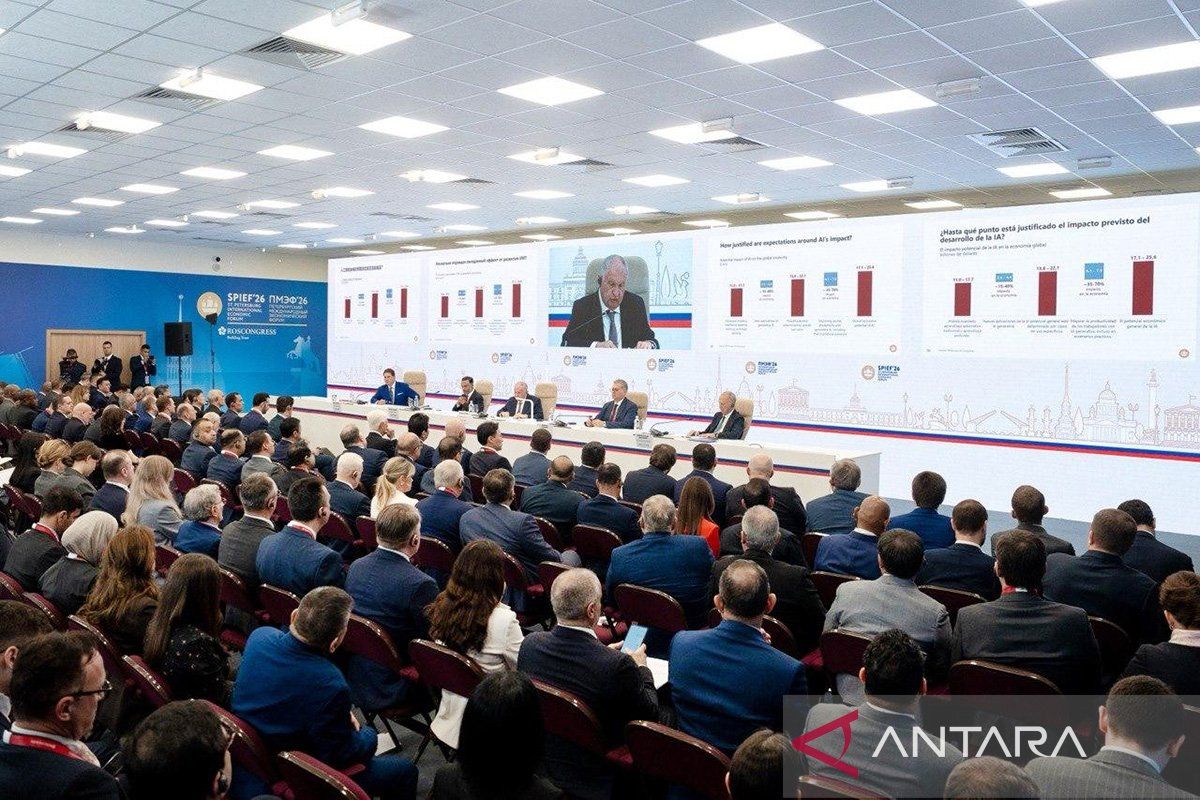
Discussions regarding the direction of global oil prices for the coming year emerged during the St. Petersburg International Economic Forum (SPIEF) 2026, attended by Rosneft Oil Company CEO Igor Sechin, Uzbekistan’s Minister of Energy Jorabek Mirzamahmudov, former International Energy Agency (IEA) Executive Director Nobuo Tanaka, and TOFS Group of Companies President David Gadzhimirzaev.
During the forum, Rosneft CEO Igor Sechin predicted that oil prices will remain at relatively high levels due to the slow recovery of global supply. He noted that the primary factor determining medium-term market trends will be the developing situation in the Strait of Hormuz. “If restrictions related to the conflict in the Strait of Hormuz are lifted now, perhaps by the end of the year, average prices could reach 95-96 US dollars per barrel,” Sechin stated in a written briefing on Monday.
According to Sechin, market equilibrium will not be restored quickly, as significant time and investment are required to return global supply capacity. “It will take about six months to restore positive momentum. Then, within one year, we will likely see prices in the range of 80-85 US dollars per barrel. This is because restoring supply alone requires significant time and investment,” he said. He added that it may not be until the second half of 2027 that the market returns to its fundamental indicators.
For Indonesia, discussions on global oil price prospects are directly linked to national energy security. Global energy market dynamics—including disruptions to strategic trade routes, changes in supply routes, or sanctions against major producers—can impact energy import costs, price stability, and domestic inflationary pressures. As a country with high energy demand, Indonesia faces risks from oil price volatility that affects not only the energy sector but also logistics costs, fuel prices, public purchasing power, and the planning of fiscal and energy subsidy policies.
Sechin further noted that if 7 million barrels of Russian oil exports were added to the 16 million barrels already affected by restrictions, there could be an additional 100 US dollars added to levels of 150-160 US dollars. However, he argued that those proposing new sanctions should consider that Russia will remain capable of maintaining much of its export volume. “It is unlikely their plans will succeed as intended. Higher price levels will offset the decrease in sanctioned volumes. Therefore, they should perhaps not repeat the same mistake, as such steps could backfire,” Sechin remarked, emphasising that current geopolitical uncertainties make energy market directions increasingly difficult to predict.
Similar views were shared by former IEA head and energy expert Nobuo Tanaka, who assessed that the oil market could face significant price surges due to supply shortages in the coming months. “I think prices could reach historic levels, exceeding 170 US dollars per barrel, or even higher, before finally starting to decline. This is a very, very serious situation, and I believe Russia will be a very important player in the context of increasing supply,” said Tanaka.
David Gadzhimirzaev, President of TOFS Group of Companies, highlighted the difficulty of predicting oil prices precisely amidst high global uncertainty. He noted that several of the world’s largest banks, accounting for the impact of the Middle East crisis, project oil prices to range between 78 and 90 US dollars per barrel. Gadzhimirzaev argued that if other shock factors are considered, prices are expected to fall within the 60 to 70 US dollar range, though he emphasised that prices should ideally not drop below the 60 US dollar level.
Source: jawawa.id (https://jawawa.id/newsitem/spief-2026-forum-discusses-oil-price-outlook-for-next-year-1780900694)
Originally published by Antara (Indonesian) (https://www.antaranews.com/berita/5598484/forum-spief-2026-bahas-prospek-harga-minyak-tahun-depan), translated from Indonesian