
Spending the Lunar New Year Touring Temple Festivals in Beijing
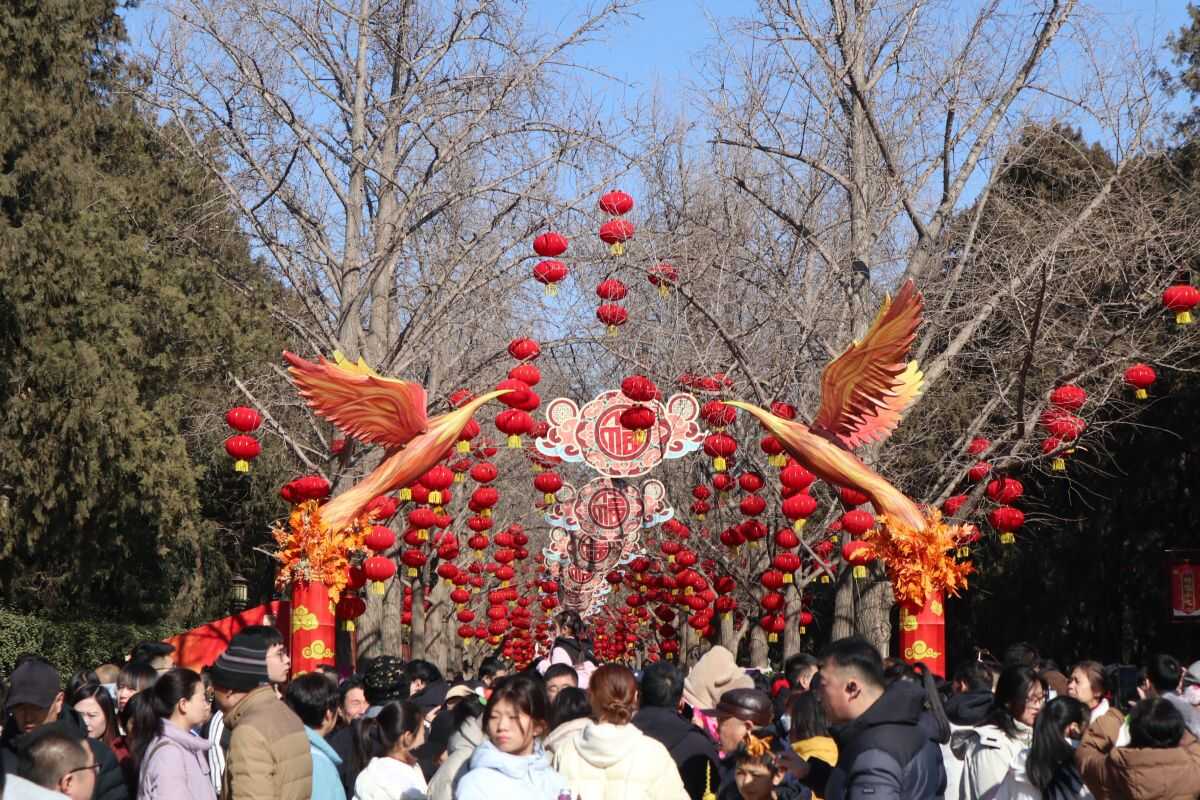
Beijing (ANTARA) - The Spring Holiday, more commonly known as Lunar New Year, is the most special celebration in China — not only because Chinese citizens enjoy more than a week of holiday, but also because of the richness of traditions and culture surrounding the festival.
Historical records trace the origins of Lunar New Year to around 2000 BC, falling on the first day of the lunar calendar established during the reign of Emperor Wu Di of the Han Dynasty.
Although celebrations varied across different imperial eras and numerous mythological accounts exist, they all converge on the figure of “Nian,” meaning “year” in modern Chinese. In ancient times, the word referred to a fearsome creature with a gaping mouth that appeared every New Year’s Eve to terrorise humans.
One day, a warrior who had managed to defeat Nian advised the villagers to hang red paper charms on their doors and set off firecrackers at every year’s end, as the beast detested loud noises and the colour red.
The phrase “guo nian” (过年), originally meaning “survive Nian,” has shifted in meaning to “celebrate the New Year,” reflecting the dual connotation of the character “guo” (过), which can mean both “to pass through” and “to celebrate.”
Red decorations and firecrackers endure to this day, though their function as evil-repelling talismans has largely faded, replaced by more festive activities to welcome the new year — notably temple festivals, particularly in Beijing.
Temple Festivals
Long before they became known as venues for entertainment and commerce, the origins of temple festivals lay in worship rituals performed by ancient agrarian communities to honour nature deities, seeking protection and bountiful harvests.
Music and dance were inseparable elements of these ceremonies, marking the beginning of performances at temple festivals.
Social and economic interactions also began to take shape as people gathered and seized the opportunity to barter goods with one another.
The arrival of Buddhism in China during the first century AD and the concurrent development of Taoism marked a turning point. In their bid to win over the populace, both religions vigorously built temples and created a variety of engaging religious activities.
One such event was the ritual of “行像” (xíng xiàng) — a procession of deity statues adorned on colourful floats parading through the city, accompanied by music, dance, and spectacular acrobatic performances. As a result, temple courtyards and their surroundings transformed into bustling centres where religion, entertainment, and a growing number of traders converged.
The golden age of Beijing’s temple festivals occurred during the Ming Dynasty (1368–1644) and the Qing Dynasty (1644–1911), when these events were no longer solely about religious observance but had evolved into centres for public celebration, social interaction, economic activity, and entertainment for people from all walks of life.
The tradition of “逛庙会” (guàng miàohuì) — leisurely strolling through temple festivals during Lunar New Year — has become deeply rooted in Beijing’s culture and persists to this day.
After being suspended for several decades during the Cultural Revolution, this tradition was revived in 1985 and has since continued to grow into a cultural celebration inseparable from Lunar New Year in modern Beijing.