
Specifications of the B-52 Bomber That Crashed and Killed 8 People in the US
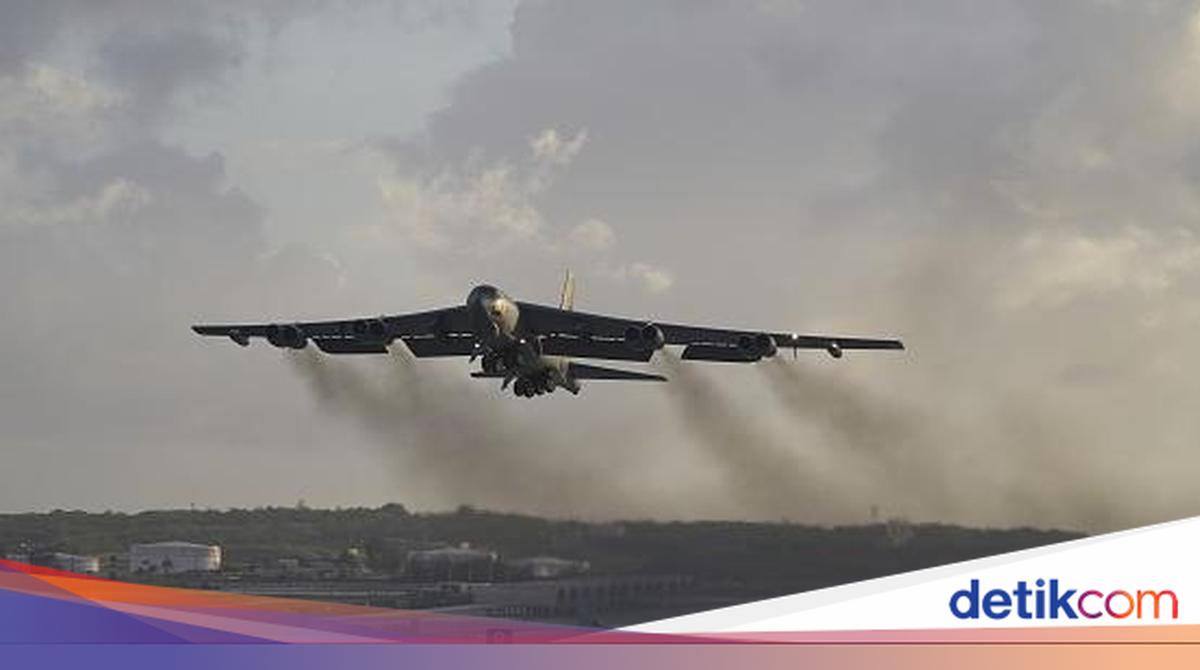
A B-52 Stratofortress bomber crashed shortly after take-off from Edwards Air Force Base, northeast of Los Angeles, United States, killing eight people. The aircraft is one of the US’s strategic defence assets.
According to CNN, the US Air Force website, and Boeing, the B-52 has been the backbone of the US bomber force for more than 60 years. The Boeing-built aircraft can drop gravity bombs, cluster bombs, precision-guided missiles, and joint direct attack munitions. It is also capable of carrying nuclear bombs.
The US Air Force expects to operate the B-52 until 2050. The first B-52A flew in 1954, and the B model entered service in 1955. A total of 744 B-52s were built, with the last, the B-52H, delivered in October 1962. The first of 102 B-52H aircraft was delivered to Strategic Air Command in May 1961. The H model can carry up to 20 air-launched cruise missiles.
Additionally, the aircraft can carry conventional cruise missiles that were launched in several contingency operations beginning in the 1990s with Operation Desert Storm and culminating in Operation Inherent Resolve in 2016. The aircraft’s flexibility was evident in Operation Desert Storm, or the Gulf War, and during Operation Allied Force in Yugoslavia. The B-52 struck wide-area troop concentrations, fixed installations, and bunkers, and decimated the Iraqi Republican Guard. On 2-3 September 1996, two B-52H aircraft attacked power plants and communications facilities in Baghdad with 13 AGM-86C Conventional Air-Launched Cruise Missiles (CALCM) as part of Operation Desert Strike. At the time, this was the longest distance flown for a combat mission, involving a 34-hour, 16,000-mile round trip from Barksdale Air Force Base, Louisiana.
In 2001, the B-52 was used in Operation Enduring Freedom in Afghanistan. The B-52 also played a role in Operation Iraqi Freedom, launching approximately 100 CALCMs during a night mission on 21 March 2003. In 2016, the B-52 returned to the Central Command area of responsibility for the first time in a decade. B-52 aircraft flew approximately 1,800 combat sorties against ISIS forces in Syria and Iraq.
Currently, only the H model remains in Air Force service and is assigned to the 5th Bomb Wing at Minot Air Force Base, North Dakota, and the 2nd Bomb Wing at Barksdale Air Force Base, Louisiana, under Air Force Global Strike Command. The aircraft is also assigned to the Air Force Reserve Command’s 307th Bomb Wing at Barksdale Air Force Base.
The aircraft is equipped with eight Pratt & Whitney TF33-P-3/103 turbofan engines, each producing up to 17,000 pounds, or 7,711 kilogrammes, of thrust. The aircraft has a wingspan of 56.4 metres and a length of 48.6 metres. It stands 12.4 metres tall and weighs 83,915 kilogrammes. The aircraft has a maximum take-off weight of up to 221,353 kilogrammes. Its fuel capacity reaches 141,610 kilogrammes, with a payload of up to 31,751 kilogrammes. The aircraft can reach a speed of Mach 0.88 and has a range of 7,647 nautical miles. It can operate at a maximum altitude of 15,240 metres. The unit price of one aircraft is USD 84 million, or approximately Rp 1.5 trillion.
The B-52 Stratofortress crashed on Monday, 15 June, while on a routine test mission. The aircraft took off at 11.20 a.m. local time from the remote Edwards air base. All eight crew members were reported killed in the incident. “This is tragic and unsurvivable,” Colonel James Hayes said in a press conference. Chief Master Sergeant Joshua T. Skarloken said the team was working to notify the families of the deceased. Boeing, the aircraft’s manufacturer, said two of its employees were on the Monday flight. “The aircrew consisted of a mix of military officials, government civilians, and government contractors,” Skarloken said. The B-52 bomber was conducting tests to support a radar modernisation programme. The crash left a large scorched mark on the sandy runway.