
Speaker Puan Maharani Calls for Total Handling of Bromo Fires
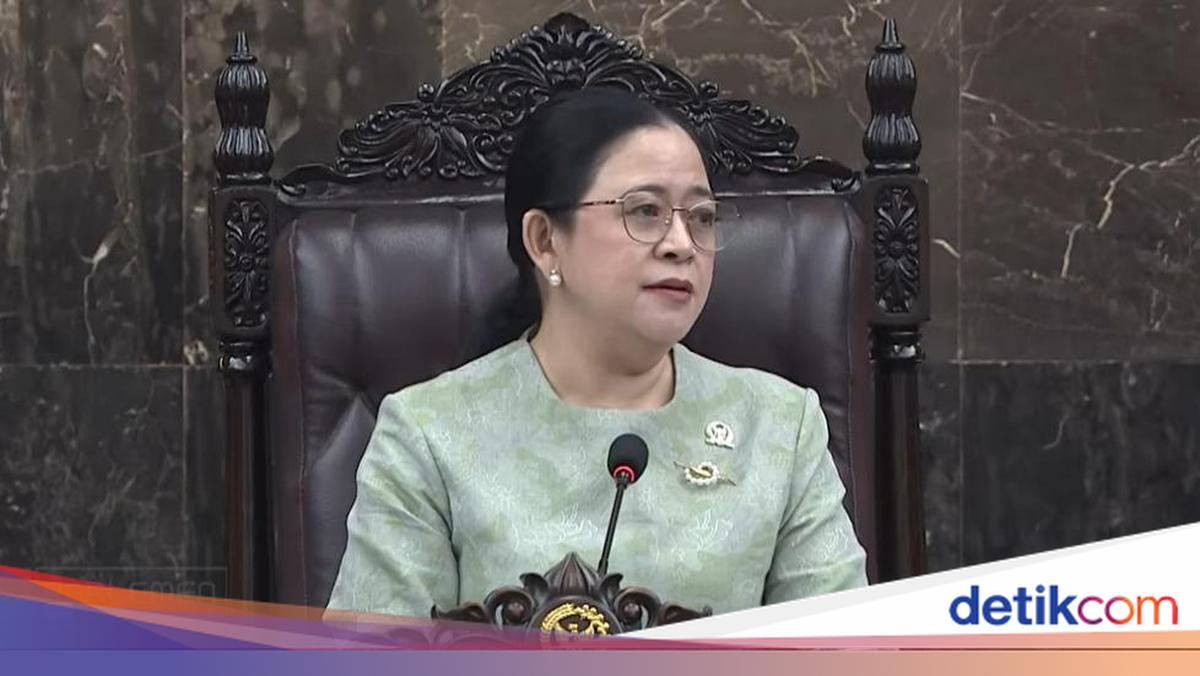
Speaker of the House of Representatives (DPR RI), Puan Maharani, is urging the government to immediately resolve the forest and land fire (karhutla) problem so that it does not threaten public safety. This includes the severe fire in the Mount Bromo area, East Java.
According to Puan, the spread of forest fires is a serious condition that requires the government’s full concentration on fire control, ecosystem protection, and public safety. She said that based on reports, the burned area has reached approximately 520 hectares and all tourist access has been closed.
“The closure of the area is a necessary step to provide maximum space for the extinguishing process and to prevent new risks to tourists,” said Puan in a written statement on Monday (10/8/2026).
As is known, the forest and land fire in the Bromo area, which was reported to have started on Monday last week, has continued to spread, prompting the Bromo Tengger Semeru National Park Agency (TNBTS) to completely close tourist access from Malang, Lumajang, Pasuruan, and Probolinggo regencies.
The fire in the Bromo area over the past week has scorched around 520 hectares of land. As of today, the fire is still known to be burning quite fiercely and has burned a number of dry vegetation in the Bromo area. The difficult-to-reach terrain is one of the obstacles in the firefighting efforts.
Regarding this matter, Puan asked the government to ensure that the forest and land fire extinguishing operation in the Bromo area has a strong single command, adequate personnel and equipment support.
“As well as supervision of all vulnerable points so that fires that have been brought under control do not reignite or spread to other areas,” said Puan.
“The current priority must be clear: extinguish the fire as quickly as possible, prevent the expansion of damage, and protect the surrounding community from its derivative impacts,” Puan continued.
Puan reminded that the government must take effective steps so that ground and air firefighting is directed based on mapping of fire movement, wind conditions, dry vegetation, and areas with high ecological value.
“At the same time, air quality and the potential spread of smoke to residential areas must continue to be monitored,” said the first woman to serve as Speaker of the DPR RI.
Furthermore, Puan asked the government to have a clear map of the level of damage to vegetation, wildlife habitat, soil conditions, water catchment areas, and areas at risk of erosion and further degradation.
According to Puan, the recovery of the Bromo area should not be simplified to merely replanting trees or vegetation.
“The burned area must be divided based on the level of damage and given different recovery interventions, prioritising the regeneration of native vegetation and the restoration of the area’s ecological functions,” said Puan.
Puan also assessed that the total closure of the Bromo area has economic consequences that the government must begin to calculate now. This is because Bromo is one of the leading tourist destinations, so the total closure is considered likely to affect the tourism sector.
“Bromo is an economic ecosystem for communities that depend on income from tourism jeeps, homestays, lodging, trade, culinary businesses, tour guides, transportation, and various small businesses in the buffer villages,” Puan explained.
Therefore, Puan said, the government needs to immediately conduct an assessment of the economic impact of the area closure on households and local business actors.
“So that if the closure lasts a long time, government support can be directed precisely to groups that have truly lost their source of income,” she said.
“Do not let the communities who have been helping to protect and sustain Bromo tourism become the ones bearing the greatest economic burden from this disaster,” Puan added.
In the long term, Puan asked the government to use the Bromo fire as a basis for building resilience standards for nationally strategic natural tourist areas.
“National park areas like Bromo must have fire risk mapping from all aspects, down to the smallest line, because it concerns the preservation of much vegetation and even people’s lives,” she explained.
Puan detailed that the mapping should start from the site level, available firefighting water sources throughout the fire-prone season, early detection systems, standby personnel, activity limits based on fire danger levels, and protocols for protecting the community’s economy when a destination is forced to close.
“And for handling the fire in the Bromo area, it is not enough to simply extinguish the fire and then reopen the tourist destination,” Puan asserted.
“The state must ensure three recoveries run simultaneously: that the fire is truly under control, the damaged ecosystem is restored, and the livelihoods of the surrounding community are protected,” she added.
On the other hand, Puan asked the government to monitor the condition of national parks and other forest areas experiencing forest and land fires. She stressed that public safety must be the top priority.
This was conveyed by Puan following the forest and land fire in Palangka Raya, Central Kalimantan, which continues to spread and has almost reached residential areas.
The strong winds at the fire location have caused the fire on the peatland to spread quickly. As of Friday (7/8/2026), the affected land area in Palangka Raya reached 162.49 hectares. The dry season conditions and the potential for a strong El Niño are expected to increase the risk of fires in Central Kalimantan.
According to Puan, this shows that forest and land fires are no longer merely an environmental issue. Because when fire begins to enter the living space of the community, the problem changes.
“This is no longer an environmental issue, but has become a threat to the safety of residents, assets, health, and the continuity of local economic activities,” Puan explained.
Puan also assessed that forest and land fires in peatland areas require special handling because they have their own level of difficulty, as fire can spread to the subsoil layer and reappear at other points. And what is more worrying, the forest and land fires in Central Kalimantan are not sporadic events but show indications of deliberate action.
“This condition shows that the forest and land fire problem requires a systematic and sustainable approach, not merely an extinguishing operation when the fire has already grown large,” said Puan.
Therefore, Puan encouraged the government to strengthen forest and land fire prevention strategies, especially in areas with high vulnerability levels.
“Including mapping the potential spread of fire, which must be translated into concrete action on the ground. With such a system, resources can be deployed earlier so that fires can be handled before they develop into major blazes,” she explained.
Puan also emphasised the importance of forest and land fire disaster preparedness for communities around the burned areas, considering that severe fires can cause smoke haze that can have a negative impact on health and community activities.
“Local governments must prepare health services and special protection for children, the elderly, pregnant women, and people with respiratory disorders if air quality deteriorates,” said Puan.
“The safety of residents must not only become a concern when the impact of the fire has entered residential areas. Forest and land fires can disrupt community activities, and this must also be an aspect considered in handling forest and land fires,” she concluded.
Source: jawawa.id (https://jawawa.id/newsitem/speaker-puan-maharani-calls-for-total-handling-of-bromo-fires-1786362862)
Originally published by detikcom (https://news.detik.com/berita/d-8612555/puan-maharani-minta-kebakaran-bromo-segera-ditangani-total), translated from Indonesian