
Spain’s Transport Minister Resigns After Train Crash Kills Dozens
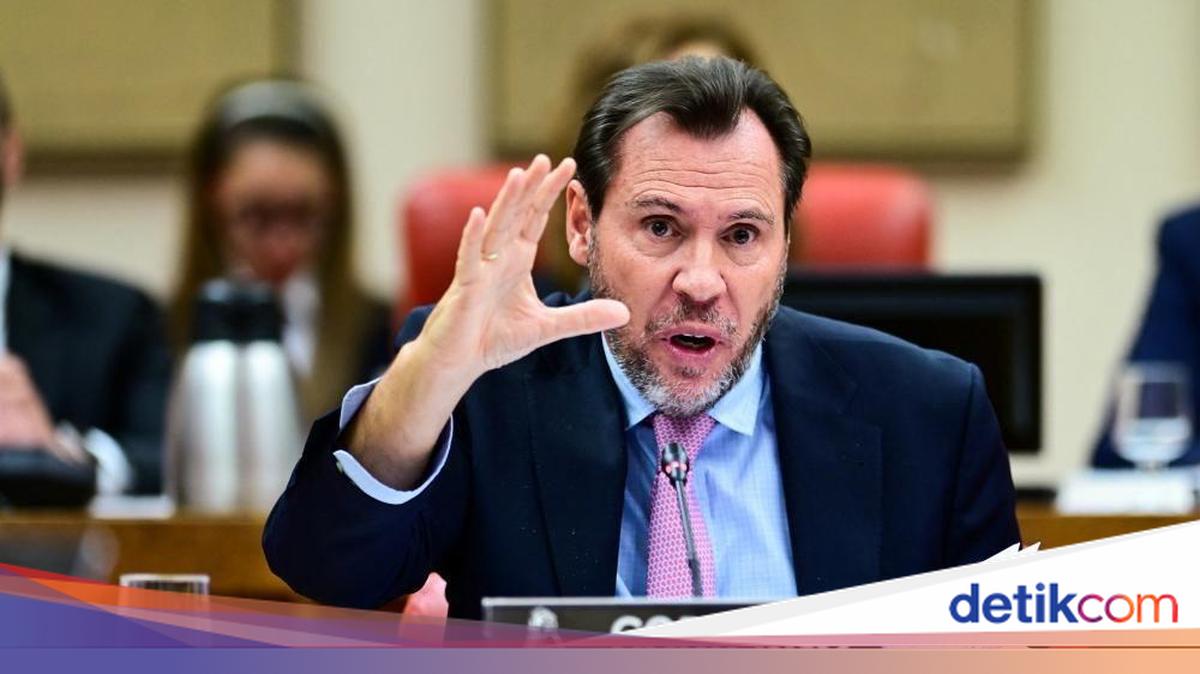
Spain’s Transport Minister, Óscar Puente, resigned on Tuesday evening (3 November), six days after a high-speed train collision killed at least 69 people and injured dozens more.
He announced his decision in Congress after giving an account of the disaster on Wednesday (28 October), near the town of Urda, south of the capital Madrid, where one train struck the rear of a stationary train.
“A transport minister in a country like Spain cannot remain in office after two accidents this serious in less than a year,” he said, referring to a crash in January on the same line that killed 46 people.
Last week’s crash was one of the worst railway disasters in modern European history, and Spain’s deadliest since 2013.
Puente announced his decision at the end of a lengthy congressional session on Tuesday evening, during which he outlined new rail safety measures and faced questioning from the opposition.
“I am not only resigning from my position as transport minister, but … I am also withdrawing my name from the list for the snap legislative election,” he said.
Puente’s position came under immediate scrutiny after the 28 October crash.
The main opposition, the conservative People’s Party (PP), and the far-right Vox party both called for his resignation, as did some government allies.
They argued that the minister should be held accountable for a high-speed rail system that many Spaniards now consider unsafe, and whose credibility Prime Minister Pedro Sánchez, a Socialist, has acknowledged is “damaged”.
The opposition also criticised Puente for appearing to blame human error for the crash, claiming he was trying to deflect responsibility from his own failings.
However, after saying a few days earlier that he would remain in office, his resignation appeared to take many by surprise.
The train crash and Puente’s decision came at a crucial point in Spain’s political calendar, with a snap election scheduled for 29 November.
Many observers see the crash as a major electoral setback for the Socialist-led government, making it unlikely that Sánchez can defy the polls and win the election.
The dilemma facing Puente was also a dilemma for the prime minister. If Puente refused to resign, the government risked being seen as insensitive in the wake of the crash; but his resignation could also be regarded as an admission that he and the government were responsible.
In the end, Puente chose the latter option, insisting that his decision was driven by “political dignity”.
The prime minister praised his colleague for having “faced the situation, provided answers and solutions, and then resigned”.
“For dignity. Of his own accord. As a mark of respect for the victims,” Sánchez added.
Many Spaniards will now wonder whether Puente’s successor can restore confidence in the country’s rail system.
The crash on Wednesday (28 October) involved a train operated by state-owned company Renfe, carrying 397 passengers, and a stationary train carrying 147 passengers. The stationary train was operated by private company Iryo.
A computer fault that disrupted the automatic signalling system had brought all trains on the affected line to a stop.
Leaked audio recordings published in Spanish media shortly after the crash captured conversations between train drivers and the control centre in the minutes before the disaster.
Three recordings of conversations between Madrid’s control centre and the two train drivers appear to show that the Renfe train was authorised to move even though another train had stopped on the tracks about 25 kilometres ahead.
In one recording, a control-centre operator is speaking to the driver of the Renfe train, who is experiencing technical difficulties.
After several exchanges, the operator tells the driver to continue.
“Continue your journey and then proceed under [the Lateral Signal Block], at normal speed and under normal operation,” the operator says.
“At normal speed?” the driver asks.
The controller replies: “Yes.”
The Lateral Signal Block is a backup system used when automatic signalling or data transmission systems fail.
In another audio recording, the driver of the stationary Iryo train says that communication with the train control system has been lost and that the train is not moving.
“The train is stopped in front of the entry signal at Urda,” the driver tells the control-centre operator. After a series of exchanges, the driver is told to “continue” as normal.
According to a later recording, the Iryo driver contacts the control centre again and says they cannot operate the train.
“The train won’t let me operate the [safety] system. That’s why I’m still stopped in front of the entry signal,” they say.
The final recording indicates that the traffic controller had been informed that the Iryo train remained stationary as the Renfe train approached.
Iryo said its carriages had been “struck from behind” by another train.
Source: jawawa.id (https://jawawa.id/newsitem/spains-transport-minister-resigns-after-train-crash-kills-dozens-1793793166)
Originally published by detikcom (https://news.detik.com/bbc-world/d-8738440/menhub-spanyol-mundur-buntut-kecelakaan-kereta-tewaskan-puluhan-orang), translated from Indonesian