
SpaceX Successfully Launches Starship V3, the Most Powerful Rocket in History, Setting a New Record
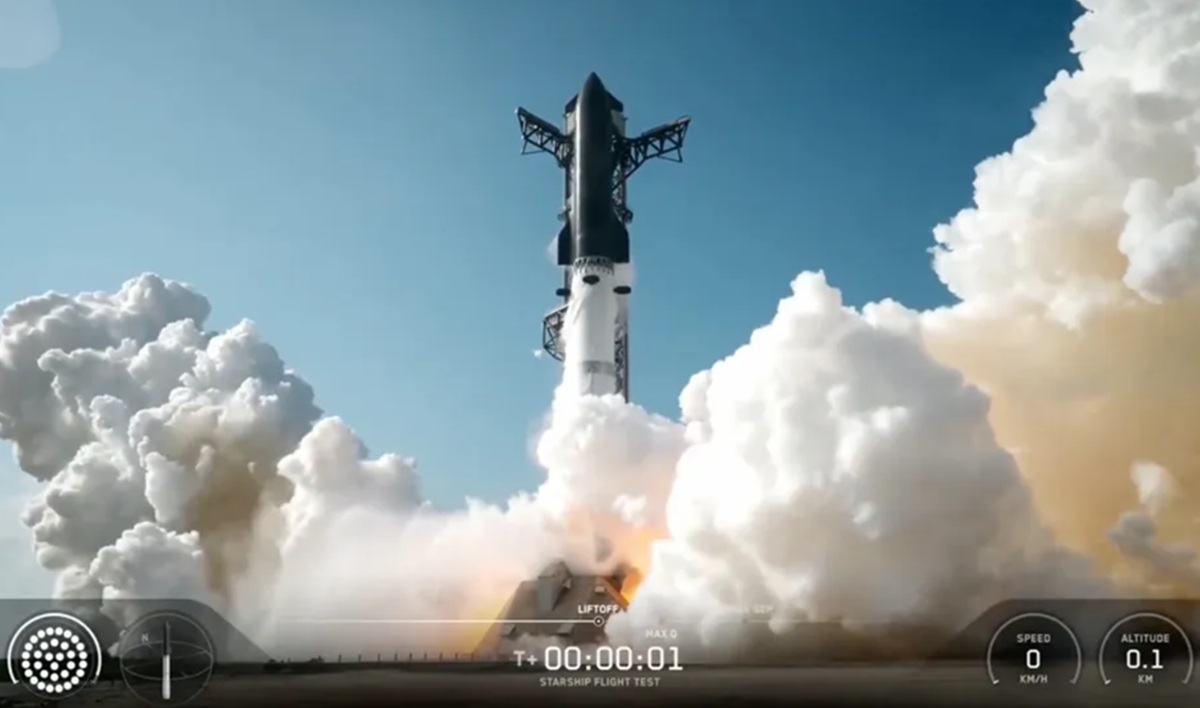
The most powerful rocket in history has just lifted off from its pad in a spectacular display of power and technology. SpaceX successfully launched the latest version of their colossal rocket, Starship, on Friday local time.
The launch took place from a second pad recently completed at the Starbase manufacturing and testing facility in South Texas. The 124-metre-tall vehicle rose at 18:30 Eastern Daylight Time to undertake the 12th suborbital test flight. It was Starship’s first mission since October 2025 and also the first flight of Starship Version 3 (V3), the latest generation featuring a total redesign aimed at operational missions in the future.
“Congratulations to the SpaceX team on the epic first launch and landing of Starship V3!” wrote SpaceX CEO Elon Musk on his X account. “You have scored a goal for humanity.”
However, the flight path was not without technical challenges. At liftoff, one of the 33 Raptor engines on the first stage of the Super Heavy booster failed, depriving the booster of critical thrust to control its return to Earth. Additionally, the upper stage (Ship 39) lost one of its six engines during ascent, although it ultimately reached space with five engines operating.
“I won’t call it a nominal orbit insertion, but we are on a path we analysed, and it’s within tolerances,” SpaceX spokesman Dan Huot said in a livestream. “So the team continues to work through it with one engine out.”
About 2 minutes 20 seconds after liftoff, the hot staging method (rocket stage separation) was accomplished. The Super Heavy booster then fell and struck the waters of the Gulf of Mexico. This step was deliberately chosen to ensure a controlled splashdown in the water to avoid damage to the new launch pad.
In this mission, Starship carried 22 payloads, including two Starlink satellites equipped with cameras to inspect the rocket’s heat-shield tiles before re-entering Earth’s atmosphere. After spending about 50 minutes in space, Ship 39 began its re-entry sequence, firing two engines to simulate a landing burn, before tipping over and exploding in the ocean as planned.
The mission represents a critical step for SpaceX, given NASA’s reliance on Starship as one of the lunar landing vehicles for the Artemis 3 program targeted for mid to late 2027.
“Congratulations to the SpaceX team and Elon Musk on the remarkable Starship V3 launch,” NASA Administrator Jared Isaacman wrote, witnessing the launch on-site. “One step nearer to the Moon… one step nearer to Mars.”