
SpaceX Rocket to Crash into Moon, Exposing Absence of Damage Regulations
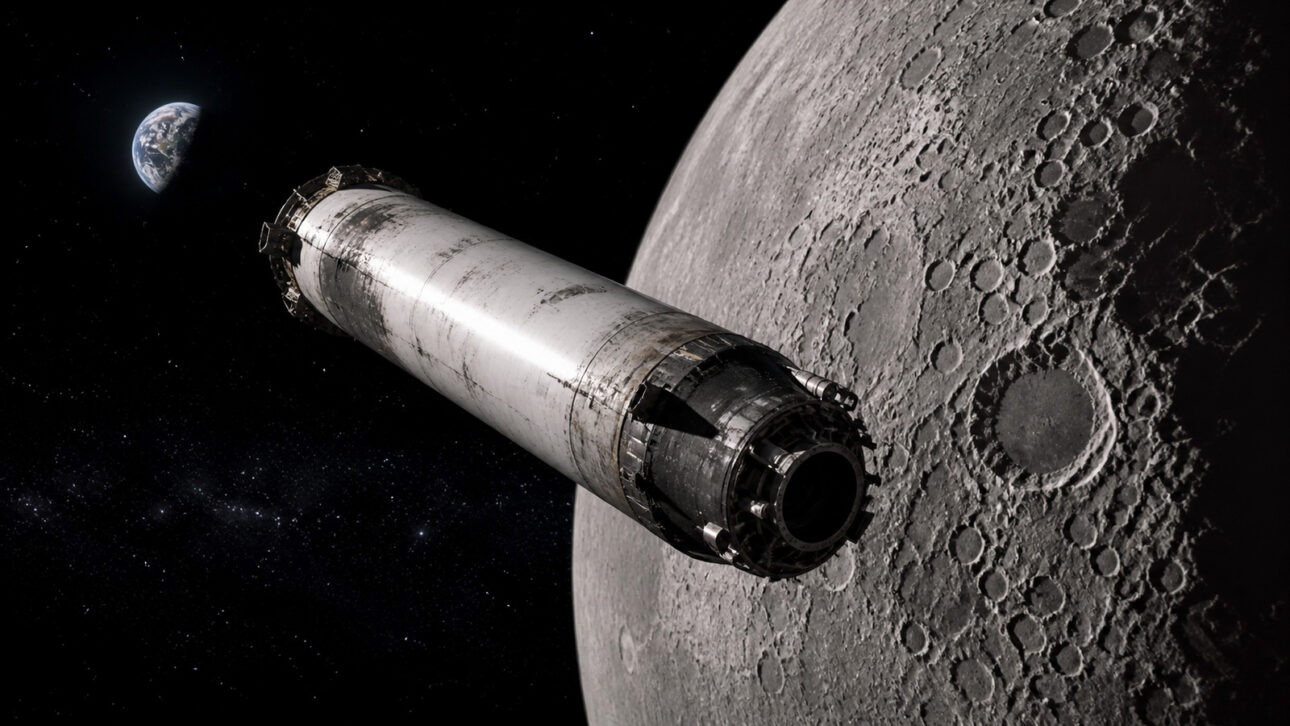
A spent section of a SpaceX rocket is expected to strike the Moon’s surface on 5 August 2026. Although the collision, at a speed of 8,700 km/h, poses no direct danger, the event has raised significant concern over the unpreparedness of international regulations to govern human activities and their environmental impact on the Moon.
The rocket, which carried two commercial lunar landers in early 2025, ran out of fuel to return to Earth or venture further into space, and gravity ultimately pulled it onto a fatal collision course.
For astronomers, this accidental event offers a rare scientific opportunity, as researchers will have the chance to observe the process of crater formation and the behaviour of lunar dust, known as regolith. The impact is projected to produce a crater 20 to 30 metres wide and hurl a cloud of dust several kilometres into the sky.
On the other hand, the event underscores the fact that anything that happens on the Moon will persist almost indefinitely. Unlike Earth, which has an atmosphere and weather, the Moon’s static environment means impact scars, new craters, and even the footprints of Apollo programme astronauts from 57 years ago remain intact for thousands of years.
Without clear rules, physical damage from accidents of this kind threatens historic sites and precious scientific assets belonging to all of humanity.
The SpaceX rocket incident, which will land in an isolated area such as the Einstein Crater, will alter the Moon permanently and expose a gaping hole in space governance.
The 1967 Outer Space Treaty does indeed prohibit territorial claims on the Moon and designates it as a public domain for shared exploration. However, the international legal document contains almost no guidance on environmental protection or operational rules.
The Moon has no environmental protection mechanism equivalent to UNESCO on Earth, meaning fundamental decisions about physical changes to the Moon currently rest in the hands of private entities or individual states without global coordination.
Nevertheless, under applicable law, the United States government bears full responsibility for the actions of domestic companies such as SpaceX. If an accident damages infrastructure worth millions of dollars, scientific experiments, or historic sites, the consequences could extend to financial losses, criminal liability, and even diplomatic tensions between nations.
To keep pace with the rapid growth of commercial activity and research stations on the Moon, the international community is being urged to make use of existing legal instruments. One proposed solution is the establishment of a voluntary operational registration system for the Moon, through which states and companies could share activity plans, infrastructure locations, and cultural sites to prevent clashes between missions. In addition, a standard early-warning system for lunar operators is needed to designate landing zones, vehicle routes, and dust-risk activities before launch.
The Fourth United Nations Conference on the Space Law Framework — formally the UN Conference on Outer Space — is hoped to be convened soon as an official forum to realise these safety instruments, as preventing future space accidents will depend heavily on the readiness of diplomats and space law experts.