
SpaceX Rocket Hits Moon, Experts Warn of Risks to Human Settlement
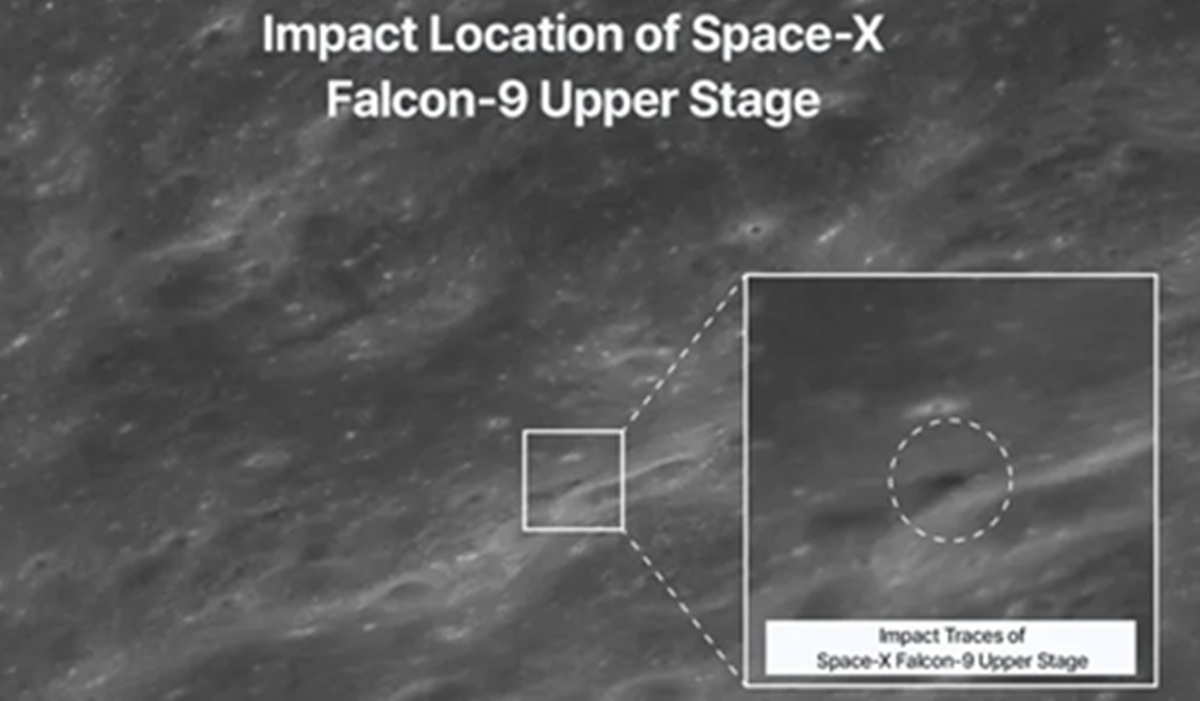
The impact of a 4.5-tonne Falcon 9 rocket remnant from SpaceX on the Moon’s surface on 5 August 2026 has once again highlighted the hidden dangers facing the future of space exploration. The rocket debris, launched on 15 January 2025, struck an area near Einstein Crater at approximately 8,690 km/h after wandering in space for more than a year.
Although the impact caused no damage to existing facilities, the uncontrolled incident underscores a serious threat to plans for building permanent settlements on the Moon. Without an atmosphere to slow falling objects, impacts from man-made objects trigger tremors and high-velocity ejecta of dust and rock fragments that spread over great distances.
British aerospace engineer Dean Sladen warned that spent rocket boosters left drifting now pose a real threat. “As space agencies and private companies build permanent infrastructure on the Moon, uncontrolled rockets evolve from a minor nuisance into a genuine operational risk,” Sladen said.
According to Sladen, the risk comes not only from direct impact. “A direct hit is clearly the worst-case scenario, but distant impacts also produce ground shaking and high-velocity material ejections that can damage sensitive equipment over time,” he explained.
He added that the effects of such material ejections could threaten physical safety on the lunar surface. “While this is not a major threat to current isolated missions, as we build permanent lunar infrastructure, high-velocity ejecta pose a real hazard to surface habitats, solar panels, and working astronauts.”
Before the impact occurred, the movement of the SpaceX rocket remnant had raised concerns about a potential collision with South Korea’s lunar orbiter, Danuri. Senior researcher at the Korea Aerospace Research Institute (KARI), Eunhyeuk Kim, revealed that his team had been monitoring the threat well in advance. “We became aware around the end of June that there was a Falcon 9 upper stage heading towards the Moon, and we also knew it would be close to Danuri,” Kim said. Fortunately, an orbit adjustment manoeuvre performed by Danuri in mid-July placed the orbiter in a safe position when the incident occurred.
The location of the new crater resulting from the collision was successfully captured by the Danuri orbiter and NASA’s Lunar Reconnaissance Orbiter (LRO). In addition, several observatories on Earth, including the Very Large Telescope (VLT) in Chile and the Lowell Discovery Telescope in Arizona, managed to detect the emergence of clouds of sodium and lithium gas rising from the rocket’s hard impact.
To minimise the risk of similar incidents in the future, experts are urging the global space industry to immediately establish strict de-orbit protocols or designate specific impact zones so that spent rocket boosters fall far from human facilities and activities on the Moon.