
Space Race Intensifies: Will the Moon Become a New Rubbish Dump?
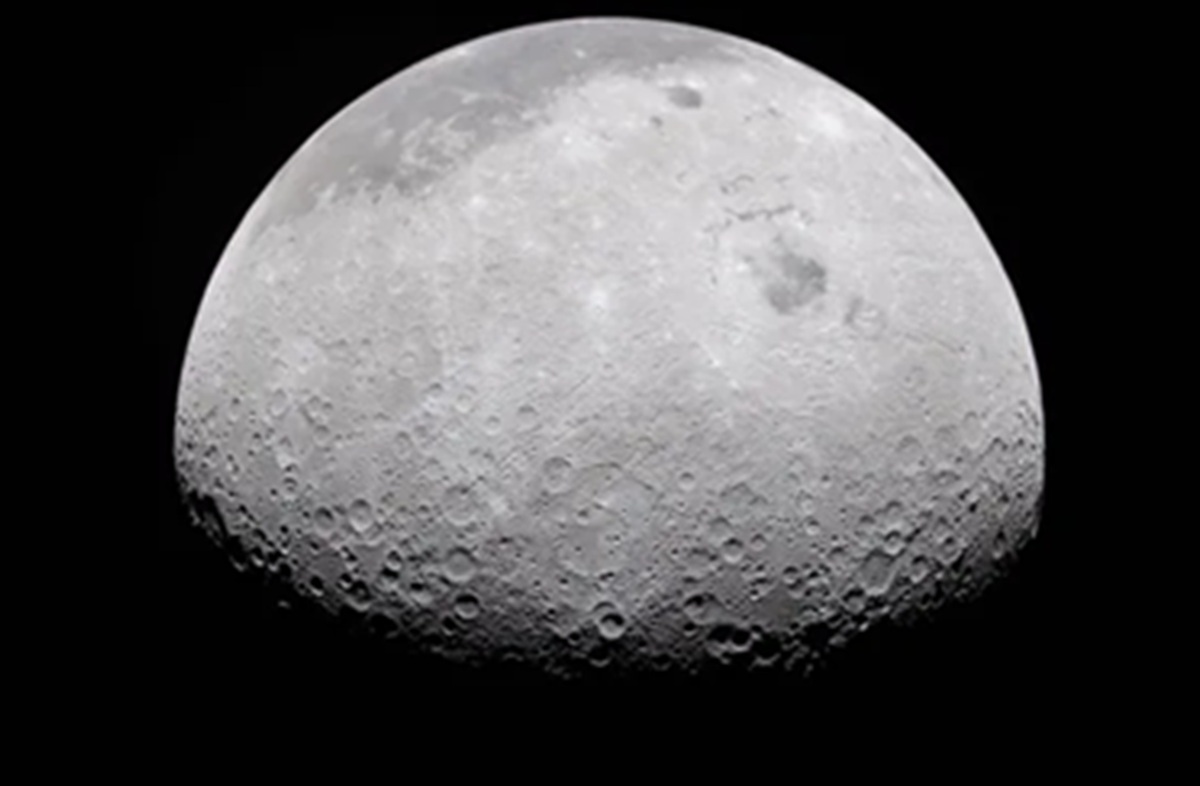
The upper stage of a Falcon 9 rocket, weighing around 4,000 kilograms, struck the surface of the Moon on Wednesday (5/8/2026). The collision sent up a cloud of lunar regolith dust large enough to be observed from Earth. The event adds to the growing list of man-made materials scattered across Earth’s natural satellite.
To date, around 200 tonnes of material originating from Earth has fallen or been deliberately left on the Moon since the early era of space exploration. Some of the material holds significant historical value, such as the landing modules from six Apollo missions, the Soviet Union’s Lunokhod rovers from the 1970s, and China’s Yutu 1 and 2 robots. However, many objects have also fallen there unintentionally, such as rocket remnants abandoned in orbit between Earth and the Moon.
Astronomer and space historian Jonathan McDowell believes the increasingly intense level of space activity risks worsening the situation. “We are in a period of transition. From an era when lunar exploration was rare and dominated by the US and the Soviet Union, we are now seeing other countries and commercial missions begin to land on the Moon. But governance has not been able to keep pace. We do not yet have a set of international agreements on how to operate around the Moon,” said McDowell.
Legally, human activity on the Moon is governed by the United Nations Outer Space Treaty of 1967. Policy officer at the Royal Astronomical Society in the UK, Marieta Valdivia Lefort, explained that Article IX of the treaty obliges every country to avoid harmful contamination. However, the threshold for such contamination has not been specifically defined. “The Outer Space Treaty does not define when contamination becomes ‘harmful’. The regulation does not set a limit on the amount of waste, does not create official disposal sites, and does not require every object on the Moon to be transported back,” Lefort wrote via email.
Although the Moon has a surface area of around 38 million square kilometres, its low gravity (about 17% of Earth’s gravity) causes impact dust to travel far and take a long time to settle. McDowell cautioned that this dust ejection is a continental-scale event that could disrupt scientific experiments and instruments at future human bases. Furthermore, falling rocket debris risks damaging natural geological evidence that has not yet been studied.
Space law expert from Bond University Australia, Gregory Radisic, added that the Falcon 9 incident serves as an important moment to discuss responsible behaviour in outer space. “It is not because of good planning that this did not hit anything important. It is purely by luck that we are only discussing theoretical problems and have not lost experiments worth millions of dollars or important scientific research sites,” said Radisic.
The Falcon 9 rocket that struck the Moon had previously been abandoned in high Earth orbit in January 2025 after delivering Firefly Aerospace’s Blue Ghost lander and ispace’s Resilience. Since that launch, SpaceX has pushed the remnants of their lunar mission rockets further into orbit around the Sun to avoid unexpected collisions.
“I hope we see new norms develop, and that what we see now is no longer the way rocket remnants are disposed of in the future,” said McDowell.