
Space Debris Is Building Up, and People Are Beginning to Feel the Consequences
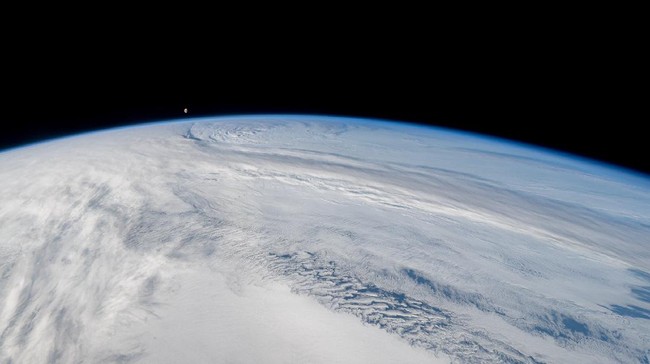
Jakarta, CNBC Indonesia — Earth is now surrounded by millions of fragments of space objects travelling at extremely high speeds. A problem long considered to be far above us is beginning to affect people on the ground directly, and the situation is getting worse over time.
According to the latest data released by the European Space Agency, hundreds of millions of fragments from satellite and spacecraft launches are currently orbiting Earth.
The smallest fragments are also the most numerous, numbering in the hundreds of millions, while there are more than a million medium-sized objects.
Tens of thousands of objects larger than 10 centimetres are now being tracked. Of all the satellites orbiting Earth, only a small proportion are still functioning properly. The rest are inactive and have become debris hurtling through space.
Each object travels at speeds of tens of thousands of kilometres per hour, meaning that even a tiny fragment could destroy an operational satellite in a collision. A collision between two large objects could create thousands of new fragments, which could then hit other objects and trigger a chain reaction of damage, potentially making certain orbital regions entirely unusable.
Researchers warn that the amount of debris will continue to grow even if no new satellites are launched from today onwards.
The effects of this accumulation of space debris are now beginning to be felt directly on Earth. Positioning signals, weather forecasts and communications systems that rely on satellites could be disrupted if equipment in space is damaged. Astronomers’ observations are also increasingly hindered: reflected light from objects in orbit leaves bright trails that obscure important data collected by telescopes.
When these objects re-enter the atmosphere and burn up, the residue releases metal particles whose long-term effects on the climate and human health are not yet fully understood. In addition, safe space for launching new satellites is becoming more limited as increasing numbers of objects cross launch paths.
Plans for a near-term increase in satellite numbers are prompting fresh concern. Satellite internet technology companies intend to place tens of thousands or even hundreds of thousands more satellites in Earth’s orbit, which would sharply increase congestion in space.
Alongside SpaceX’s Starlink, led by Elon Musk, there is Amazon’s Kuiper, Europe’s OneWeb and new operators from China.
Although developers say they have prepared collision-avoidance systems and designs that will ensure satellites descend and burn up in the atmosphere at the end of their operational lives, the existing debris will remain in orbit and cannot disappear on its own.
Various clean-up efforts are being designed and tested. One involves developing a specialised spacecraft to capture defunct satellites in orbit and direct them to burn up over a vast ocean, with the first clean-up mission planned for the coming years.
Researchers have also proposed a launch bond system, under which companies sending satellites into space would deposit a sum of money that would be returned only if the satellite is safely brought down or destroyed after it is no longer in use.
The sky, once clear and free of traces of human activity, is now filled with the remnants of our civilisation. This problem will not disappear with time, and if it is not addressed seriously, future generations will inherit a sky that is no longer a place of exploration and hope, but one that is hazardous and increasingly difficult to access.
Effects on people
When satellites or other space objects fall into the atmosphere, most of their structure burns up. However, the process releases fine aluminium oxide particles that remain suspended at altitudes of tens of kilometres.
Research published in the Journal of Geophysical Research: Atmospheres warns that if the amount of debris re-entering the atmosphere reaches 10,000 tonnes a year, tens of thousands of tonnes of this dust could have accumulated over the polar regions, both north and south, by 2040.
These particles could interfere with the way the ozone layer absorbs heat and processes solar radiation. Located 15 to 50 kilometres above the ground, the ozone layer protects all living things from harmful ultraviolet rays. Dust from burning space debris could slow the layer’s recovery and even widen the ozone hole that forms over Antarctica each spring.
The accumulation of these particles could also alter heat absorption patterns in the upper atmosphere. Models indicate that this change could raise or lower temperatures in the South Polar region by around 1.5 degrees Celsius. Even a small temperature change at that altitude could shift the strength of the polar vortex, a large-scale air circulation pattern that shapes winter weather in the hemisphere.
If the vortex weakens or shifts, regions with normally temperate climates could experience extreme weather more frequently, including very low temperatures or stronger-than-usual storms.
The threat comes not only from debris falling to Earth, but also from debris that remains in orbit. Satellites used to monitor storms, sea temperatures and wildfires now have to make repeated manoeuvres to avoid collisions. Each change of course temporarily interrupts observational data and consumes limited fuel.
Records show that just three of NASA’s Earth-observation satellites have made hundreds of avoidance manoeuvres since 2005, meaning that crucial weather data has at times been incomplete.
Source: jawawa.id (https://jawawa.id/newsitem/space-debris-is-building-up-and-people-are-beginning-to-feel-the-consequences-1794318636)
Originally published by CNBC Indonesia (https://www.cnbcindonesia.com/tech/20261110135358-37-783892/sampah-menumpuk-di-langit-manusia-mulai-rasakan-akibatnya), translated from Indonesian