
Soybean Self-Sufficiency Accelerated, Amran Targets Production of 5 Tonnes per Hectare
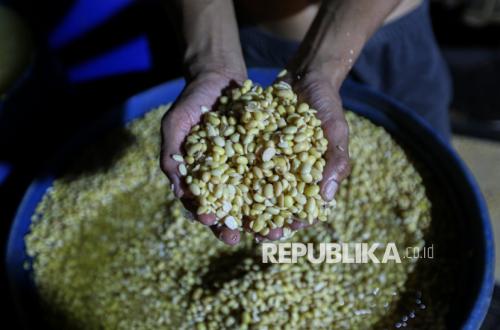
Agriculture Minister Andi Amran Sulaiman is targeting national soybean productivity to reach a minimum of 5 tonnes per hectare through strengthened research and collaboration with the National Research and Innovation Agency (BRIN). The target is part of the government’s efforts to accelerate self-sufficiency in strategic commodities that still depend on imports. The target was conveyed following the signing of a memorandum of understanding (MoU) between the Ministry of Agriculture and BRIN. The cooperation includes strengthening research, utilising research facilities, and downstreaming innovation to increase agricultural sector productivity. “For me, if I were to ask, at least 5 tonnes. But 3 tonnes, 4 tonnes is already good,” said Amran when answering questions about the soybean productivity target from the research collaboration in Jakarta, Tuesday (9/6/2026). The minister explained that the government is beginning to focus on commodities with high demand and the potential to improve farmers’ welfare. After rice and maize production showed positive developments, the government’s attention is now directed at soybeans, garlic, cocoa, cashew nuts, and sugarcane. According to him, the development of these commodities will be supported by stronger research, the presence of researchers in the field, and the use of technology to produce more productive varieties and cultivation methods. “First, rice is done. Maize is already self-sufficient for feed. Going forward, we focus on soybeans, garlic, cocoa, cashew nuts, sugarcane, and so on, which have high demand globally and can quickly improve farmers’ welfare,” said Amran. The government is also preparing budget support to oversee the programme. Assistance will not only be carried out on a trial scale but will be directly applied in production centres with farmers. Amran explained that commodity development is carried out based on the advantages of each region. For garlic, for example, the government has mapped out potential areas such as Sembalun in West Nusa Tenggara, North Sumatra, and Temanggung in Central Java. Researchers will be deployed directly to the locations to oversee aspects of cultivation, water management, and the application of production technology.