
Sowing Hope in Mangroves
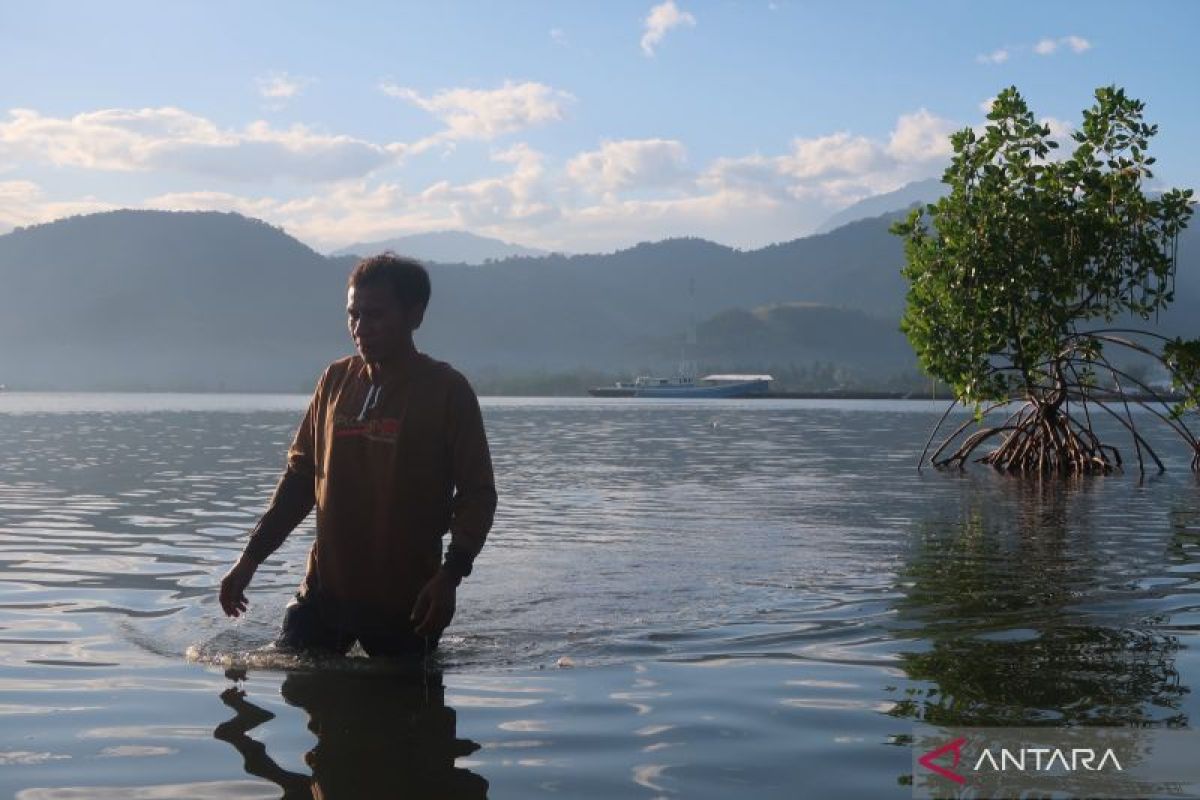
Sumbawa (ANTARA) - Muhamad Isnaini treads upon coral mounds as the tide slowly recedes due to the earth’s rotation and the gravitational influence of the moon in Labuhan Alas Village, Alas District, Sumbawa Regency, West Nusa Tenggara.
His hands occasionally touch the leaves of mangrove trees, two metres high, growing between houses and fishponds, as he begins to explain the various benefits of mangrove plants for the environment and the lives of coastal communities.
“Mangrove roots, especially from the Rhizophora species, are used by the community as an ingredient to make Sumbawa Oil,” said the 53-year-old man, during mangrove planting activities in Sumbawa on 7 July 2026.
Sumbawa Oil is a traditional herbal concoction from West Nusa Tenggara made from dozens of forest wood roots and coconut milk. The oil is used for massages, relieving muscle pain, treating itching, and healing wounds.
Isnaini, as the Coordinator of the Sumbawa Mangrove Community, shared that a grilled fish dish with a sour flavour known as Sepat Sumbawa also utilises Rhizophora mangrove roots.
Unlike Sumbawa Oil, which utilises older mangrove roots, Sepat Sumbaya uses young, soft roots that have not yet reached the soil surface. These roots are processed into a seasoning that provides a distinctive flavour to the traditional dish.
The lives of the local community, which are intertwined with mangroves, demonstrate that coastal ecosystems are not merely natural fortresses, but also part of cultural identity and a source of livelihood.
Beyond economic and cultural benefits, mangroves play a much larger ecological role. Mangrove forests serve as habitats for various types of fish, shrimp, crabs, and shellfish that are the primary source of income for fishermen. The lush mangrove roots also function as nurseries for marine biota before they migrate to deeper waters.
Since 2014, the Sumbawa Mangrove Community, consisting of 100 members, has been planting mangroves along the coastal areas of Sumbawa Regency. This action aims to improve the condition of the coastal environment.
The expansion of maize plantations into forest areas has impacted coastal regions. Chemical fertilisers, pesticides, and herbicides are washed away by rain into lowlands and rivers, eventually flowing into the sea, damaging coral reefs and poisoning fish.
Small-scale fishermen who lack advanced fishing gear are the most vulnerable group when coastal ecosystems are damaged. They are forced to sail much further out to sea to catch fish.
Mangrove trees growing along the coast play a role in filtering harmful chemicals—the result of extractive agricultural activities—to prevent them from polluting the sea.
Ecological Repentance
For coastal residents, the act of planting mangrove seedlings carries substantive meaning regarding the effort to preserve cultural heritage, protect livelihoods, and contribute to climate change mitigation efforts.
Minister of Environment Mohammad Jumhur Hidayat stated that mangrove trees can absorb five times more carbon than terrestrial tropical forests. Carbon is not only stored in the trunks and leaves but also accumulates in the muddy soil layers for decades or even hundreds of years. Mangrove rehabilitation is a key element in reducing ecosystem-based climate change risks.
The Ministry of Environment is promoting a national-scale ‘ecological repentance’ movement through mangrove rehabilitation actions, recognising that Indonesia is a maritime nation. This strategic step aims to face various challenges arising in coastal areas.
The threats of climate change cause sea-level rise, ocean acidification, and coral reef damage, which significantly impact archipelagic nations. Mangrove trees, with their very strong root systems, are capable of protecting land from abrasion, dampening wave and storm energy, reducing seawater intrusion into the land, and even buffering the impact of tsunamis.