
Southwest Papua Governor: Every Village Must Have Access to Electricity
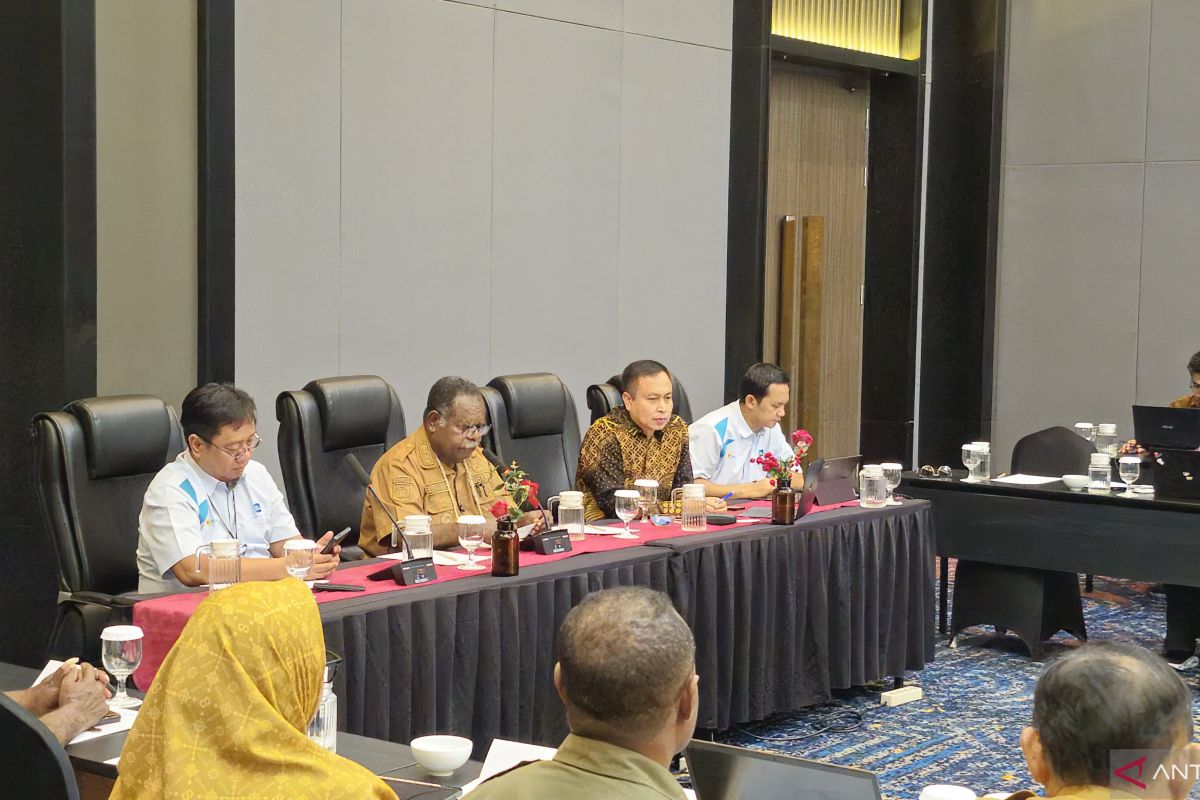
Sorong (ANTARA) – Southwest Papua Governor Elisa Kambu has stressed that every village in the province must have access to electricity to promote more evenly distributed development and improve people’s welfare, particularly in remote areas.
She said regencies and municipalities needed to coordinate and compile data on electricity requirements in their respective areas, especially in villages without electricity and the number of households that had yet to receive a connection.
“We hope regents and mayors can confirm which villages do not yet have electricity, including the number of households without connections, so that these needs can be proposed and accommodated,” she said after a coordination meeting with PLN in Sorong on Tuesday.
According to Kambu, Southwest Papua’s geography—spanning mainland, mountainous and island areas—poses particular challenges to developing conventional electricity networks.
Alternative approaches are therefore needed, including the construction of solar power plants (PLTS), either communal or individual, to reach communities that are difficult to serve by extending the PLN network.
She recommended prioritising communal solar power plants in villages with relatively large concentrations of residents, making their management and maintenance easier.
“Where there is a fairly large concentration of residents, it is better to have a centralised system so that maintenance is easier. Our experience is that when units are spread out individually, they are sometimes not secure and can be moved easily,” she said.
Individual solar power systems, meanwhile, could be used in specific locations such as homestays or businesses that have the capacity and willingness to maintain them independently.
Kambu said ensuring equitable access to electricity was a shared responsibility involving PLN, the central government through the Ministry of Energy and Mineral Resources (ESDM), and local governments at provincial, regency and municipal levels.
“We hope the network will be built by PLN. Connections can be the responsibility of PLN or the Ministry of Energy and Mineral Resources, but they can also be provided by local governments, whether provincial, regency or municipal. We have been doing this,” she said.
Earlier, state-owned electricity company PT PLN (Persero), through its Southwest Papua Electricity Project Implementation Unit (UP2K), set a target of bringing electricity to all 447 villages in the province that are not yet served by PLN by 2029.
UP2K Southwest Papua Manager Deskiniel said that of the province’s approximately 1,013 villages, 447 still lacked PLN electricity services.
“To accelerate equal access to electricity, PLN has prepared three schemes: conventional electricity network construction, communal solar power plants and individual solar power plants,” he said.
In 2026, PLN plans to roll out electrification programmes in around 86 villages using the three schemes. Conventional network construction is planned for 39 villages across Sorong, South Sorong, Tambrauw and Maybrat regencies.
Communal solar power plants are also planned for seven villages, with completion targeted for around June 2027. Another 40 villages are expected to receive electricity through individual solar power systems, with work forecast to be completed by March 2027.
He expressed hope that support from local governments and Indigenous communities would facilitate electricity infrastructure construction and help achieve the goal of providing access across Southwest Papua by 2029.
Source: jawawa.id (https://jawawa.id/newsitem/southwest-papua-governor-every-village-must-have-access-to-electricity-1793703408)
Originally published by Antara (Indonesian) (https://www.antaranews.com/berita/5829075/gubernur-pbd-semua-kampung-harus-mendapatkan-akses-listrik), translated from Indonesian