
Southeast Asia's Energy Crisis Due to Iran War, China Seeks to Profit
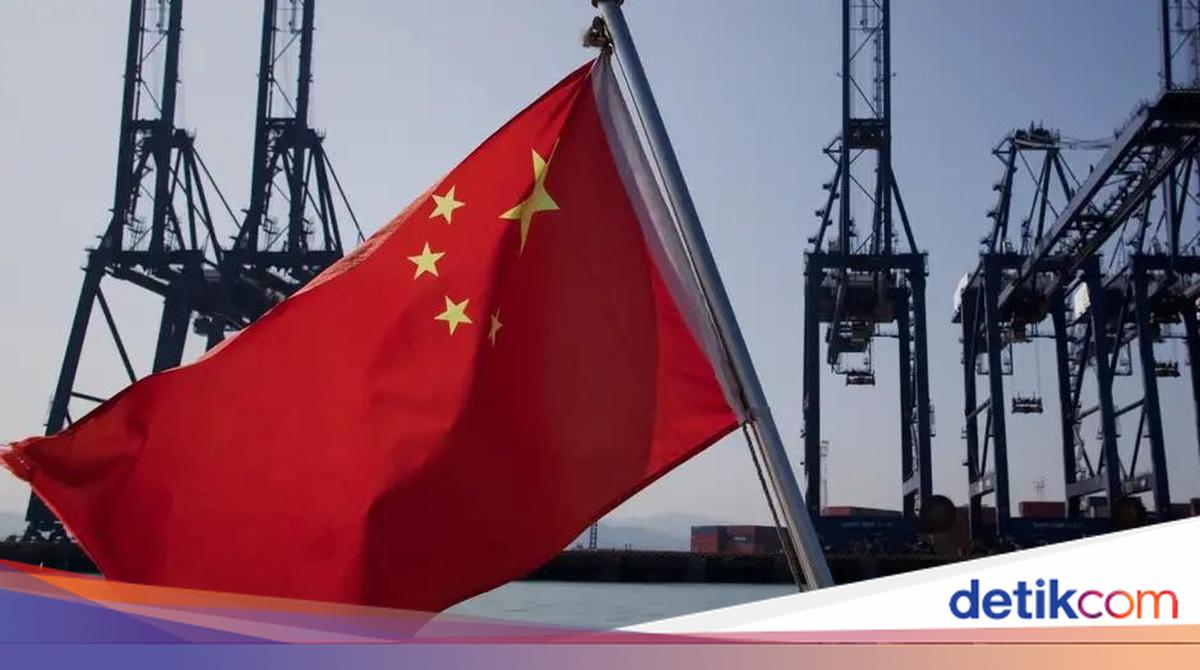
The energy crisis stemming from the Iran war is beginning to shake Southeast Asia. Several countries have declared states of emergency, restricted consumption, and prepared substantial subsidies. Amid this situation, China is moving quickly to offer itself as a key partner.
“China is willing to strengthen coordination and cooperation with Southeast Asian countries to jointly address energy security issues,” said spokesperson for the Chinese Foreign Ministry, Lin Jian, in a press conference last week, as reported by DW on Friday (27/3/2026).
Disruptions to global oil and gas flows due to attacks by the United States and Israel on Iran have prompted countries in the region to race for solutions.
Several governments are implementing energy conservation measures and increasing subsidies. They are also seeking alternative suppliers and trade routes to maintain secure supplies.
Even producer nations like Malaysia and Brunei Darussalam remain affected. Both are vulnerable to inflation and supply chain disruptions from West Asia.
The Philippines has been one of the countries responding most forcefully. On 24 March 2026, the government declared a one-year national energy emergency.
The government warned of an ‘imminent threat’ to energy supplies. A four-day workweek was implemented for government offices, accompanied by energy usage restrictions.
The Philippines is also providing cash assistance to transportation workers and warning of potential aviation fuel shortages that could ground parts of the fleet.
Vietnam has taken similar steps by utilising its energy price stabilisation fund and asking airlines to prepare for operational cutbacks.
Meanwhile, importers are warning that jet fuel supplies are secure only until March 2026.
Indonesia has pledged to absorb some impacts through the state budget and increased subsidies. Thailand is considering additional aid as surging diesel prices hit sectors like fisheries. Malaysia is also boosting subsidies to keep fuel prices stable.
This crisis is forcing Southeast Asian countries to seek supplies from outside the Arabian Peninsula. According to a Reuters report, Asia is estimated to import Russian fuel in the largest volumes in March 2026, with Southeast Asia as the main recipient.
China Wants to Appear as the ‘Saviour’
Amid this pressure, China is seen as viewing an opportunity to strengthen its influence in the region.
Associate Professor at Singapore’s S Rajaratnam School of International Studies, Li Mingjiang, assesses that China is using this crisis to ‘present itself as a responsible actor and stabiliser’.
He notes that China has called for de-escalation in the Middle East and pledged to work with Southeast Asian countries to address energy shortages.
Academic at the Lee Kuan Yew School of Public Policy, Chin-Hao Huang, views Beijing’s stance as aligning with Southeast Asian countries that advocate diplomacy regarding Iran.
Like countries in the region, the Chinese government wants the Strait of Hormuz to reopen soon while remaining cautious to avoid direct involvement in the conflict.
“So far, China’s public response has been to call for restraint, a ceasefire, and dialogue; this is a common ground for most governments in Southeast Asia,” said Huang.
This crisis also bolsters China’s narrative as a major power defending peace, free trade, and multilateralism. In contrast, the United States is seen as increasingly aggressive.
“The US-Israeli military intervention in Iran is highly unpopular in several Southeast Asian countries. China doesn’t even need to do anything for the US image to worsen in the region,” said Associate Professor at the University of Hong Kong, Enze Han.
“Surges in gas prices in many countries are also tarnishing the United States’ image. Once again, Beijing doesn’t need to do anything for the blame to be directed at the US,” he added.
However, closeness to China does not necessarily guarantee energy stability for the region. Beijing itself has restricted fuel exports to protect its domestic supplies.
On 18 March, Cambodia stated that export restrictions from China and Vietnam forced it to seek alternative suppliers and prepare for domestic energy shortages.
In the long term, this crisis could strengthen China’s position in Southeast Asia.
Energy shocks are raising concerns about dependence on Middle Eastern oil. This situation is increasing the appeal of renewable energy, a sector dominated by Chinese companies.
China has been involved in Southeast Asia’s green energy transition. Chinese companies are major investors in the electric vehicle and battery industries in the region.
Beijing is also the primary funder of large-scale hydropower plants and solar farms in mainland Southeast Asia.
Speaking at the Boao Forum in China, Singapore’s Prime Minister Lawrence Wong said China can ‘play an important role’ in shaping the global direction and ‘a greater role in supporting regional prosperity and stability’ while urging Beijing to remain a supporter of rules-based open trade.
Wong also emphasised that ASEAN needs to work with China on renewable energy development and regional power grids.
If the Iran war pushes Southeast Asia to reduce reliance on oil, China stands to benefit, not only from the current crisis but also from the region’s strategic responses moving forward.
Source: jawawa.id (https://jawawa.id/newsitem/southeast-asias-energy-crisis-due-to-iran-war-china-seeks-to-profit-1774666277)
Originally published by detikBali (https://www.detik.com/bali/bisnis/d-8418800/asia-tenggara-krisis-energi-gegara-perang-iran-china-mulai-cari-untung), translated from Indonesian