
Southeast Asia Faces Haze Emergency as Singapore Records Extreme Pollution
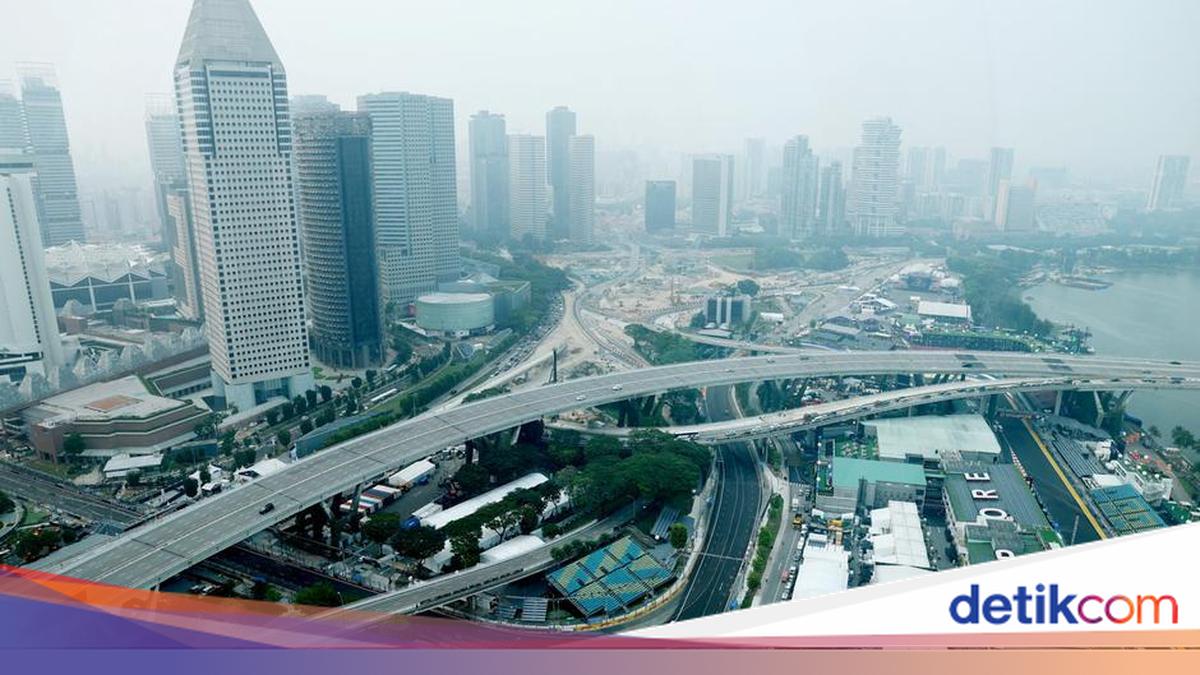
Forest and land fires in Indonesia have triggered an air pollution crisis in Southeast Asia. On Wednesday (14 October), air quality in western Singapore reached the highest category in the country’s national classification. Meanwhile, Timor-Leste decided to close schools for three days to protect the health of pupils and teaching staff.
Singapore’s National Environment Agency recorded a PM2.5 concentration of 288 micrograms per cubic metre in the west of the country. These extremely small particles can penetrate the lungs and enter the bloodstream. The reading was far above the World Health Organization’s (WHO) recommendation for average annual exposure of five micrograms per cubic metre.
Fires burning across forests and plantations in Sumatra and Kalimantan have consumed hundreds of thousands of hectares. The smoke has spread to neighbouring countries, including Singapore, Malaysia and Timor-Leste, and has even reached the Philippines.
Peat fires destroy hundreds of homes
In Bangka Belitung Islands province, Sumatra, fires destroyed nearly 300 homes and forced about 1,000 people to flee. Residents initially tried to put out the flames using portable water pumps, but fires continued to smoulder beneath the peatland surface. When the wind changed direction, the flames spread back into residential areas.
“They thought the fire had been put out. But this is peatland, and there are still flames burning beneath the surface,” Bangka Belitung Islands Mayor Riza Herdavid told AFP.
For residents, the fire destroyed their homes and belongings. “My house is gone,” said Leni, 55, who is now staying at a shelter with her family.
“Nothing is left. I could only save myself and take my children. I panicked and had no time to take anything,” she said.
Another survivor, Haryanti, 50, said strong winds accelerated the spread of the fire, which engulfed homes built mostly of wood. “Not one of my belongings survived. I only have the clothes I was wearing,” she said.
Riza said the village was built on peatland that had previously been a protected area. The land was converted into a housing complex last year.
Land clearing worsens fires
Indonesia regularly faces forest and land fires during the dry season. This year, drought linked to the El Niño phenomenon has worsened the fires.
Experts have also highlighted the practice of clearing land by burning. They say it has altered the landscapes of Sumatra and Kalimantan, which are naturally more resistant to fire.
The fires, which have continued for months, have generated thick haze and tens of thousands of cases of respiratory illness in Indonesia. According to a Reuters report, this year’s forest and land fires are the most intense Indonesia has experienced in 11 years.
In parts of Kalimantan, smoke has even hampered firefighting efforts. The disaster management agency reported that aircraft used for water-bombing could not operate because of poor visibility.
On Monday (12 October), President Prabowo Subianto ordered the government to make every effort to tackle the fires. Cabinet Secretary Teddy Indra Wijaya said more than 60,000 personnel had been deployed on the ground to put them out.
However, firefighting efforts, including weather modification and water-bombing, have so far failed to produce adequate results in some locations.
Haze disrupts flights and prompts ASEAN response
The impact of the haze has spread to transport and education. Malaysian airline Firefly extended the cancellation of its Kuala Lumpur–Singapore flights until Wednesday (14 October) as a precaution for aviation safety.
In Singapore, the government activated subsidies for medical care for people affected by the haze and began distributing N95 masks to eligible residents. Some outdoor workers, however, said they found it difficult to wear masks while working.
“With a mask, I have to breathe harder,” Daniel, a 27-year-old delivery driver, told AFP.
Meanwhile, Timor-Leste closed schools nationwide for three days from Thursday (15 October) to protect the health of pupils and teaching staff.
The crisis has also prompted Malaysia to seek regional discussions. Malaysian Foreign Minister Mohamad Hasan said ASEAN foreign ministers would discuss the haze ahead of the 49th ASEAN Summit in Manila next month.
Mohamad said ASEAN already had mechanisms for dealing with disasters such as floods and volcanic eruptions, but haze was not covered. Malaysia had previously offered Indonesia assistance in fighting the fires, although operations in some areas were hampered by poor visibility, difficult access and conditions unsuitable for weather modification.
Cross-border haze has once again become a regional challenge, with consequences for public health, education and transport across Southeast Asia.
Source: jawawa.id (https://jawawa.id/newsitem/southeast-asia-faces-haze-emergency-as-singapore-records-extreme-pollution-1792043511)
Originally published by detikcom (https://news.detik.com/dw/d-8707924/asia-tenggara-darurat-kabut-asap-singapura-catat-polusi-ekstrem), translated from Indonesian