
South Tangerang City Government to Spend Rp19.95 Billion on Official Vehicle Rentals, Observer Urges Shift from Asset Ownership
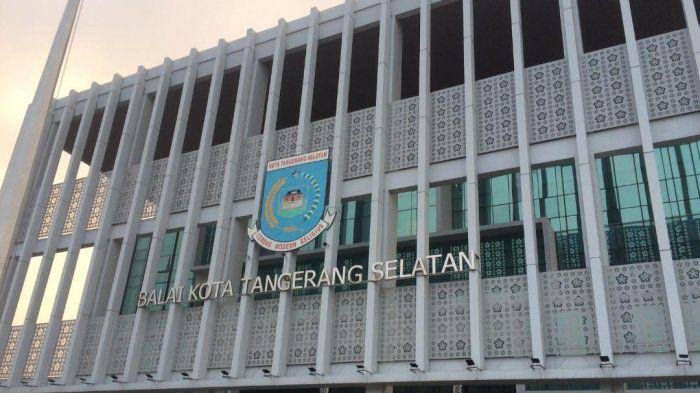
The allocation of Rp19.95 billion for official vehicle rentals by the South Tangerang City Government in the 2026 fiscal year has sparked public discussion.
Public policy analyst Yanuar Winarko stressed that the public should view this policy holistically through the lens of Total Cost of Ownership (TCO), rather than merely looking at the macro figures in the regional budget.
From a legal standpoint, Yanuar explained that this rental scheme has a very strong foundation in Indonesian positive law. The South Tangerang City Government’s move is supported by Government Regulation (PP) No. 28 of 2020, amending PP No. 27 of 2014 on the Management of State/Regional Property.
“Under that regulation, regional governments are given the flexibility to meet operational needs through a rental mechanism, in order to avoid a build-up of unproductive assets. In addition, Regulation of the Government Procurement Policy Agency (LKPP) No. 9 of 2021 has also simplified the process through e-purchasing and e-catalogue, making procurement transparent, accountable, and closing loopholes for collusion,” Yanuar explained when contacted on Friday (10/7/2026).
According to Yanuar, the old bureaucratic paradigm of taking pride in asset ownership must be shifted towards asset utilisation. “The government is a provider of public services, not a logistics company that must physically own its entire fleet,” he said.
Yanuar dissected the financial calculations related to the declining usefulness of regional assets if South Tangerang insisted on purchasing new vehicles. The economic life of vehicles is a crucial variable that is often overlooked by the public when assessing the efficiency of regional spending.
“In asset accounting theory and fleet management, the economic life of operational vehicles is very limited, ideally only in the range of 4 to 5 years. Beyond that golden period, engine performance inevitably declines drastically, while maintenance costs soar exponentially. If the city government buys the assets, then in the years ahead South Tangerang’s regional budget will continue to ‘leak’ and be burdened by high servicing costs, spare part replacements, and the erosion of the assets’ book value due to depreciation costs that can reach 15 to 20 per cent in the early years,” Yanuar said.
Through the Rp19.95 billion rental scheme, Yanuar believes South Tangerang has taken a smart step by transferring the risks of the economic life cycle to a third party.
“Through this rental contract, matters of declining performance and ageing vehicle life become entirely the commercial concern of the winning tender vendor. South Tangerang is relieved of routine costs such as annual taxes, vehicle registration renewals, all-risk insurance, and mechanic fees,” he said.
Furthermore, he added, South Tangerang obtains a zero-downtime guarantee. This means that if any unit experiences declining performance or enters its scheduled service period, the vendor is obliged to provide an equivalent replacement unit on the very same day, ensuring bureaucratic mobility is not disrupted at all.
Regarding the increase in the rental budget of Rp2.07 billion compared with last year, bringing the total to Rp19.95 billion, Yanuar considers the figure to remain within the corridor of healthy fiscal rationality. The increase is judged proportionate to the guarantee of fleet readiness and legal certainty obtained by the regional government.
“The Rp2.07 billion increase should not be seen as wasteful spending, but rather as an adjustment investment towards guaranteed vendor service quality and market value fluctuations. If calculated carefully and comparatively, renting hundreds of vehicles in always-prime, ready-to-use condition is far cheaper than allocating tens of billions in capital to buy new ones, which would ultimately burden the regional budget with complicated and inefficient logistics management,” he explained.
Although he fully supports Mayor Benyamin Davnie’s policy, Yanuar still reminded the Inspectorate and relevant agencies to exercise strict oversight of its execution in the field. The Service Level Agreement (SLA) in the contract must be firmly locked down so that the budget increase is genuinely compensated by the vendor’s excellent and accountable service.
“As a matter of public policy principle, this rental scheme is a best practice already implemented in many developed countries and global-scale corporations. South Tangerang’s move is on the right track towards achieving a regional budget that is healthy, lean, and well-targeted,” Yanuar concluded.
Source: jawawa.id (https://jawawa.id/newsitem/south-tangerang-city-government-to-spend-rp19-95-billion-on-official-vehicle-rentals-observer-urges-shift-1783684275)
Originally published by Media Indonesia (https://mediaindonesia.com/megapolitan/909611/pemkot-tangsel-sewa-kendaraan-dinas-rp1995-miliar-pengamat-hindari-penumpukan-aset-tak-produktif), translated from Indonesian