
South Tangerang City Expands Free Internet Access to Boost Public Productivity
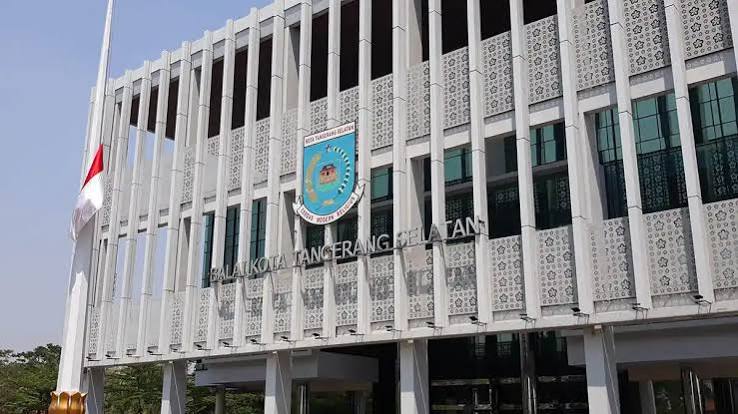
The South Tangerang City Government (Pemkot Tangsel) is accelerating digital inclusion to support regional economic transformation. Through the Communication and Informatics Office (Diskominfo), the city has launched a network expansion programme that now covers more than 5,000 free internet (Wi-Fi) service points across various areas, including hundreds of houses of worship.
This tactical move aims to narrow the digital divide while boosting community-based productivity by transforming mosques and prayer rooms into centres for public economic literacy.
Head of the South Tangerang City Diskominfo, Tb. Asep Nurdin, stressed that expanding internet access in public areas is not merely about providing basic facilities, but is a strategic pillar for developing human resources ready to face the digital economy landscape.
“Mosques must become centres for community activities and youth development. They should not only host religious activities but also programmes that provide concrete benefits to the community, including the use of digital technology for economic empowerment and education,” Asep said on Tuesday (23/6/2026).
Asep explained that providing internet quota and networks without accompanying digital skills risks triggering negative impacts from technology misuse. Therefore, Diskominfo Tangsel is not only focusing on physical infrastructure (hardware) but also on strengthening human capacity.
Through the “Digital Mosque” ecosystem, the city government has designed structured digital training programmes targeting various segments, from students and mosque youth groups to mosque administrators (takmir). Training materials cover basic digital skills, cybersecurity, and the use of digital platforms for developing micro, small, and medium enterprises (UMKM) within the congregation.
“We want to ensure that reliable connectivity directly correlates with productive activities. The younger generation must be directed to become digital creators and innovators, not just content consumers,” Asep added.
As of the second quarter of 2026, the free internet expansion programme has reached various clusters of public facilities. Of the total 5,000 service points available, 397 are Wi-Fi points in government areas and 4,603 are in public areas.
Specifically for religious facility clusters, free internet services have been installed in 379 mosques and 376 prayer rooms spread across seven sub-districts. Pondok Aren Sub-district has the highest distribution with 197 points, followed by East Ciputat (150 points), Pamulang (129 points), Ciputat (106 points), Serpong (91 points), North Serpong (54 points), and Setu (36 points).
Beyond houses of worship, facilitated public spaces include 1,198 points at community halls or security posts, 245 points at educational organisations such as private schools and Islamic boarding schools, and 148 points at integrated health posts (posyandu) or non-communicable disease service posts (posbindu).
The city government has also launched a free web hosting service for religious organisations and mosque-assisted UMKM. This step aims to reduce digital operational costs while supporting community digital independence.
The resilience of this regional digitalisation programme is fully supported by the city’s capable Data Centre, which boasts 616 CPU cores, 1,840 GB of RAM, and a massive storage capacity of 328.17 Terabytes (TB).
Asep is optimistic that the strategy of optimising houses of worship as digital literacy hubs can reach grassroots communities that have traditionally been difficult to access through formal banking or technology corporation outreach.
“This massive network expansion also serves as a positive signal for the investment climate in the technology sector within the capital’s buffer zone, proving that South Tangerang is ready to fully transition towards electronic-based government systems (SPBE) and an inclusive digital economy,” he concluded.