
South Sumatra establishes task force to accelerate strategic project investments
Palembang — The Bank Indonesia South Sumatra Regional Office, in collaboration with the regional government, has established an investment acceleration task force to expedite the implementation of strategic projects and attract more investors to the area.
Bank Indonesia South Sumatra Regional Head Bambang Pramono stated that the task force aims to strengthen cross-stakeholder coordination in resolving various investment obstacles in the region.
“The investment acceleration task force is expected to enhance the readiness of regional investment projects to become more bankable, marketable, and implementable,” Pramono said on Thursday (28 May 2026).
He noted that South Sumatra has high investment appeal due to abundant natural resources, strategic geographic location, and strong economic sectors including mining, processing industry, agriculture, trade, transportation, and services.
However, according to 2025 data, investment realization in South Sumatra amounted to Rp62.67 trillion, a 11.64% year-on-year decline.
Although this figure exceeded the Regional Medium-Term Development Plan (RPJMD) target of Rp42.5 trillion, the slowdown in investment growth requires attention.
South Sumatra Provincial Investment and One-Stop Service Agency (DPMPTSP) Head Lusapta Yudha Kurnia announced Governor’s Decree No. 218/KPTS/DPMPTSP/2026 concerning the Provincial South Sumatra Investment Acceleration Task Force.
Following the task force’s launch, the government will conduct socialisation for domestic and foreign investors regarding investment opportunities and existing projects in South Sumatra.
“Next steps will include monitoring, performance evaluation, and obstacle identification, followed by strategic economic review forums, showcasing achievements, and policy validation for subsequent stages,” he explained.
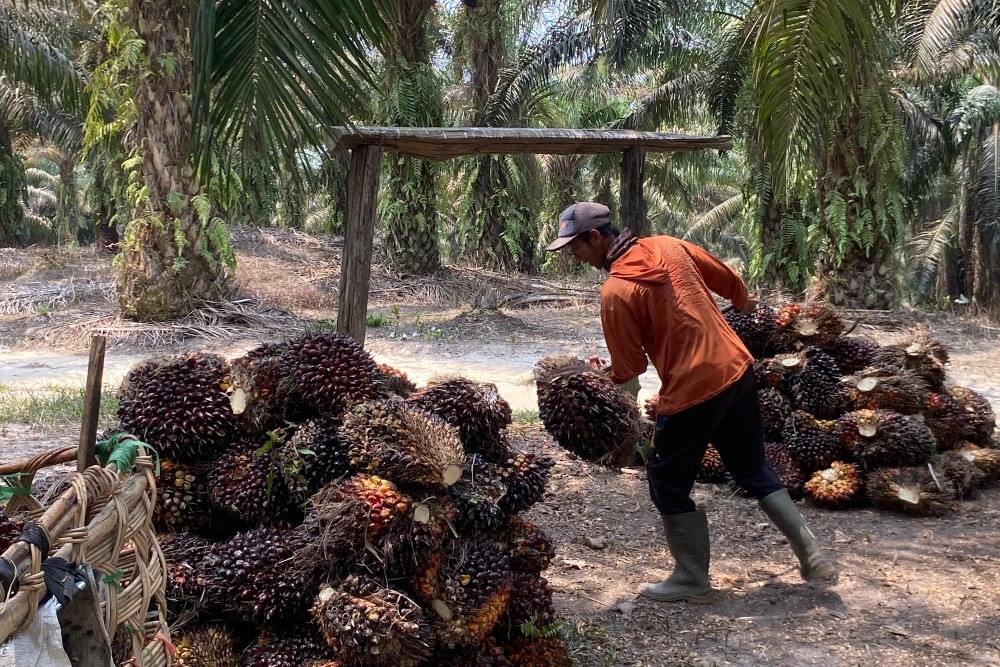
According to DPMPTSP data, the region has various natural resources with potential for strategic investment opportunities. In the plantation and agriculture sectors, for example, palm oil production reaches 1.2 million tonnes per year.
Additionally, coconut production of around 46,000 tonnes is utilised for virgin coconut oil (VCO) downstream processing, rice in East OKU Regency with annual production of 100,000 tonnes, and robusta coffee in Lahat Regency producing 25,341.8 tonnes annually.
“There are also integrated rubber and coffee processing centres in Ogan Komering Ulu and Lahat regencies, offering production cost efficiencies through direct raw material availability,” he added.
Yudha also highlighted the largest patin fish hub in East OKU Regency, supplying 70% of South Sumatra’s patin fish demand. Additionally, there is potential for pineapple fibre and biomass downstream processing into natural fibre-based textiles in Muara Enim and renewable energy pellets in Musi Banyuasin Regency.
He added that one ready-to-offer investment project is the downstream rubber industry in Banyuasin, which is considered promising due to rising demand for natural rubber in domestic and global markets.
“The domestic and global demand for natural rubber is growing at an average of 9% per year, and rubber prices are improving. This project demonstrates strong financial viability,” he concluded.