
South Papua Becomes New Mainstay for National Food Production
The Ministry of Agriculture has recorded that the development of food estates in Papua has reached 137,429 hectares up to 2026. The programme consists of 83,030 hectares of new paddy field development and 54,399 hectares of land optimisation, with South Papua serving as the largest development centre.
Ministry data shows that South Papua is developing 48,934 hectares of new paddy fields and 53,499 hectares of optimised land, totalling over 100,000 hectares of food production area. The region is projected to become a food production hub in eastern Indonesia while supporting the national food self-sufficiency target.
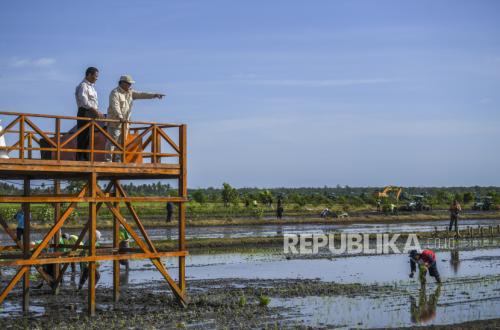
Minister of Agriculture Andi Amran Sulaiman stated that the food estate development programme has a direct impact on improving community welfare. ‘This programme belongs to the people, to the native communities of Papua. Let no one claim to represent the community and say they disagree, because the fact is that after the programme ran, people’s incomes rose by up to 300 per cent. In fact, the community is now requesting additional paddy field development,’ Amran said during a joint rice planting activity with farmers in Waninggap Kai Village, Semangga District, Merauke Regency, South Papua, on Saturday (4/7/2026).
Besides South Papua, food estate development is also underway in several other provinces. Papua is developing 24,248 hectares, Southwest Papua 4,675 hectares, West Papua 3,373 hectares, and Highland Papua 2,000 hectares. According to Amran, the increasing demand for new paddy field openings demonstrates the community’s high level of enthusiasm for the programme. The government will continue food estate development according to the needs of local farmers.
Amran added that the government is also moving quickly to address various obstacles in the field. Upon receiving reports of diesel fuel shortages for agricultural operations, the Ministry of Agriculture immediately coordinated with Pertamina to ensure farmers’ needs are met promptly. ‘As soon as we received the report about the diesel shortage, we immediately coordinated with Pertamina and the quota is ready to be increased. The important thing is that farmers’ needs are met so that field activities are not disrupted,’ he said.
The Ministry of Agriculture noted that agricultural productivity in Merauke has begun to increase. The cropping index rose from 1.05 to between 1.82 and 2.00, followed by increases in rice productivity, harvest area, rice production, and farmers’ incomes. The government is also building a modern agricultural ecosystem through the provision of agricultural tools and machinery, superior seeds, irrigation development, the establishment of food brigades, and assistance to farmers. ‘Now Merauke farmers are capable of operating modern agricultural equipment. Technology used in developed countries is now also being used in Papua to increase productivity and farmers’ welfare,’ Amran said.
Governor of South Papua Apolo Safanpo stated that Merauke is the backbone of food development in Papua. More than half of the new paddy field development programme and almost all of the land optimisation programme in the region are located in Merauke Regency. According to Apolo, the South Papua Provincial Government is ready to support this national strategic project in the food sector to strengthen food security and propel South Papua to become a food barn, even a rice exporter in the future.