
South Minahasa UMKM Coconut Husk Products Penetrate Chinese Market
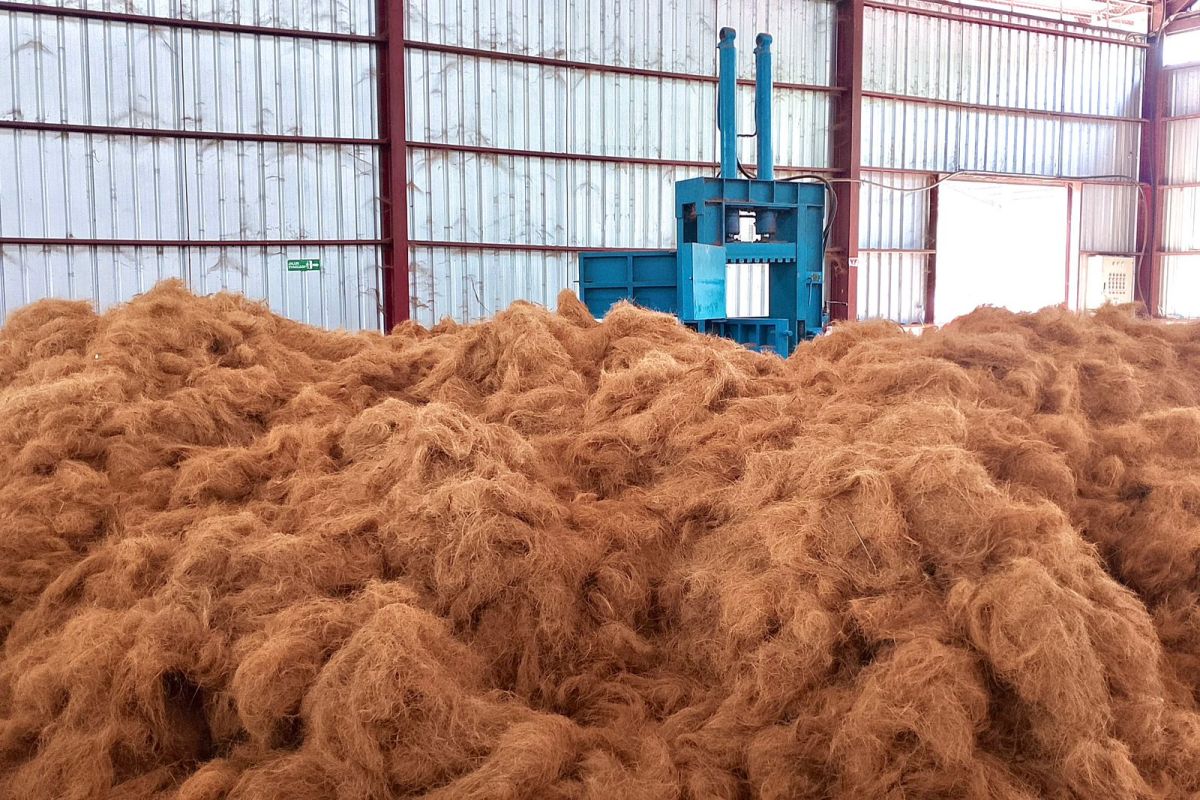
Products derived from coconut husks originating from South Minahasa Regency, North Sulawesi, have entered the international market through their inaugural export to Guangzhou, China. The export, conducted on Tuesday, dispatched two containers filled with coco fiber, husk chips, and peat blocks processed via the South Minahasa Joint Production House (RPB), with a transaction value reaching Rp98.68 million. Assistant Deputy for Production and Digitalisation of Small Businesses at the Ministry of UMKM, Ali, stated in a written remark received in Jakarta on Tuesday that this achievement serves as proof of the transformation of local resource management into high-value-added products. “This accomplishment represents a crucial momentum in strengthening downstream processing while enhancing the competitiveness of regional flagship commodities in the international market,” Ali said. South Minahasa is one of the largest coconut production centres in North Sulawesi, with a plantation area spanning 46,451 hectares. Based on data from the Central Statistics Agency (BPS), the region’s coconut production reached 43,980 tonnes in 2025, accounting for approximately 16.4 per cent of the province’s total production. Ali explained that previously, farmers typically only utilised the fruit, shell, and coconut water. However, through strengthening the business ecosystem and assistance from the Ministry of UMKM, coconut husks, which were previously underutilised, are now processed into economically valuable products oriented towards exports. Its economic potential is considerable. According to Ministry of UMKM records, from every 100 kilograms of coconuts, approximately 25 kilograms of husks can be produced, which are then processed into 7.5 kilograms of coco fiber and 16 kilograms of coco peat. In the domestic market, coco fiber can be sold for up to Rp40,000 per kilogram, while coco peat is around Rp13,000 per kilogram. Coco fiber products have various applications, ranging from household equipment, industrial and automotive components, to growing media and environmental conservation materials such as geotextiles for erosion control. To optimise this potential, the government established the Coconut Processing Joint Production House (RPB) in South Minahasa on 23 September 2022. This facility enables integrated production processes, thereby increasing value added for farmers and UMKM actors. The RPB programme is one of the Ministry of UMKM’s strategies to promote micro and small-scale manufacturing based on regional flagship commodities. Currently, there are 16 RPB locations managing 12 types of commodities in various regions. Through the RPB, the government provides support in the form of production facilities, equipment and machinery assistance, technology and management mentoring, as well as market access expansion via a business-to-business approach to strengthen the value chain and improve the welfare of UMKM actors.
Source: jawawa.id (https://jawawa.id/newsitem/south-minahasa-umkm-coconut-husk-products-penetrate-chinese-market-1777384343)
Originally published by Antara (Indonesian) (https://www.antaranews.com/berita/5546100/olahan-sabut-kelapa-umkm-minahasa-selatan-tembus-pasar-china), translated from Indonesian