
South Lampung Farmers Develop Biosaline Rice on Former Shrimp Pond Land
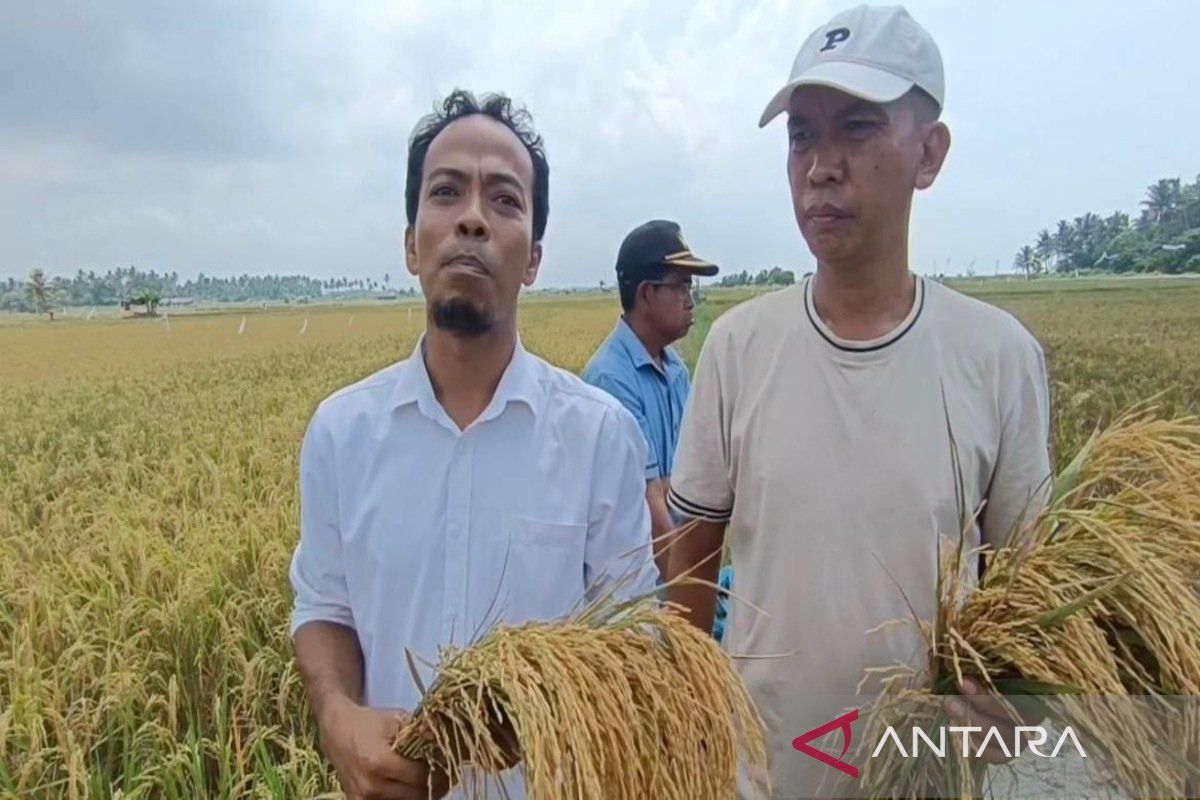
South Lampung (ANTARA) - A number of farmers in South Lampung Regency (Lamsel) have successfully developed biosaline rice varieties on former shrimp pond land that was previously unproductive for food crops.
Biosaline rice innovator in the South Lampung region, Jalu from Ketapang, said on Monday that the use of biosaline varieties serves as a solution for farmers in coastal areas who have long struggled to utilise land impacted by seawater intrusion.
He explained that the use of biosaline varieties provides a solution for farmers in coastal areas who have long struggled to utilise land impacted by seawater intrusion.
According to him, in addition to being tolerant of salinity, biosaline rice also has a relatively short planting period of around 105 to 110 days.
“Coincidentally, this biosaline rice is tolerant of saltwater. In the South Lampung region, particularly in Ketapang Subdistrict, there are the Way Sekampung and Way Pisang rivers, whose water becomes brackish during the dry season, so this biosaline rice can address the needs of farmers during the El Niño season; farmers can still plant and harvest,” he stated.
He said that this success opens up opportunities for utilising abandoned pond land to support regional food security.
“The development of biosaline rice is quite crucial because it can adapt to climate change in coastal areas if properly managed. This biosaline rice can maintain food security even during El Niño weather. South Lampung has great potential to achieve food self-sufficiency, as it is surrounded by the sea and traversed by the Way Sekampung river,” he added.
Meanwhile, the Field Agricultural Extension Officer for the Ketapang area, Warti Rahayu, explained that her team will continue to provide assistance to farmers through the provision of seeds and training on land management.
“Biosaline rice cultivation is more efficient, as one hectare only requires four quintals of fertiliser. This rice is also relatively resistant to pests,” said Warti Rahayu.