
South Korea's Kospi Loses US$1 Trillion in Market Cap, Yet Remains a Global AI Investment Barometer
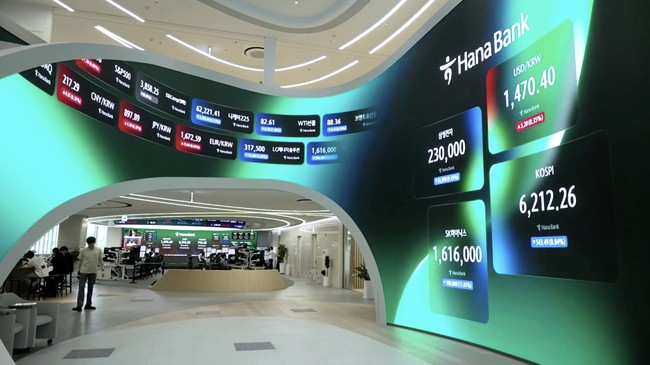
Jakarta, CNBC Indonesia — Around US$1 trillion, or roughly Rp18,076 trillion, of South Korea’s stock market capitalisation has evaporated since the Kospi index reached its peak in June.
Even so, the stock market of the Land of Morning Calm remains one of the main reference points for global investors in reading the direction of artificial intelligence (AI) investment and semiconductor shares worldwide.
According to Fortune, South Korea’s stock market, now valued at around US$4 trillion, is drawing growing attention from global investors as the role of AI-related shares strengthens, particularly Samsung Electronics Co. and SK Hynix Inc.
The movements of the two chip issuers are now considered capable of influencing trading sentiment for technology and semiconductor shares across the world’s various exchanges.
The shift has also altered global investment patterns. JPMorgan Asset Management’s Chief Asia Market Strategist presented the Korean market to his global team for the first time in 14 years, whilst Japanese investors have begun adding the Kospi index to their main watchlists.
PineBridge Investments portfolio manager Hani Redha said investors can no longer ignore the Korean market when reading the direction of AI share trading.
According to her, market monitoring activity now runs almost 24 hours, from trading in Seoul to the American depositary receipts (ADR) of SK Hynix and Korea-based ETFs traded in New York.
Behind its growing influence, the Kospi has also become one of the most volatile major indices in the world. Highly leveraged trading amplifies price fluctuations, whilst SK Hynix’s listing in the United States means the impact of Korean market movements is increasingly felt as far as Wall Street.
Pressure on AI shares re-emerged last week after an unexpected breakthrough from a Chinese AI start-up raised doubts about the scale of capital spending in the sector.
The situation triggered a sell-off in global semiconductor shares and threatened to weigh on the Korean market when it reopened after the long holiday.
Last Monday, negative sentiment surrounding AI demand prospects triggered a correction of nearly 9% on the Kospi. The weakness then spread to Wall Street, with SK Hynix’s US-listed shares plunging 9.3% and dragging down other major chip stocks.
Data compiled by Bloomberg shows the 60-day correlation between the Kospi and the Nasdaq 100 has risen to 0.46. That figure is close to its highest level in two years and nearly three times higher than its five-year average of 0.16.
Tigress Financial Partners Chief Investment Officer Ivan Feinseth believes Korea has now become part of the same volatility ecosystem as the Nasdaq and the Philadelphia Semiconductor Index (SOX). According to him, movements in SK Hynix, Samsung and the Kospi now serve as early indicators of AI and semiconductor investment risk in the United States.
Korea’s market influence appears even stronger during downturns. The Nasdaq 100’s sensitivity to Kospi movements when the Korean market falls reached its highest level since 1990 on 7 July, whilst a similar measure for the MSCI World Index rose to a four-year high.
Correlation with the Japanese market has also increased. The correlation between the Kospi and the Nikkei 225 has surged so sharply that Ortus Advisors’ Head of Japan Equity Strategy, Andrew Jackson, has for the first time in more than two decades added the Kospi chart to his routinely monitored indicators.
Herald van der Linde, Head of Equity Strategy for Asia Pacific at HSBC Holdings Plc, said Korea has become a topic of discussion at nearly every investor meeting. Similarly, JPMorgan Asset Management’s Chief Market Strategist for Asia Pacific, Tai Hui, said he only began presenting the Korean market to his global team this year.
Nevertheless, Korea’s influence could shrink if the sell-off continues. Since peaking in June, the Kospi has fallen 25% and erased around US$1 trillion in market capitalisation, whilst the market values of Samsung and SK Hynix have each declined by more than 30%.
The South Korean government has also decided to temporarily halt the issuance of leveraged ETF products based on single stocks in order to curb speculation and volatility. The move is expected to reduce the turbulence that has been amplifying market movements.
Even so, the Kospi has still recorded a 62% gain so far this year and stands as one of the best-performing indices in the world. With Samsung and SK Hynix playing key roles in the global memory chip supply chain, the Korean market is expected to remain the primary barometer of AI investment in the near term.
Chisa Kobayashi, Japan equity strategist at UBS SuMi TRUST Wealth Management, said the situation represents a new normal that investors must accept for as long as the AI rally continues. However, she cautioned that the dominance of a market heavily influenced by leveraged trading means price movements often deviate from company fundamentals.
Source: jawawa.id (https://jawawa.id/newsitem/south-koreas-kospi-loses-us-1-trillion-in-market-cap-yet-remains-a-global-ai-investment-barometer-1785329567)
Originally published by CNBC Indonesia (https://www.cnbcindonesia.com/market/20260729165646-17-754845/kapitalisasi-pasar-bursa-korsel-menguap-rp-18000-triliun), translated from Indonesian