
South Korean Military Initiates Acquisition Process for Nuclear-Powered Submarines
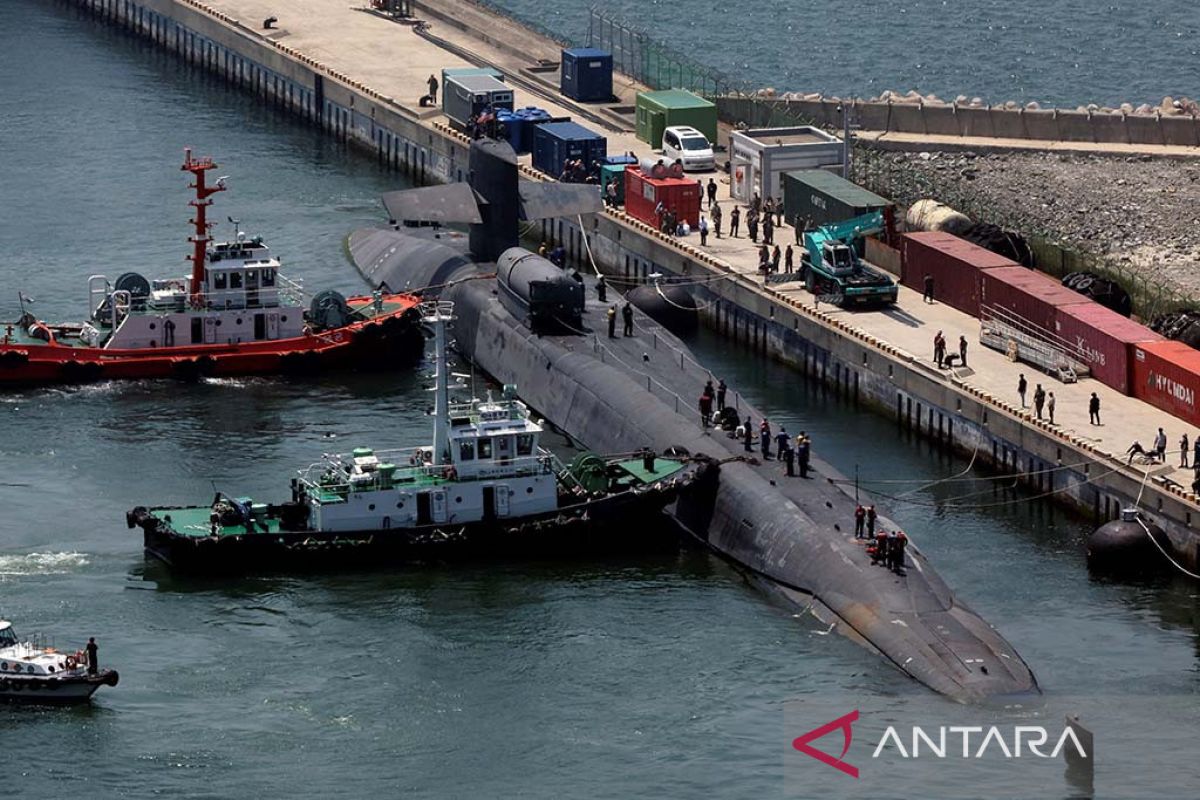
Seoul — The South Korean military has commenced the formal process to acquire nuclear-powered submarines, according to recently released Navy documents. This move comes amidst limited progress in security discussions with the United States regarding Seoul’s push for the project.
The South Korean Navy recently submitted documents to the Joint Chiefs of Staff (JCS) detailing the programme’s requirements, including desired capability specifications, the number of systems needed, and projected deployment schedules. These documents were provided to opposition Member of Parliament Kang Dae-sik of the People Power Party.
The United States previously granted approval for South Korea to build nuclear-powered attack submarines and committed to cooperating with Seoul to meet the project’s needs, including fuel procurement pathways, according to a joint fact sheet released following a summit between the leaders of both nations.
The JCS is currently reviewing the Navy’s proposal and is scheduled to hold a meeting at the end of this month to finalise the project’s requirements. Once the requirements are established, the programme will typically proceed to initial research and feasibility studies, followed by consultations with budgetary authorities regarding total project costs before entering the development phase.
This step is viewed as part of Seoul’s efforts to accelerate the nuclear-powered submarine project after months of delays in follow-up negotiations with Washington regarding the implementation of the summit’s outcomes. The summit documents also include a US commitment to support Seoul in obtaining uranium enrichment rights and the reprocessing of spent nuclear fuel.
US Deputy Assistant Secretary of State for Political Affairs, Allison Hooker, is scheduled to visit Seoul in the coming weeks to launch a bilateral working group to implement the summit agreements. The visit has raised hopes that discussions between the two nations regarding security commitments may see progress.
The South Korean military is reported to have conducted preliminary studies for the construction of at least four 5,000-ton class nuclear-powered submarines starting in the mid-2030s. However, it remains unclear how the South Korean military will meet the fuel procurement needs for these submarines, which will utilise small nuclear reactors as a power source. To obtain nuclear propulsion capabilities for these vessels, South Korea will need to sign a specific agreement with the United States to allow the transfer of nuclear material from Washington for military purposes. Seoul is expected to soon announce a roadmap for the nuclear-powered submarine programme, which will outline the defensive nature of the programme, its role in accordance with international non-proliferation obligations, and the project’s implementation schedule.