
South Korea Unleashes Huge AI Budget, Targets US$1 Trillion in Exports
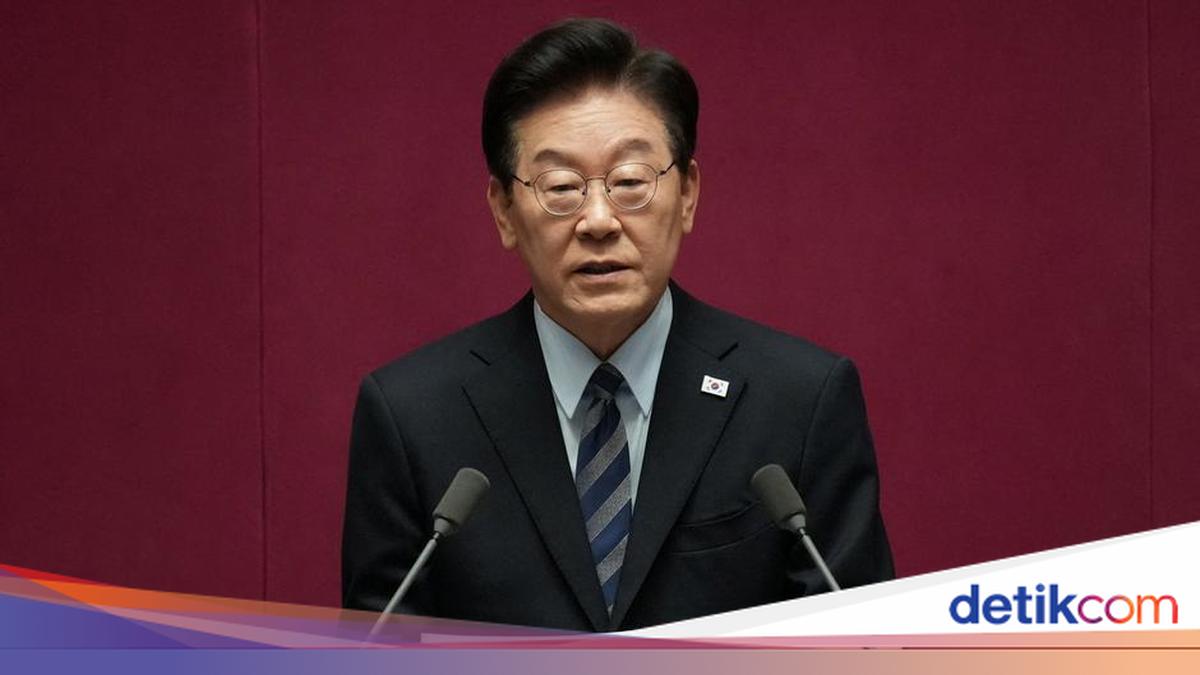
President Lee Jae Myung has asked South Korea’s parliament to approve a 2027 budget that raises government spending by 12.8 per cent to 820.9 trillion won, the largest increase in the country’s history. The government has made artificial intelligence (AI), semiconductors and data centres its top priorities to safeguard national technological competitiveness amid the global AI race.
In a speech to parliament on Monday (2 November), Lee said South Korea must be bold in investing to strengthen its long-term growth potential.
“We will invest 21.3 trillion won in AI and three national mega-projects in semiconductors, physical AI and AI data centres. That is almost double this year’s amount.”
The investment is equivalent to US$15.97 billion, or around Rp289.8 trillion.
Riding the AI wave
South Korea is now at the centre of the global AI boom. The country is home to Samsung Electronics and SK hynix, two of the world’s three largest memory-chip makers. Demand for high-capacity memory chips has surged as data centres and generative AI applications expand.
The government has set aside 4.7 trillion won to support frontier AI projects.
“We will support frontier AI development projects with the aim of achieving world-class performance through our own AI models, which are a strategic national asset,” Lee said.
The strategy forms part of an agenda announced last June through a public-private partnership centred on three national mega-projects: expanding the semiconductor cluster, building a robotics research centre and constructing a gigawatt-scale AI data centre.
When launched, the targeted investment was nearly US$1.2 trillion, or about Rp21,774 trillion, equivalent to more than two-thirds of South Korea’s gross domestic product.
Exports set to hit a new record
South Korea’s economic growth in recent years has been heavily supported by the chip sector. The fourth-largest economy in Asia grew faster than expected in the third quarter, thanks to exports and semiconductor investment.
From January to October 2026, South Korea’s total exports reached US$930 billion, or around Rp16,875 trillion. The government expects the figure to exceed US$1 trillion, equivalent to roughly Rp18,145 trillion, before the end of the year.
If achieved, South Korea would become the fourth country in the world to record annual exports above US$1 trillion, after the United States, China and Germany.
“Annual exports worth one trillion dollars are now within reach,” Lee said.
He stressed, however, that economic growth must not benefit only a small segment of society.
“We must make a major transition from growth for a few, where opportunities and gains are concentrated in certain regions, social classes and a small number of companies, towards growth for everyone.”
Future fund backed by chip-tax revenues
The government also plans to establish a 162.3 trillion won Future Response Fund, which will begin operating next year. It will be financed largely by a surge in tax revenues from the semiconductor boom.
The fund will support future industries, education, regional development and young people, while also serving as a fiscal buffer if government revenues weaken in the future.
Lee said South Korea’s fiscal position was also continuing to improve. The budget deficit is forecast to fall to 0.1 per cent of GDP in 2027, from 3.9 per cent this year. Government debt as a share of GDP is projected to decline to 48.3 per cent, compared with 51.6 per cent currently.
Lee said these developments had received positive responses from international organisations and global credit-rating agencies.
Private investment breaks records
Alongside public funding, the government is relying on large-scale corporate spending. Last June, Samsung Electronics and SK hynix announced investment plans worth more than 4,755 trillion won, equivalent to around US$3.5 trillion or Rp63,508 trillion. This is one of the largest corporate investment commitments ever recorded in South Korea.
The government is also promoting an 800 trillion won semiconductor complex led by the two companies. The massive project includes chip-factory expansion and supporting infrastructure in the country’s south-west.
The AI demand boom has boosted profits and share prices for South Korean chipmakers. Its effects have also spread to the labour market: semiconductor engineers and technology workers now have greater bargaining power in wage negotiations with companies as sector profits rise.
Infrastructure is key
Lee said the government would allocate an additional 2.1 trillion won to strengthen electricity and water supplies, as well as industrial zones supporting the semiconductor industry.
He said AI’s success depended not only on algorithms or software, but also on the ability to provide reliable physical infrastructure.
“Semiconductor factories need a stable electricity supply 24 hours a day, 365 days a year.”
For Seoul, the AI bet is now more than just industrial policy. The government is building a new national development strategy based on chips, data centres, robotics and domestic AI. If successful, South Korea hopes not only to supply components for the global AI revolution, but also to become one of the major players shaping its direction.
Source: jawawa.id (https://jawawa.id/newsitem/south-korea-unleashes-huge-ai-budget-targets-us-1-trillion-in-exports-1793620292)
Originally published by detikcom (https://news.detik.com/dw/d-8735204/korsel-gelontorkan-anggaran-jumbo-untuk-ai-targetkan-ekspor-us-1-triliun), translated from Indonesian