
South Korea pushes for stronger cooperation amid declining trade volume
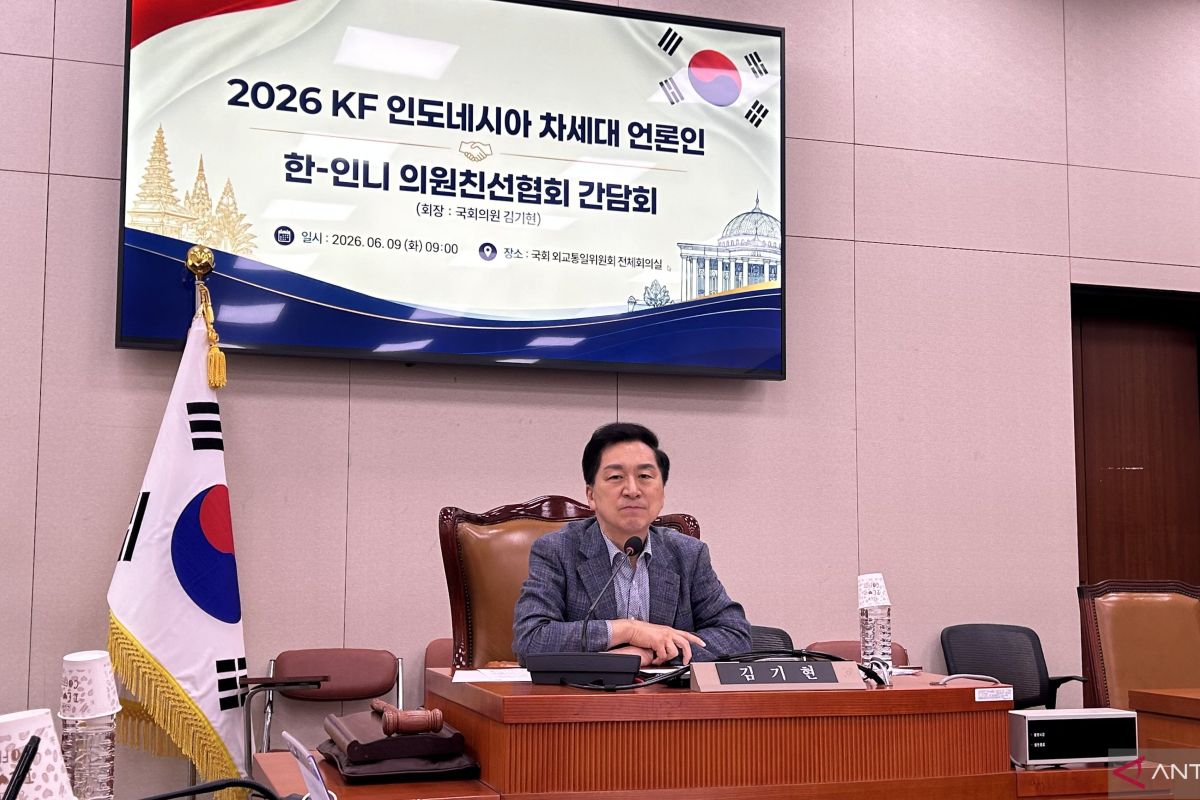
Seoul (ANTARA) - The South Korean Parliament is pushing for the strengthening of cooperation between Seoul and Indonesia in response to a declining trend in trade volume.
This statement was made by Kim Gi-Hyeon, Chairman of the Korea-Indonesia Parliamentary Friendship Association, during the ‘Indonesian Next-Generation Journalist Network’ event organised by the Korea Foundation and the Foreign Policy Community of Indonesia in Seoul, South Korea, on Tuesday.
“I hope there will be more opportunities for economic investment, technology transfer, and talent development between Indonesia and Korea,” said Kim.
Kim noted that the trade volume between the two nations is currently experiencing a continuous downward trend compared to 2020, when the trade value reached approximately US$25.5 billion.
The lawmaker highlighted the increasing number of certification requirements through the Indonesian National Standard (SNI), which he believes acts as a non-tariff barrier, making it more difficult for Korean companies to enter the Indonesian market.
“This essentially increases non-tariff barriers between the two countries and makes it harder for Korean companies to enter the Indonesian market. The SNI standards were revised about a year ago, requiring more products to obtain certification, while the transition or grace periods have become shorter,” he explained.
Kim also highlighted the impact of the removal of electric vehicle (EV) incentives on the automotive industry.
According to him, the removal of incentives and policies that he believes are more heavily utilised by China have led Hyundai, South Korea’s largest EV manufacturer, to reconsider its investment expansion.
“Hyundai Motor Company has produced electric vehicles in Indonesia, such as the Kona EV and IONIQ 5. These were the first electric cars produced in Indonesia,” said Kim.
“However, after the incentive system was abolished, the available benefits tend to be more enjoyed by Chinese companies,” he added.
He assessed that Indonesia could collaborate with South Korea in the fields of robotics and Artificial Intelligence (AI), as well as their application in the healthcare sector.
Furthermore, he expressed his hope that both countries could further enhance talent development and technology transfer, given the high number of Indonesian students receiving scholarships from South Korea.
Currently, 1,126 Indonesian students are receiving scholarships from South Korea, making Indonesia the country with the highest number of recipients.
At the request of the Indonesian government, South Korea is also pushing for policies to increase the number of Indonesian students studying in STEM (Science, Technology, Engineering, and Mathematics) fields.
Meanwhile, the trade volume between Indonesia and South Korea reached US$18 billion in 2025, with Indonesia maintaining a 25 per cent surplus, compared to US$20.09 billion in 2024.