
South Korea pushes for incentives for nickel-based EV batteries in Indonesia
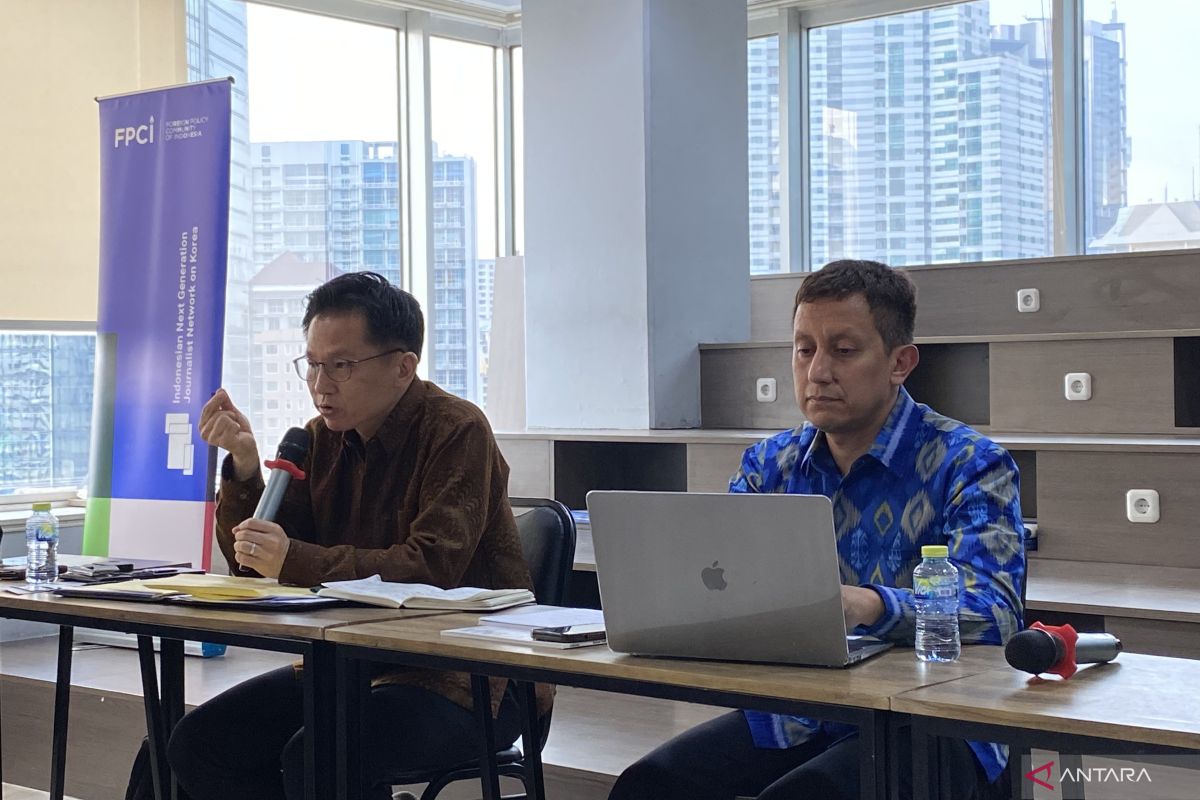
South Korea is encouraging the Indonesian government to provide incentives and regulatory easing for electric vehicles (EVs) that use nickel-based batteries in order to strengthen the electric vehicle ecosystem in Indonesia.
Speaking at the Indonesian Next Generation Journalist Network on Korea (IKJN) workshop in Jakarta on Wednesday, Uhm Taeho, Political Section Chief and Counsellor at the South Korean Embassy in Indonesia, said that such policy support is one of the topics currently being discussed with the Indonesian government.
“We hope the Indonesian government can provide incentives and regulatory easing for batteries that use nickel, which will certainly also benefit Indonesia,” Uhm said at the event organised by the Foreign Policy Community of Indonesia (FPCI) and the Korea Foundation.
He explained that nickel-based batteries have the advantage of being relatively easy to recycle and more environmentally friendly. However, the cost of this type of battery is relatively higher compared with other battery types.
According to Uhm, this is one of the reasons South Korea hopes for policy support from the Indonesian government for electric vehicles using nickel-based batteries.
The push is also linked to the growing South Korean investment in Indonesia’s electric vehicle ecosystem, ranging from vehicle manufacturing to battery production and nickel processing.
Uhm said Hyundai Motor’s investment in Indonesia is one example of mutually beneficial industrial cooperation. Hyundai has not only built an electric vehicle manufacturing facility but is also developing a battery supply chain in Indonesia through cooperation with LG.
According to him, the investment demonstrates the commitment of Korean companies to continue developing their business and the electric vehicle industrial ecosystem in Indonesia.
Hyundai’s presence, he continued, has also had a knock-on effect by attracting investment from other Korean companies in the nickel sector. One of them is EcoPro, which is said to have invested more than US$1 billion in the development of the nickel smelting industry in Indonesia.
“This shows how comprehensive our partnership is … They (EcoPro) saw Hyundai Motor enter and saw the potential for collaboration here. So, this creates a ripple effect by attracting more investment and helping Indonesian industry,” he said.
He assessed that the development of this ecosystem can benefit both countries, given that Indonesia is one of the world’s major nickel producers, while Korean companies have the technological and industrial capacity to develop electric vehicles and batteries.
Uhm expressed hope that the policy support can maintain the investment competitiveness of Korean companies while deepening cooperation between Indonesia and South Korea in building an integrated electric vehicle supply chain.
Electric vehicle cooperation was one of the points agreed in the Joint Statement on the Establishment of a Special Comprehensive Strategic Partnership between the Republic of Korea and the Republic of Indonesia, which resulted from the summit meeting between President Prabowo Subianto and South Korean President Lee Jae Myung in April 2026.
In the joint statement, the two leaders reaffirmed their commitment to strengthening cooperation in developing the electric vehicle ecosystem in Indonesia and promoting the production of Indonesian-made batteries.
The two leaders also committed to strengthening the policy environment, including the Domestic Component Level (TKDN) assessment system for electric vehicles in accordance with applicable regulations, as well as enhancing cooperation in battery recycling to promote a circular economy and strengthen the sustainability of the electric vehicle supply chain.
Meanwhile, Mina Ryu, Director of the Southeast Asia 1 Division at South Korea’s Ministry of Foreign Affairs, said economic cooperation has been the initial foundation of the two countries’ economic relationship, which has since developed from textiles to electronics, steel, petrochemicals, biotechnology, and more recently electric vehicles and batteries.
“Korean investment has developed from the textile sector to electronics, steel, petrochemicals, biotechnology, and more recently electric vehicles and batteries, which contribute to the development of an integrated EV ecosystem,” she said.
She cited Hyundai Motor’s plant in Indonesia, which has built an electric vehicle manufacturing facility in the country. The Hyundai IONIQ 5 became the first electric vehicle to be produced locally in Indonesia.
Together with the battery cell production facility, according to Ryu, Indonesia and South Korea are now building an electric vehicle value chain that connects vehicle and battery production in Indonesia.
“This not only contributes to industrial cooperation, but also to the development of Indonesia’s downstream industry and the creation of greater domestic added value,” she said.
South Korea, through Hyundai Motor Group, is reported to have invested around US$3 billion to build an electric vehicle ecosystem in Indonesia.
Hyundai Motor Manufacturing Indonesia (HMMI) itself is reported to have invested around US$1.55 billion for a vehicle manufacturing facility in the Delta Mas industrial estate in Cikarang, West Java.
In addition to vehicle manufacturing, South Korea is also investing in EV battery cell production through PT HLI Green Power in Karawang, West Java. In 2024, HLI Green Power was recorded as producing 20.1 million battery cells, with around 98 percent of its production destined for export markets, especially South Korea and India.
Meanwhile, Vahd Nabyl Achmad Mulachela, Head of the Centre for Asia Pacific and Africa Regional Policy Strategy at Indonesia’s Ministry of Foreign Affairs, said South Korea is one of Indonesia’s important partners, especially in economic and technological cooperation.
He noted that South Korea recorded investment commitments of around US$11 billion in the 2020-2024 period.
“Besides investment, South Korea is also important for Indonesia in terms of technology. The technology gap between Indonesia and Korea can be one of the areas we want to explore for further bilateral cooperation,” he said.
Source: jawawa.id (https://jawawa.id/newsitem/south-korea-pushes-for-incentives-for-nickel-based-ev-batteries-in-indonesia-1787756151)
Originally published by Antara (Indonesian) (https://www.antaranews.com/berita/5712484/korsel-dorong-insentif-bagi-ev-berbaterai-nikel-di-indonesia), translated from Indonesian