
South Korea Open to Partnering on Indonesia’s First Nuclear Power Plant, Targeted for 2032
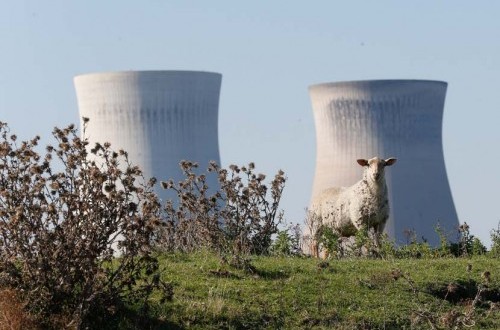
JAKARTA — South Korea is open to co-operating with Indonesia on developing nuclear power plants amid projections of a surge in electricity demand driven by artificial intelligence (AI) and data centre construction. Nuclear technology is seen as one option for providing a large-scale, sustainable energy supply to support the growth of Indonesia’s digital economy.
Kim Chanwoo, economic minister-counsellor at the Embassy of the Republic of Korea in Jakarta, said his country had extensive experience in developing nuclear technology, including building power plants overseas. This expertise creates scope for co-operation with Indonesia, which has begun including nuclear energy in its national electricity planning.
“We also have experience exporting nuclear technology and building nuclear power plants overseas. Therefore, there is potential for co-operation in this area,” Kim said at a workshop of the Indonesian Next Generation Journalist Network on Korea, organised by the Foreign Policy Community of Indonesia (FPCI) and the Korea Foundation in Jakarta on Friday, 30 October 2026.
Kim said rising energy demand could not be separated from the development of digital technology, which increasingly requires large amounts of electricity. Data centres supporting AI services, cloud computing and various digital economic activities are expected to increase Indonesia’s electricity needs over the long term.
South Korea has extensive experience operating nuclear power plants. According to the World Nuclear Association (WNA), the country has 26 operable nuclear reactors with a net capacity of about 25,609 megawatts electric (MWe).
These plants supply about one-third of South Korea’s electricity. The country also has four reactors under construction, with a combined capacity of about 5,360 MWe, according to the WNA reactor database.
South Korea’s experience extends beyond domestic nuclear energy use. A consortium of South Korean companies built four APR-1400 reactors at the Barakah Nuclear Power Plant in the United Arab Emirates (UAE), one of the country’s largest nuclear technology export projects.
All four Barakah units have been operating commercially since the final unit began generating electricity for commercial use in September 2024. The plant can supply about a quarter of the UAE’s electricity needs, according to the WNA. Experience in building and operating an international project of this scale is one of the strengths of South Korea’s nuclear industry as it explores overseas markets.
Data centre electricity demand projected to surge
The increase in electricity consumption from AI development is not a concern for Indonesia alone. The International Energy Agency (IEA) estimates that global data centre electricity demand will nearly double, from about 485 terawatt-hours (TWh) in 2025 to around 950 TWh in 2030.
In its study of the relationship between energy and AI, the IEA says electricity consumption by AI-specific data centres is growing much faster than that of data centres overall. Demand is driven by high-performance processors, intensive computing systems and supporting infrastructure that requires substantial power.
The industry’s challenge is not simply to provide large amounts of electricity, but also to ensure a reliable supply around the clock. Data centres need power for servers, cooling systems, communications networks and security equipment; prolonged interruptions could put their operations at risk.
South Korean companies are also increasing their presence in Indonesia’s data centre industry. In October 2026, the Korea Overseas Infrastructure & Urban Development Corporation (KIND) announced the involvement of Korean companies in an AI-capable data centre project in Jakarta, with total investment of about US$320 million.
The project involves LG CNS and other South Korean companies in construction and infrastructure provision, including cooling systems and backup power storage. On Friday, 30 October 2026, LG CNS said the Jakarta data centre was expected to be completed in early November. The development illustrates South Korea’s role in expanding Indonesia’s digital infrastructure, although it is not directly connected to a nuclear power plant project.
Against this backdrop, nuclear power is one option for providing low-carbon energy that can operate continuously. It is not the only solution, however: data centre supply also requires reliable transmission networks, energy storage systems and the development of other electricity sources.
Indonesia targets first nuclear plant to operate in 2032
Potential co-operation with South Korea is in line with the Indonesian government’s policy of beginning to include nuclear energy in the national electricity generation mix.
Under PLN’s 2025–2034 Electricity Supply Business Plan (RUPTL), the government is targeting an additional 69.5 gigawatts (GW) of generating capacity. Of this, about 42.6GW is to come from new and renewable energy, while 10.3GW is earmarked for energy storage systems.
The plan provides for 0.5GW, or 500MW, of nuclear generating capacity. This is relatively small compared with the total planned addition to national generating capacity, but it marks the formal inclusion of nuclear power plants in Indonesia’s electricity system development plan.
The Ministry of Energy and Mineral Resources (ESDM) said the initial development is planned as two units, each with a capacity of 250MW. The first unit is targeted to begin operating in 2032 for the Sumatra electricity system, while the next is planned for 2033 for the Kalimantan system.
Source: jawawa.id (https://jawawa.id/newsitem/south-korea-open-to-partnering-on-indonesias-first-nuclear-power-plant-targeted-for-2032-1793368299)
Originally published by Republika (https://ekonomi.republika.co.id/berita/tnq1qt451/pltn-pertama-ri-ditargetkan-2032-korea-selatan-siap-jadi-mitra), translated from Indonesian