
South Korea Issues Bill on Nuclear-Powered Submarines
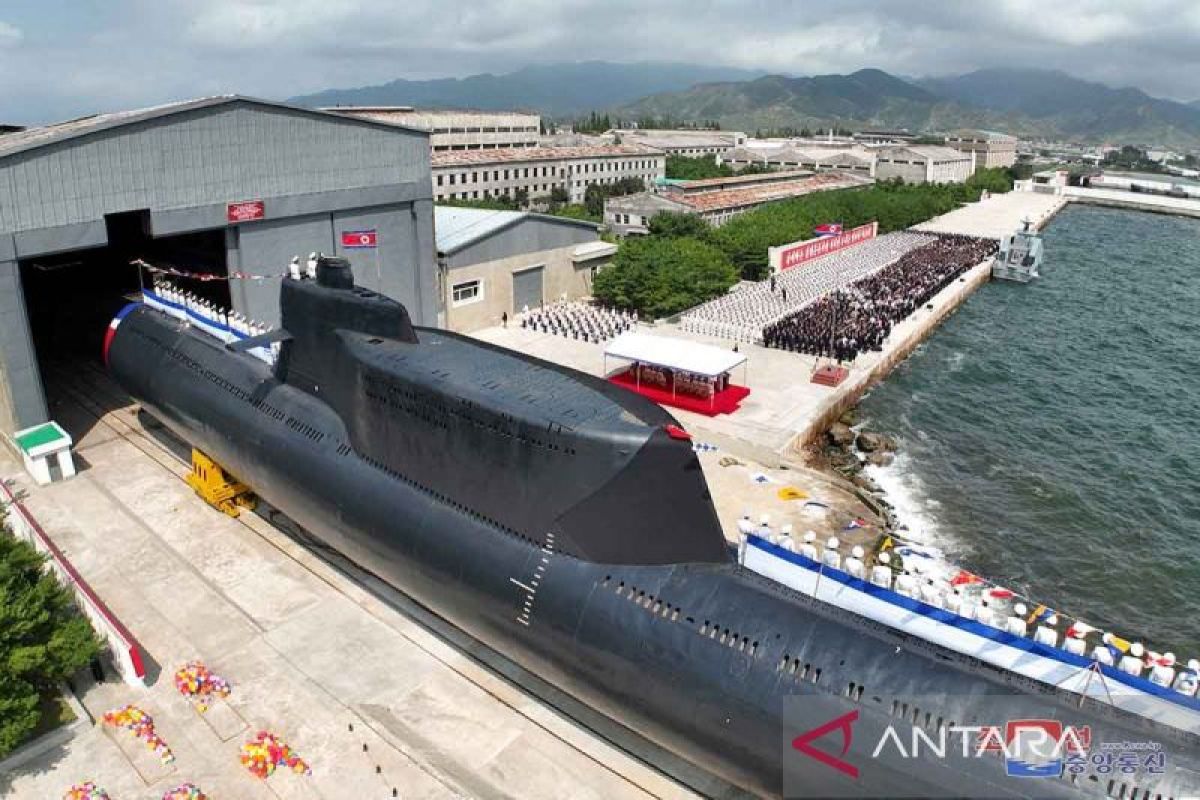
Seoul (ANTARA) - South Korea’s Defence Ministry on Wednesday issued a public notification regarding a draft bill on nuclear-powered submarines, amid Seoul’s efforts to build the strategic vessels through cooperation with the United States.
The special bill is designed to provide a legal foundation for the Jang Bogo N project, which targets the construction of at least three 8,000-tonne nuclear-powered attack submarines with conventional armament by the mid-2030s.
The submarines will use low-enriched, high-assay uranium fuel with an enrichment level below 20 per cent.
South Korea received the green light from the United States to pursue the construction of nuclear-powered submarines following a high-level meeting between President Lee Jae Myung and US President Donald Trump in October last year.
One of the key points of the bill is a provision stating that the nuclear-powered submarine programme is not intended to develop, produce, or possess nuclear weapons.
The bill also stipulates that South Korea will not engage in any action that diverts nuclear material for other purposes or undermines the international non-proliferation regime - an effort to reaffirm its commitment to non-proliferation obligations.
The draft bill provides for compliance with the Nuclear Non-Proliferation Treaty (NPT) as well as full cooperation with the International Atomic Energy Agency (IAEA) in implementing nuclear safeguard procedures.
The bill also commits to ensuring public safety and environmental protection from radioactive material, and sets safety standards for the submarines.
Furthermore, a Defence Ministry official said the nuclear-powered submarine programme is the first case in which a weapons system is integrated with nuclear energy.
“Given that this project spans various legal domains, including defence procurement and nuclear safety management, the current legal framework has limitations,” the official said.
The proposed bill also calls for the establishment of a strategic committee under the prime minister to discuss follow-up measures, including determining the location of project facilities. The defence minister would be required to review the programme’s implementation plan every 10 years.
The Defence Ministry plans to gather public input until 7 September before submitting the bill to the National Assembly.