
South Korea in Turmoil: KOSPI and Won Plunge Simultaneously
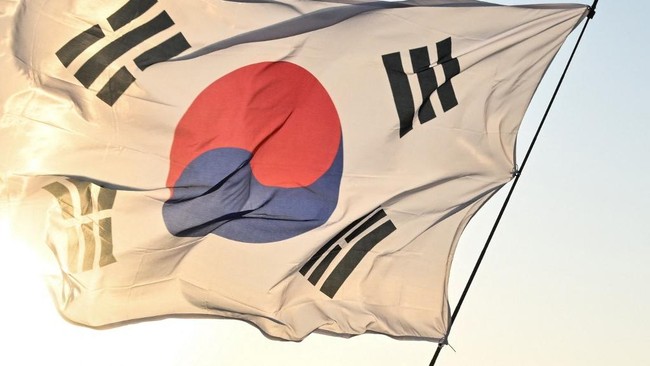
South Korea’s financial markets are under immense pressure. The nation’s main stock index, KOSPI, witnessed a deep slump during this morning’s trading, in line with the weakening trend of the South Korean won against the US dollar.
According to Refinitiv, as of 09:50 WIB on Monday (8/6/2026), the KOSPI fell 4.24% to the level of 7,814.74. Pressure on the South Korean stock exchange occurred after global markets were shaken again by concerns regarding the direction of US interest rates. At the start of trading, the KOSPI even plummeted by as much as 8.8%, prompting exchange authorities to activate a 20-minute trading halt. This marks the first trading halt in the last three months and the third so far this year.
The primary pressure originated from technology and semiconductor stocks. Two South Korean chip giants, Samsung Electronics and SK Hynix, both saw declines of more than 10%. This sharp correction followed strong US employment data, which reignited market fears that the Federal Reserve may maintain a hawkish stance or even open the door for interest rate hikes this year. Previously, during Friday’s trading, US technology markets also faced significant pressure, with the Nasdaq falling 4.2% and the Philadelphia Semiconductor Index dropping 10%. This global tech sell-off dragged down the South Korean market, given the heavy weighting of semiconductors in the KOSPI.
Han Ji-young, an analyst at Kiwoom Securities, noted that the surprise from US labour data triggered a rise in bond yields, providing the catalyst for a correction in a market that had previously become overheated following the semiconductor rally. While volatility is expected to remain high, Han suggested that the recent correction has brought KOSPI valuations down, and the earnings momentum for semiconductor stocks remains relatively solid.
Amidst this pressure, foreign investors have continued their selling spree, recording a net sell of approximately 200 billion won (equivalent to US$128.86 million), extending their net selling streak to 21 consecutive sessions. Despite today’s sharp drop, the KOSPI has recorded massive year-to-date gains, up approximately 83% in 2026, following a 76% surge in 2025, making it one of the world’s best-performing indices.
Simultaneously, the South Korean won has hit its weakest level since the 2009 global financial crisis. Refinitiv data shows the won ended Friday’s (5/6/2026) trading with a sharp depreciation of 1.78% against the greenback, pushing the exchange rate to KRW1,559.08/US.AlthoughthewonsawatechnicalreboundtoKRW1, 549.29/US during Monday morning’s trading, the long-term trend remains pressured. The won has weakened by approximately 7.3% against the US dollar since the outbreak of the US-Israel-Iran conflict in late February 2026.
Several factors are weighing on the currency, including the strength of the US dollar driven by global geopolitical uncertainty in the Middle East. Furthermore, structural changes within South Korea are playing a role; Korean individuals, financial institutions, and corporations are increasingly allocating funds to overseas assets, particularly US dollar-denominated stocks, bonds, and properties. This increased demand for dollars to fund foreign investments is exerting further downward pressure on the won.