
South Korea Explores Nuclear Energy Cooperation Opportunities with Indonesia
Jakarta (ANTARA) – The South Korean government sees opportunities to cooperate with Indonesia on developing nuclear energy to help meet electricity demand, which is expected to rise as artificial intelligence (AI) advances and data centres are built.
Kim Chanwoo, Minister-Counsellor for Economic Affairs at the Embassy of the Republic of Korea in Jakarta, said South Korea had experience and technology in nuclear energy development, including building nuclear power plants overseas.
“We also have experience exporting nuclear technology and building nuclear power plants abroad. Therefore, there is potential for cooperation in this field,” Kim said at a workshop of the Indonesian Next Generation Journalist Network on Korea, organised by the Foreign Policy Community of Indonesia (FPCI) and the Korea Foundation in Jakarta on Friday.
According to the World Nuclear Association (WNA), South Korea operates 26 nuclear reactors with a capacity of around 25,609 megawatts electric (MWe), supplying about one-third of the country’s electricity needs. A further four reactors, with a combined capacity of 5,360 MWe, are under construction.
Kim said growing electricity demand, including to supply data centres being developed extensively by the Indonesian government, would require new energy sources.
He said nuclear power could be one option for strengthening national energy security, although it is not a renewable energy source.
The potential cooperation is in line with Indonesia’s plans to develop nuclear energy. Under the 2025–2034 Electricity Supply Business Plan (RUPTL), the Indonesian government is targeting 69.5 gigawatts (GW) of additional power generation capacity, including 42.6 GW from new and renewable energy and 10.3 GW from energy storage.
Of the planned additional new and renewable energy capacity, the government has included 0.5 GW of nuclear power. It is also targeting the selection of a site for a nuclear power plant in 2026 or, at the latest, 2027.
Potential for CCS cooperation
In addition to nuclear power, South Korea also sees opportunities to cooperate with Indonesia on carbon capture and storage (CCS) technology.
Kim said Indonesia had significant geological potential for CO₂ storage, attracting interest from several South Korean companies. However, he said technical studies and investigations were still needed before the cooperation could be developed into concrete projects.
Kim said CCS had also been discussed at the 14th Indonesia-Korea Energy Forum in Bali the previous week, involving government agencies and companies from both countries.
He said no specific projects had yet been announced. The South Korean Embassy would continue to promote discussions with relevant ministries and companies to realise mutually beneficial cooperation opportunities.
Indonesia and South Korea have already established a bilateral framework for cooperation in clean energy through memorandums of understanding (MoUs) on clean energy and CCS, signed in Seoul on 1 April 2026.
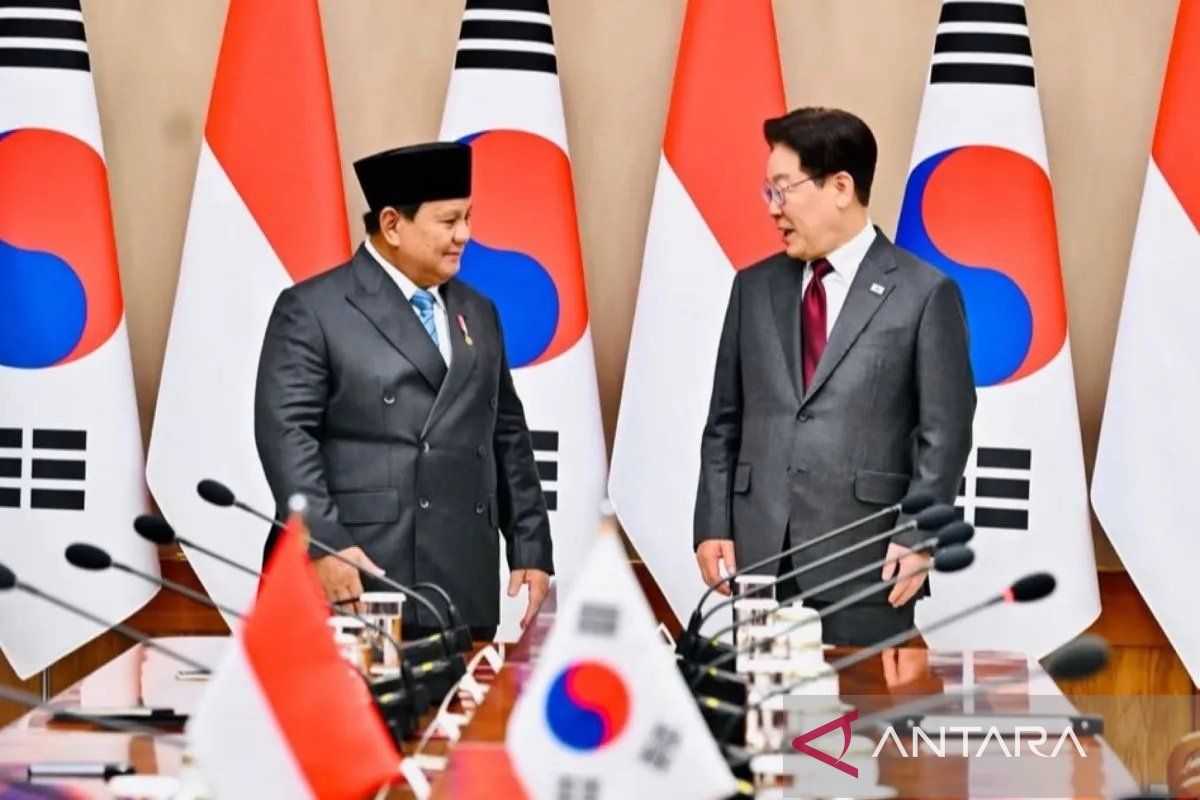
Indonesian Energy and Mineral Resources Minister Bahlil Lahadalia signed both agreements with the South Korean government in the presence of President Prabowo Subianto and President Lee Jae Myung.
The clean energy MoU covers cooperation on renewable energy, nuclear power, hydrogen, energy storage and efficiency, batteries, bioenergy, waste-to-energy, smart grids and energy systems for self-sufficient islands.
The CCS agreement covers the development of cross-border carbon capture and storage technology, promotion and commercialisation of the technology, and support for research and industrial projects.
Source: jawawa.id (https://jawawa.id/newsitem/south-korea-explores-nuclear-energy-cooperation-opportunities-with-indonesia-1793364878)
Originally published by Antara (Indonesian) (https://www.antaranews.com/berita/5822223/korea-selatan-jajaki-peluang-kerja-sama-energi-nuklir-dengan-indonesia), translated from Indonesian